I went to a protest against Digital ID in Birmingham City Centre on 11 October, 2025. I have taken some photos and video for upload (the videos will be uploaded at a later date).
The themes of the protest were basically what you would expect. There were still quite a lot of references to the Covid issue and the vaccines. Rameece, a rap artist who had previously attended some anti-Covid events, did his rap song about the Covid vaccine.
One example among many of Covid themed signsRameece
Other themes that came up were 5G, the One Login system implemented by the government and its relation to digital ID, and other authoritarian surveillance legislation such as the Onljne Safety Bill. As well as usual themes of criticism of the claims of climate change, Agenda 2030, the UN, WEF, etc.
The attendance for this protest was a few hundred people. It looked like primarily the people who used to attend the anti lockdown protests, I recognised several faces from those events.
Politician Andrew Bridgen also attended the protest.
He said that he knows a Labour MP who has admitted he essentially votes with the Labour whip (for non UK readers, the ‘whip’ enforces voting with the party) without even reading the legislation.
Andrew Bridgen
There has been an update on Digital ID since my last post. This is the new digital Veterans ID where people can prove they served in the military to get certain benefits.
I would also recommend giving Iain Davis’ article on the Brit Card a look (linked above), where he argues that the Brit Card is a distraction (politically untenable) from the real digital ID that is/will be introduced.
We should still continue to make our voices heard against all forms of digital ID. I know I haven’t done many protests recently but I plan to continue being involved in this campaign where possible.
Since the 1990s, the idea of ‘neurodiversity’ has become a cottage industry. The basic tenet of neurodiversity is that autism is a perfectly normal variation of human development that should not be seen as a negative trait. It seeks to highlight the alleged ‘positive’ traits of autism and believes that the struggles of people with autism are largely caused by society not being accepting rather than the inherent downsides of the condition. This article will seek to discuss three parts of this phenomenon by comparing two theories of autism: the neurodiversity theory of autism and the iatrogenic theory of autism i.e. vaccine injury. The first part will discuss the evidence for each theory, concluding that vaccine injury has a large amount of evidence to support it. The second part of this article will look at the individuals and institutions that promote each theory and how the media portrays each group. The third part will draw it together by explaining how the neurodiversity theory is constructed as an alternative to deflect from the vaccine injury theory and to gaslight people suffering with autistic vaccine-injury and their parents about their experiences.
Part I: Two Theories
There are two main theories of autism. The first theory states that autism is genetic, and the second theory states that autism is iatrogenic. The first theory is advocated by both people who think that autism is a good thing, and by those who think it is a bad thing. The latter group of people, who believe that autism is a net negative but who also believe it is genetic, will not be discussed in this article. Instead we will be comparing the ‘autism is a positive, genetic gift’ group (the ‘neurodiversity’ group) to the ‘autism is iatrogenic, largely caused by vaccination’ group (the ‘vaccine-injury theory’ group). Part I will outline these two theories and look at the evidence.
The Neurodiversity Theory of Autism
What is the ‘neurodiversity’ theory of autism? It can be summed up by saying that autism is not a disability, it is a difference that should be celebrated. If you search for ‘neurodiversity’ you can find all sorts of articles advocating for this. Here’s one picked at random:
Neurodiversity is a movement that wants to change the way we think about autism. It rejects the idea that autism is a disorder and sees it instead as a neurological difference: one with a unique way of thinking and experiencing the world.
The movement focuses on celebrating neurological diversity and championing the different world-views and skills that autistic, dyslexic, bipolar, and other neurodiverse people have.
The idea of ‘neurodiversity’ has been increasing in popularity as a paradigm to ‘explain’ autism.
Of course, saying that autism is a positive trait does not explain it. So neurodiversity theorists use genetics to explain autism.
I will argue that both sides of the neurodiversity coin are false: having autism is always a negative thing, and that genetics does not explain autism.
Let’s start with the genetics aspect. One significant piece of evidence that the autism-is-genetic advocates use is twin studies:
Since the first autism twin study in 1977, several teams have compared autism rates in twins and shown that autism is highly heritable. When one identical twin has autism, there is about an 80 percent chance that the other twin has it too. The corresponding rate for fraternal twins is around 40 percent.
On the surface, twin studies look like exceedingly convincing evidence. They have been used to argue for a genetic link for a varying range of problems, including schizophrenia. In reality, though, twin studies are not good evidence that autism is genetic.
The problem that we run into is that twins are likely to have had the same environmental exposure, and this is doubly true when it comes to vaccination. No parent is going to vaccinate one of their twins and not vaccinate the other in some sort of science experiment. Thus both twins will be getting very similar exposure to aluminium, thimerosal, etc. via vaccinations. (Though see this caveat: aluminium levels in vaccination can vary significantly when vials are actually examined). The other major issue with twin studies is that they conclude that interaction between the body and these kinds of exposures is ‘genetic’. A genetic propensity to, say, accumulate certain toxins may well exist in autism cases. But in order for autism to develop, exposure to the toxin is required, and exposure to a toxin is not genetic. The same weakness applies when looking at alleged genes that have been associated with autism – it could be that those genes simply predispose a person to toxin accumulation.
The main weakness in the genetic case for autism is below:
It goes without saying that human genes have not radically changed since 1970. So how can the autism rates have changed so drastically? Autism-is-genetic advocates have tried their best to explain this graph, but they have done a bad job of it, because the whole graph screams ‘environmental causes’. But let’s have a look at their explanations for an increase in autism.
The main explanation offered is that the definition of autism has got wider and that is why these numbers have increased so much. Intuitively, this is a really poor explanation, for a number of reasons. For a start, we are looking a massive, massive increase. 1 in 10,000 to 1 in 30 is huge. To explain this simply by stating ‘it’s increased diagnosis’ is intuitively and logically implausible. People who argue this, I think, don’t understand how large a proportion of the population 3% is. That is a very significant chunk of the population. Older people here can employ their common sense. Were 3% or more of your childhood colleagues autistic? If you doubt that you could tell, I assure you that you can with just a little thought. Poor eye contact is a dead giveaway for autism, as is just an obvious awkwardness. The reality is, even ‘high functioning’ autistic people just seem odd, weird and off in particular ways so I would say you could almost always tell. Furthermore, the unemployment rate for people with autism, according to UK government data, is 78%. If we approximate the data, if 1 in 30 people are autistic and 2/3 (being generous) cannot work, this means around 2% of the population cannot work due to autism. The idea that government institutions never noticed 2% of the population being unemployable due to autism is laughably implausible.
This hypothesis also does not fit the shape of the graph very well. It keeps curving upwards, rather than seeing a bump for a change in diagnostic criteria and a levelling. The graph has still not levelled off. At some point, you have to start asking questions.
This issue also becomes more difficult to cover up when you consider severe autism. Autistic people who have a basic level of functioning in the ‘real world’ may just come across to normal people as a bit weird. In these people’s case, it’s more possible that they may not have a diagnosis. This would not be the case with those with severe autistic deficits. Again this is another argument that is just absurd on the face of it:
You can’t have missed 97 percent of the children in the ’80s who had autism. They’re trying to get the public to believe that kids who spin in circles, don’t speak, don’t socialize, can’t go to the bathroom by themselves all existed in our public high schools and elementary schools in the ’80s but only today have gotten a proper diagnosis. It’s incomprehensible.
Aside from being intuitively implausible, one study on this issue concluded:
In summary, the incidence of autism rose 7- to 8-fold in California from the early 1990s through the present. Quantitative analysis of the changes in diagnostic criteria, the inclusion of milder cases, and an earlier age at diagnosis during this period suggests that these factors probably contribute 2.2-, 1.56-, and 1.24-fold increases in autism, respectively, and hence cannot fully explain the magnitude of the rise in autism.
But what about the claim that autism is always a net negative? Surely that’s a little bit fundamentalist? After all, some of the advocates of the neurodiversity theory are autistic themselves, right, and surely they would know? So let’s tackle this thorny question.
The most obvious piece of evidence to start with is life expectancy. The evidence demonstrates that autism significantly decreases life expectancy. This is pretty mainstream evidence that can be found with a quick search.
One study, published in the American Journal of Public Health in April 2017, finds the life expectancy in the United States of those with ASD to be 36 years old as compared to 72 years old for the general population.
In other words, according to this study autism halves life expectancy.
The other study was published by the British Journal of Psychiatry in January 2018. This was a Swedish study showing similar results but elaborating on other causes of death as well. This study showed a life expectancy in those with ASD with a cognitive disability (or a learning disability) at 39.5 years versus 70 years for the general population studied. Those with ASD without a learning disability had an average age of death at about 58 years.
Furthermore, most of these causes of death are inherent to autism. For example, being much more likely to die in an accident. Autistic people have poor motor control and are much more likely to have these kinds of accidents such as drowning that lead to death. Horrific anxiety at normal experiences, such as sensory issues around normal noise/light/smell stimuli, also increases mortality as the body becomes overwhelmed with the constant anxiety triggers, meaning that the body’s ability to fight cancers is impaired, and heart attack and stroke risk is increased. People with autism are also unemployed/unemployable, with only about 20% of autistic people even being employed in the UK. This is linked to having awful social skills, having severe anxiety, and in some cases being completely non verbal and non functional. Being perennially unemployable is bad for your health; higher unemployment rates have been well established to be linked to mortality in sociology.
A study that followed autistic people for 20 years showed even more negative outcomes, although most of the participants also had other intellectual disabilities.
The outcome data was grim, showing pervasive inability to live independently, hold a job, or manage money. Few became independent, with 99% unable to live independently. Of those, 70% lived at home with relatives, 21% lived in disability homes in the community, and 8% in residential facilities. A mere 3.7% attained postsecondary education, about half of those representing certificates from college disability programs. While the majority were considered incapable of holding a job in the competitive workspace, some worked in disability workshops or other sheltered positions. Most participants were incapable of handling money, even with caretaker assistance, with only 9.5% considered capable.
The neurodiversity paradigm likes to attempt to escape from this reality by claiming that this is purely down to ‘society’ refusing to accept us. That argument is nonsense. The argument is most obviously flawed when it comes to those with severe autism, since any range of accommodations will not fix deficits such as being non verbal, not being able to go to the toilet by yourself, seizures (comorbid with autism), extremely poor motor control, severe gastroenterological issues (linked to autism), sensory issues and meltdowns, etc. If a neurodiversity advocate would like to explain how ‘acceptance’ will fix these problems, the comment section is all theirs. But it is even pretty much nonsense when it comes to ‘high functioning’ autism as well. The reality is ‘acceptance’ and accommodations only really make a difference in edge cases when it comes to solving the issues outlined above. Take for example ability to work. The severely impaired autistic person will never be able to work, you can throw all the accommodations in the world at the issue, it’s not going to happen. Whereas, a high functioning or borderline high functioning autistic person may be able to work if given a few accommodations. I’m not arguing against accommodations. What I am arguing against is the idea that accommodations, or society being more accepting of autism will fix our problems. It won’t.
As for the supposed ‘positive’ aspects of autism, what are they? Usually, it is claimed that many people with autism are more intelligent and analytical than normal people. However, this is likely to confuse correlation and causation. The most plausible explanation here is that brain development is more likely to be disrupted by toxins in the case of intelligent people due to more dense neuron growth in highly intelligent people. And again, severe cases of autism are erased by this view. It glorifies a very narrow spectrum of individuals with autistic injury – the ‘autistic savant’ – while writing off the harms done to the rest.
So what about the people with autism diagnoses who make the claim that autism is a positive thing and that neurodiversity is valid? Well, if someone with an autism diagnosis saying something settles the question, then autism is a devastating vaccine-injury that destroys and obscures the true personality of the individual, rather than reflecting it. Because of course this author has an autism diagnosis. So this kind of argument gets us nowhere.
The Vaccine-Injury Theory of Autism
There is an alternative, ‘underground’ theory of autism which advocates for the view that autism is (at least primarily) caused by vaccination. This article will discuss one cause of autism that the author believes has been comprehensively documented, that is aluminium adjuvants in vaccination entering the brain, disrupting the housekeeping cells of the brain (glia and microglia)and triggering inflammatory reactions such as the il-6 pathway. This is not to say that there are no other problems with vaccination as it relates to autism or no other possible causes (e.g. thimerosal). This article will stick to one cause for reasons of length and clarity.
I will go into a little bit more detail on the basic theory, before discussing the evidence. Aluminium is used in ~80% of vaccines as an adjuvant (substance used to promote an immune response). It is in the vast majority of childhood vaccines, excluding the MMR. However, aluminium is also a neurotoxin that the body cannot filter out effectively when injected, and because of this it can enter the brain. In short, the mechanism of how the injury occurs is like this. The aluminium in a vaccine is injected into the body. Immune cells are stimulated to respond to the site of injection. These immune cells (macrophages) respond and ‘swallow’ the aluminium. But when any inflammatory event in the brain occurs, these cells will be called upon to help, but instead will bring a massive payload of toxic aluminium with them into the brain.
A set of nine criteria used to determine the strength of an association between a disease and its supposed causative agent. They form the basis of modern medical and dental epidemiological research.
The more of the Bradford-Hill criteria you can demonstrate, the more likely it is that A causes B. Let’s look at these criteria with relevance to the fact that vaccines cause autism.
The first factor we can discuss is coherence. In other words, “does the association fit with other facts?” In the case of the above theory, it fits very well with facts about aluminium.
Aluminium is toxic to the human body. Aluminium has no biological function in human life and so its presence in the human body is always a net negative. The idea than aluminium, at least, can be toxic is widely accepted. Furthermore, it is accepted that aluminium can enter into brain tissue. Even more than this, it is accepted that it can cause harm once it gets into the brain tissue. One form of aluminium toxicity where this occurs has been observed in dialysis patients:
[A]luminium toxicity occurs due to contamination of dialysis solutions, and treatment of the patients with aluminium-containing phosphate binding gels. Aluminium has been shown to be the major contributor to the dialysis encephalopathy [“damage or disease that affects the brain”] syndrome and an osteomalacic component of dialysis osteodystrophy.
In stating this so far, I haven’t deviated from accepted science. Slightly more controversial than this is the idea that Alzheimer’s is caused by aluminium in the brain. This idea has been around since 1965 according to the Alzheimer’s Society. Although some people doubt the correlation-causation relationship (I would argue more for financial reasons than scientific), there is evidence from a wide range of sources.
The Scotsman reported on a study performed by researchers looking at aluminium levels in drinking water that found people in areas with higher levels of aluminium were more likely to die of dementia. The study’s author said:
We still see this well accepted finding that higher levels of aluminium in particular are associated with an increased risk of dementia. It’s confirmatory rather than anything else. [my emphasis]
Dr. Chris Exley has done multiple studies showing high levels of aluminium in the brains of those who died with a diagnosis of Alzheimer’s disease.
Animal studies also provide further evidence for the fact that aluminium in injurious to the brain. Dr. Christopher Exley observed, when he was studying fish, that when the fish were exposed to aluminium, they would start hanging out in the corner of the tank. Another study, performed by a sheep farmer (and shown in the Bert Ehgartner documentary, Under the Skin), showed that sheep injected with aluminium adjuvant (even without an antigen) showed much higher levels of aggressive behaviour and did things like grind their teeth on metal railings. Mice are also negatively affected by aluminium:
Male mice in the “high Al” group showed significant changes in light–dark box tests and in various measures of behaviour in an open field. Female mice showed significant changes in the light–dark box at both doses, but no significant changes in open field behaviours.
Thus, aluminium was clearly affecting the neurochemistry of the animals, and these behaviours are decent proxies for autistic symptoms in humans (aggression being analogous to autistic meltdowns and the fish acting strangely being analogous to social avoidance).
All of this evidence is a strong case that the aluminium factor in autism is coherent. We know aluminium is toxic and can harm the brain. Therefore that it can cause the kind of behavioural issues that we observe in autism cannot be prima facie ruled out. This is Criteria 1 on our Bradford Hill list solidly met.
The next criteria we can discuss is dose-response relationship. In short, if we give more aluminium adjuvants to children, do we see an increase in autism? Recall our graph from above – the 1-in-10000 to the 1-in-36 increase in autism prevalence. Now let’s compare this to the increase in aluminium adjuvants and thus exposure.
Shaw and Tomljenovic wrote a paper addressing this topic:
By applying Hill’s criteria for establishing causality between exposure and outcome we investigated whether exposure to Al from vaccines could be contributing to the rise in ASD prevalence in the Western world. Our results show that: (i) children from countries with the highest ASD prevalence appear to have the highest exposure to Al from vaccines; (ii) the increase in exposure to Al adjuvants significantly correlates with the increase in ASD prevalence in the United States observed over the last two decades (Pearson r=0.92, p<0.0001); and (iii) a significant correlation exists between the amounts of Al administered to preschool children and the current prevalence of ASD in seven Western countries, particularly at 3-4 months of age (Pearson r=0.89-0.94, p=0.0018-0.0248).
The correlation here is strong – more doses, more autism. The dose-response relationship is in this data. Point 2 on the Bradford Hill Criteria list is met.
The third factor that we can discuss is strength of association. Or in other words, how much is the difference in observed rates of autism between the vaccinated and the unvaccinated? This question is not all that easy to answer, mostly because information on this kind of question has been suppressed.
Dr. Paul Thomas has revealing evidence on this question.
Dr. Paul Thomas is the most successful doctor in the world at preventing autism. Data from his practice show:
If zero vaccines, autism rate = 1 in 715;
If alternative vaccine schedule, autism rate = 1 in 440;
If CDC vaccine schedule, autism rate = 1 in 36.
[…]His alternative vaccine schedule reduces autism risk by more than 1200%. However even an alternative vaccine schedule increases autism risk by 160% versus no vaccines at all.
The difference between 1 in 715 and 1 in 36 is huge. This is evidence of a significant strength of association between two factors. Of course the historical evidence showing fewer cases of autism among older people and more among the young with a strong correlation also matches up with this evidence, since older people are comparatively ‘unvaccinated’. So that’s our third criteria met.
The fourth factor we can discuss is temporal relationship. In other words, the effect must follow, not precede exposure. This factor is difficult to elucidate with vaccines, because exposure is so early on in life, including in the first day of life in the US. This is used by the vaccine cult to argue for the genetic position, but also ensures that it is more difficult to prove that exposure causes the symptoms because the exposure is so early and rampant. However, the simple observation of vaccines preceding autism is almost always true (unless the child is unvaccinated) because if you expose the child at day 1 (US) or 2 months (UK) that is before autistic behaviour is observed. So in a way, their rampant pushing of vaccinations has met this criteria all by itself.
We also haveanecdotal evidencefor this factor, that is, parents observing their child regressing into autism after vaccination. Of course, anecdotal evidence is automatically dismissed by any Pharma apologist. It is true that when using anecdotal evidence, there are significant pitfalls to consider. People can misremember things, or actively lie. These points are worthy of consideration.
However, both of these risks are minimised in the case of assessing autistic regression after vaccination. In terms of lying, there is simply no motive for a parent to lie about observation of regression into autism after a vaccine. Suggesting to a paediatrician, for example, that a child’s autism was caused by a vaccine will lead to being attacked and dismissed by the doctor. Parents are also attacked in the media if they suggest this idea, such as in the case of Jenny McCarthy, who has been subject to hit pieces because she stated that the MMR vaccine caused her son’s autism. Although vaccine advocates state that parents are likely to fall for the idea that someone is to blame for their child’s autism (such as doctors or Pharma) this is also unlikely. The parents had to consent for the vaccine to be given, and so you would expect to observe the opposite: parents denying that vaccines cause autism, since then they would have to blame themselves for consenting to the vaccine(s) and human beings do not like to acknowledge guilt.
Being mistaken about observation is also less likely in the case of autistic regression. This is because we are talking about parental observation of children and decent parents are highly alert to any signs of illness in a child, particularly a child of the age likely to receive vaccines. I will concede however that it is not impossible for someone to either be mistaken or lie. However it is quite implausible that given the factors weighing against these that all cases are examples of lying or misremembering given the multitude of testimonies that we have.
Thus there is at least some evidence for criteria four on the Bradford-Hill list.
The fifth factor that we can discuss is consistency. In other words, if we introduce aluminium adjuvants to all sorts of different groups, rich, poor, black, white, Asian, male, female, etc, do we see increased levels of autism?
There is a male-female disparity in autism diagnosis, with males being significantly more likely to be diagnosed than females. There is likely some biological reason why boys are more susceptible to this form of aluminium poisoning that is currently unknown (or at least, unknown to me). Nevertheless we see an increase in autism diagnosis in both groups.
The sixth factor we can discuss is experimental evidence. In other words, do we have any hard evidence for aluminium in the brain in autism? The answer to this is yes.
Dr. Exley and his research team examined this question directly. They obtained samples of brain tissue from individuals that had died with a diagnosis of autism. This was the first study of this kind. They examined this brain tissue and found very high levels of aluminium in all samples.
The aluminium content of brain tissue in autism was consistently high. The mean (standard deviation) aluminium content across all 5 individuals for each lobe were 3.82(5.42), 2.30(2.00), 2.79(4.05) and 3.82(5.17) μg/g dry wt. for the occipital, frontal, temporal and parietal lobes respectively. These are some of the highest values for aluminium in human brain tissue yet recorded and one has to question why, for example, the aluminium content of the occipital lobe of a 15 year old boy would be 8.74 (11.59) μg/g dry wt.?
We can add another one of Exley’s papers to make this evidence even better. This paper by Exley and Clarkson contains control samples who died with no signs of neurodegenerative disease:
The aluminium content of each lobe (mean and SD) were 1.03 (1.64), 1.02 (1.27), 0.95 (0.88), 0.77 (0.92) and 0.51 (0.51) μg/g dry wt.
These samples have much lower levels of aluminium in them than the autism samples, and this is despite the fact that the controls were mostly older than the autism samples – meaning lifelong exposure to aluminium through non-vaccine routes would have been higher and it would have had more time to accumulate in the control tissues.
The main limitation of this evidence as pointed out by its critics is that the study had a small sample size of N=5 when it came to measuring aluminium concentration in the autism samples (and for some aspects of the study N=10). This was for practical reasons (i.e. there isn’t a large amount of samples of autistic brain tissue available).
It is fair to acknowledge this, and obviously it would be better if the sample size was larger. However, it is completely dishonest to dismiss this study because of the small sample size. This study, for example, is completely different from a survey where 5 participants answering would be worthless. We are looking at pathological brains with clear evidence of a high level of a neurotoxin in them. The level of neurotoxin in these brains cannot be explained away by saying that there is only a few of them. To have that level of brain aluminium content and for it to not be pathological and negatively affecting the cells around it is absurd, unless you want to straight up deny that aluminium is neurotoxic.
Furthermore, no-one has tried to either confirm or reject the Aluminium Research Group’s findings (to this author’s knowledge at least). The establishment haven’t done a study where they demonstrate that the levels of aluminium found by the group are overly high. This is another case where the establishment claim the evidence isn’t good enough to support an anti-establishment view and then just ignore the question. So, despite establishment criticisms, this is criteria six on our Bradford-Hill list met.
We can use Exley’s evidence to discuss the seventh criteria, biological plausibility.
The 2018 paper shows that the high levels of aluminium were found associated with glia and microglia:
Discrete deposits of aluminium approximately 1 μm in diameter were clearly visible in both round and amoeboid glial cell bodies (e.g. Fig. 3b). Intracellular aluminium was identified in likely neurones and glia-like cells and often in the vicinity of or co-localised with lipofuscin (Fig. 5). Aluminium-selective fluorescence microscopy was successful in identifying aluminium in extracellular and intracellular locations in neurones and non-neuronal cells and across all brain tissues studied (Fig. 1, Fig. 2, Fig. 3, Fig. 4, Fig. 5).
This is important because those cells are disrupted in autism. For example, they are responsible for synaptic pruning, which does not occur correctly in autism.
Aluminium-loaded mononuclear white blood cells, probably lymphocytes, were identified in the meninges and possibly in the process of entering brain tissue from the lymphatic system (Fig. 1).
The eighth criteria we can discuss is specificity. The idea of specificity ideally means that one disease has one cause, but this is difficult to apply to reality as Bradford Hill acknowledged. Aluminium adjuvants, in reality, are highly likely to cause more than one disease. However, the argument is not just that aluminium adjuvants cause autism, but that a specific action of aluminium adjuvants causes autism. Our theory offers a specific toxicant (aluminium), a specific route of exposure (injection), a specific method by which that toxin gets into the brain (macrophages), specific cells that are disrupted (glia and microglia), and specific negative cascades that are triggered (excessive IL-6 production due to an inflammatory response). Our argument also does not claim that glial disruption by aluminium adjuvants causes a whole host of problems, but autism specifically (and nothing else). So the theory meets criteria eight on the list.
The last factor we can discuss is analogy. If we can observe similar things happening that makes our own theory more likely to be true. This is easy to demonstrate in the case of aluminium poisoning, as poisoning by different metals, such as mercury, can cause significant impairments in child functioning. One interesting case worthy of discussion here is that of acrodynia. Acrodynia, or ‘Pink disease’ was an early 20th century disease that symptomatically had some overlap with autism although with some differences. It was later proven that pink disease was a form of mercury poisoning caused by mercury teething powders. We know from this case that metal poisoning can cause symptoms with some similarities to autism. There are also examples of aluminium itself causing other forms of poisoning, which were discussed in point 1. So analogy also supports our case and gives us point 9.
Conclusion
As we can see from the above discussion, the idea that vaccines cause autism is strongly evidenced. However, the theory is also opposed by the entire establishment despite this evidence. It is to how these two differing theories of autism are treated that we now turn.
The idea of ‘pandemics’ and ‘outbreaks’ is one of the most convenient and effective ways for a government to sell fear and make money for their corporate backers (via vaccination drives). Although this did happen before Covid-19, such with the 2009 H1N1 ‘pandemic’, after Covid-19 the media has focused more on viruses and ‘pandemics’ in general, with random scare stories about viruses being grist to the MSM mill. Over the past few weeks, the idea of a ‘measles pandemic’ has been heavily pushed in the UK media. This article will discuss three aspects of this phenomena: the narrative, the purpose and the reality.
Part 1: The Narrative
Back in around September/October 2022, I noticed there seemed to be several random articles in the mainstream media about the ‘low uptake’ on the MMR (measles, mumps, rubella) vaccine.
For example, this article in the Daily Mail:
More than a third of children have not had their life-saving MMR vaccine in parts of England, according to official stats which illustrate why health chiefs fear a measles resurgence.
This immediately raised a red flag in my mind and got me thinking they might attempt to create a ‘measles pandemic’ and that this was the first signs of a new campaign.
Now, this narrative is back.
How are they building up the notion of fear?
The media has been recently filled with stories like this:
[T]he capital could experience an outbreak of between 40,000 and 160,0000 [yes, that typo is in the article] cases, fresh analysis by the UKHSA suggests.
We all know how successful modelling was with Covid. That is, successful at selling fear, because it certainly wasn’t successful at predicting ‘Covid cases and deaths’ since all the data it came out with were massive overestimates.
The model pdf report says:
[T]he risk of widespread transmission of measles, leading to a measles epidemic across the UK is considered low.
After that caveat (not mentioned in the media) we get into some nice fear porn like this:
Hospitalisation rates vary by age but range from 20 to 40%.
20% of even the fittest and healthiest age groups would be hospitalised for measles? Who believes this nonsense?
There doesn’t seem to be much of a ‘model’ in the report, their argument seems to be the lower vaccination rate in London means that the R (remember R from Covid fear porn?) is approaching 1 and this means there could be an outbreak:
[U]sing the UKHSA model, the reproduction number in London is now close to or above 1 (R=1.6, R=1.4, R=0.91) and could therefore result in an outbreak of between 40,000 and 160,000 cases.
The R rate (that is, the rate at which a virus spreads in the community, if you don’t remember it from Covid, so 1 means every infected person infects 1 other person) is calculated purely from vaccination rates among 25 and under. So far yet, this is purely hypothetical as there is no mass measles outbreak.
As to why measles has been selected for the fear campaign?
A measles outbreak seems a nice, likely candidate for a new fear campaign for a number of reasons. There is a large amount of (untrue) propaganda that a high mortality rate from measles was only stopped with the introduction of a measles vaccine.
Because measles is also a childhood disease, this evokes fear in parents that their child will die of measles. This contrasts with previous fear campaigns Covid-19, which clearly was not dangerous to children, and monkeypox/mpox/whatever-it-is-now, which largely affected gay men who had promiscuous sex.
Part 2: The Purpose
What’s the purpose of all this?
One of the main purposes is to sell MMR vaccination. Many of these articles fearmongering about measles (such as this one) have a picture of MMR vaccine vials – essentially product placement. You might not think the market would be that big – after all only young children get measles vaccines, right? But there’s actually potentially a bigger market than just young children available.
In fact, as per the UK Government, a large proportion of the population is not ‘fully vaccinated’ against measles, mumps and rubella. Why is this? Because the UK government deems that you need two doses to be ‘fully vaccinated’. The MMR vaccine (at 1 year) was introduced in 1988, but a second dose of the MMR vaccine (between 3-4) was not introduced until 1996, meaning 8 years of people not considered ‘fully protected’ who second doses can be sold to. Then there’s the people whose parents refused to let them have the MMR vaccination due to Wakefield’s paper. This group is referred to in the government press release as possibly ‘not fully vaccinated‘.
And then there are adults who were children before MMR was introduced. Presumably, these adults received a 1 dose measles single vaccine. Perhaps they are hoping that the endless fear porn will cause more people to ask their GPs for MMR vaccines. Many of the media articles stress that you can ask your GP about MMR vaccines if you are unsure of your vaccination status, as does the government press release:
Parents should check their children are fully vaccinated with 2 MMR doses, which gives 99% life-long protection, by checking their red book or with their GP practice, which younger and older adults can also do. Anyone not up-to-date should make an appointment as soon as possible.
Another purpose is to demonise antivaxxers, and also to set up the narrative of blaming antivaxxers for any cases that occur (real or fabricated). We can see this in a recent article from the Daily Mail. Dr. Ahmad Malik, a British surgeon sceptical of the Covid jabs, recently interviewed Dr. Andrew Wakefield for his podcast. The Daily Mail immediately put out an article on Wakefield’s ‘misinformation’:
The disgraced ex-doctor and godfather of the anti-vax movement sparked fresh outrage today by claiming kids shouldn’t be given any jabs. Andrew Wakefield made the hugely controversial comments in a new podcast.
While you do get occasional hit pieces on Wakefield in the media, why this podcast was selected for instant hatred was most likely due to the timing of its release – late July 2023. Wakefield has done multiple interviews with different alt-media (e.g. Steve Kirsch, UI Network, CHD) over the past few years without that much comment. However the timing of the release of the Malik podcast allows the media to blend this into their ‘measles pandemic’ push:
Fellow orthopaedic surgeon Dr Roshana Mehdian noted that Dr Malik was registered with the General Medical Council, the body that regulates medics in the UK. She noted that it comes ‘amidst a measles outbreak in London’.
Wakefield is ‘irresponsibly spreading’ ‘anti-vax disinformation’ ‘in the middle of an outbreak’ – where have we heard this tune before? This is a ‘measles outbreak’ that according to the article itself, consists of…85 cases.
The final function I will discuss is fear. That is pretty simple, to keep people in a state of fear so that if the government wants to revive policies like lockdowns in the future they will have an easier time of it. It has been demonstrated that people are more primed to accept authoritarian governments if there is a pandemic or illusion of a pandemic.
Part 3: The Problem
What do I mean by the problem? Vaccine failure. If we do get a resurgence of measles (which of course, is possible, although there is no evidence that this has occurred so far) vaccine failure will be the prime culprit.
The reality is that Measles/MMR vaccination has been a failure. The problem with vaccination is simple: while it is true that vaccination ‘produces antibodies’ the problem is that the manipulated solution of vaccination does not produce antibodies comparable to natural infection. This means that real immunity is not created to measles.
In short, levels of antibodies to measles are much lower since vaccination than they were prior to vaccination:
The study also found that adding a booster dose of the MMR vaccine only raises antibody levels in the very short term.
It’s also important to point out that all vaccination can do is put antibodies in the blood (regardless of the actual clinical meaning of those antibodies – as antivaxxers correctly argue, generating a bunch of antibodies is not proof of correlate of protection). The complex nature of the immune system is something not considered in vaccination (as discussed previously in this article). The complex responses created by natural infection are not something crudely rigging the immune system with vaccination can achieve. So if vaccination is even a failure at generation of blood antibody titers it’s a total failure.
James Lyons-Weiler also provided a helpful list of studies relating to measles vaccine failure on his substack. These are studies completed by vaccine promoters that nevertheless show real issues with measles vaccination. I cannot discuss all 25 (and of course, some of them are paywalled) but a glance at a few is worth our time.
One article from 1987 highlights vaccination failure was known even at that time:
An outbreak of measles occurred in a high school with a documented vaccination level of 98 per cent. Nineteen (70 per cent) of the cases were students who had histories of measles vaccination at 12 months of age or older and are therefore considered vaccine failures.
One of the articles highlighted by Lyons-Weiler is co-written by Greg Poland, one of the most fanatical vaccinators on the planet. This is the guy who got tinnitus from the Covid ‘vaccine’, acknowledges he got tinnitus from the Covid ‘vaccine’ and still took a booster. So if even this guy is acknowledging limitations of measles vaccination, we must be looking at some degree of failure.
Receiving less attention, however, is the issue of vaccine failure. […][W]e and others have demonstrated that the immune response to measles vaccine varies substantially in actual field use. Multiple studies demonstrate that 2–10% of those immunized with two doses of measles vaccine fail to develop protective antibody levels, and that immunity can wane over time and result in infection (so-called secondary vaccine failure) when the individual is exposed to measles. For example, during the 1989–1991 U.S. measles outbreaks 20–40% of the individuals affected had been previously immunized with one to two doses of vaccine.
For clarity we are talking about pretty small outbreaks here, so this as of yet cannot be taken as proof of mass vaccine failure. Nevertheless it demonstrates significant problems with the vaccine:
However, even with two documented doses of measles vaccine, our laboratory demonstrated that 8.9% of 763 healthy children immunized a mean of 7.4 years earlier, lacked protective levels of circulating measles-specific neutralizing antibodies [11], suggesting that even two doses of the current vaccine may be insufficient at the population level.
Meanwhile, the idea of measles ‘elimination’ via vaccination is a nonsense that is impossible, even with a mostly effective vaccine:
…measles eradication is unlikely as population immunity of 96–98% is required to prevent persisting measles endemicity [7,8,27,201]. In a recent study of measles-vaccine efficacy from 1960 to 2010, median efficacy was only 94% [28].
The UK government, media and establishment in general are attempting to push a fear based narrative around measles in order to sell MMR vaccination to the public and blame antivaxxers for any outbreaks. In reality, vaccine failure has been a contributing factor to outbreaks, and will continue to be so into the future.
Our society, and particularly since the introduction of the ‘Covid pandemic’ in 2020, is heavily focused towards the promotion of experts. Experts, according to the technocratic elite, are the kind of people we need to run our society, particularly when it comes to ‘scientific’ policies. In reality, however, experts do not represent a ‘neutral’ science but in fact serve as representatives of economic interests. This can be seen with, for example, the United Kingdom’s alleged ‘expert’ Neil Ferguson and his incorrect predictions, who served as simply a technocratic cover for policies the establishment wanted to institute. However, it can also be seen in the case of experts with genuinely impeccable credentials, who are only interested in truth, who the establishment will not consider because their views oppose certain economic interests. This article will discuss Dr. Christopher Exley, an expert (or possibly the expert) on the negative health effects of human exposure to aluminium, and media coverage of his work.
Who is Dr. Christopher Exley?
Dr. Christopher Exley is one of the most highly credentialed, credible people in the ‘health freedom/vaccine sceptic’ movement, who is known for speaking out about the risks of human aluminium exposure, including aluminium adjuvants in vaccination. Dr. Exley is a former Professor of Bioinorganic Chemistry at Keele University, UK. He completed his Ph.D. on the topic of aluminium and acid rain and the effects on fish. In total he has published around 200 peer-reviewed scientific papers on the issue of aluminium.
One of the most notable issues he has addressed is the issue of aluminium exposure and Alzheimer’s disease, and how the two are connected. The idea that Alzheimer’s disease is caused by aluminium in the brain is somewhat controversial due to the necessity of aluminium to modern life. More specifically, it threatens the profits made by those in the aluminium industry, as well as those from expensive big pharma drugs, which have been a miserable failure in treating Alzheimer’s disease. For example, the Alzheimer’s Society, like all major charities, part of the establishment, has the following to say:
However, multiple other small and large scale studies have failed to find a convincing causal association between aluminium exposure in humans and Alzheimer’s disease.
Aluminium was found in all 144 tissues and its concentration ranged from 0.01 to 35.65 μg/g dry wt. (Table 1). The mean aluminium content for whole brains (n = 12) ranged from 0.34(0.26) for individual A1 to 6.55(9.59) μg/g dry wt. for individual A8. Approximately 40% of tissues (57/144) had an aluminium content considered as pathologically-concerning (≥2.00 μg/g dry wt.) while approximately 58% of these tissues had an aluminium content considered as pathologically-significant (≥3.00 μg/g dry wt.). The brains of 11 out of 12 individuals had at least one tissue with a pathologically-significant content of aluminium.
In 2018, he and his colleagues published an even more controversial paper on aluminium in brain tissue in autism, that found autistic brains had extremely high aluminium levels:
The aluminium content of brain tissue in autism was consistently high. The mean (standard deviation) aluminium content across all 5 individuals for each lobe were 3.82(5.42), 2.30(2.00), 2.79(4.05) and 3.82(5.17) μg/g dry wt. for the occipital, frontal, temporal and parietal lobes respectively. These are some of the highest values for aluminium in human brain tissue yet recorded and one has to question why, for example, the aluminium content of the occipital lobe of a 15 year old boy would be 8.74 (11.59) μg/g dry wt.?
This paper was extremely controversial due to its implication that the aluminium adjuvants in vaccination enter the brain and cause autistic symptoms. The study even demonstrated the mechanism by which this happens, that the aluminium is ‘swallowed’ at the injection site by macrophages, and then is transported to the brain. The macrophages can remain loaded up with aluminium in the blood. Transportation to the brain takes place when there is an event in the brain, causing the brain to ‘call for help’ from macrophages. The aluminium is then dumped in the brain by these macrophages. In autism the aluminium ends up largely in the glial and microglial cells, which negatively affect the pruning of neurons in the brain (it is a reasonable assumption that this leads to the sensory issues seen in autism as the unsuccessfully pruned neurons latch on to the incorrect sensory triggers). As argued by the website Vaccine Papers, this aluminium triggers the IL-6 inflammation pathway, leading to extremely high levels of anxiety and dysfunction.
Media Coverage of Dr. Exley’s Research Example 1: The Camelford Poisoning
The next parts of this article seek to compare the coverage of Dr. Chris Exley in the mainstream media before and after the autism paper was published. While there are different examples of the media discussing his work including a few on his general Alzheimer’s research, this article will focus on the Camelford poisoning and its aftermath.
Camelford is a village in Cornwall. Aluminium sulphate, meant to be used in an early stage of water purification, was dunked into the wrong tank by an inept delivery driver back in 1988, leading to the direct presence of extremely high levels of aluminium in the drinking water in Camelford. This led to large amounts of complaints about the quality of the drinking water from Camelford residents, they complained that the water was black, sticky and caused the milk in tea to curdle. The authorities, of course, called this water safe and did not warn people of the risks of drinking the water. People from Camelford suffered from significant health problems both during the aluminium exposure and afterwards.
Exley’s paper describes the symptoms suffered by Carole Cross before her death:
In May 2003 the woman, by then aged 58 years, was referred for investigation of deterioration of her mental state, which extended back over a period of several months. She had developed difficulty in finding words, problems with simple calculations and a heightened tendency to visual hallucinations. She also complained of headaches. On examination, she was unable to name objects or carry out any but very simple commands. By February 2004 she was aphasic, had lost weight and appeared anxious. Tone had now increased in the legs and there was an abnormal startle response and limited up gaze. She continued to deteriorate and died in April 2004.
It also describes what was found upon examination of Carole Cross’ brain.
Aluminium is usually found in brain tissue in the range of 0–2 μg/g dry weight.3 Aluminium in the brain cortex in this case ranged from values typical of Alzheimer’s disease, 3–7 μg/g dry weight,3 to one value, 11.01 μg/g dry weight, similar to that found in aluminium-induced encephalopathies4,5 to a higher value, 23.00 μg/g dry weight, typical of dialysis-associated encephalopathies.4,6
Several different mainstream media articles have cited Exley’s comments on the Camelford poisoning and the inquest of Carole Cross.
Here are some varying examples of Camelford poisoning coverage featuring Dr. Exley. This article, from 2014, portrays Exley as a scientist seeking to get to the heart of a government coverup:
At the forefront of the campaign to expose the link [between the poisoning and deaths in Camelford] is Christopher Exley, a professor in bioinorganic chemistry at Keele University, who examined Mr Gibbons’s brain after his death.
At last month’s inquest into Mr Gibbons’s death, Prof Exley reported finding a mean reading of 4.35 micrograms (mcg) of aluminium per gram of dry tissue in samples.
‘This is abnormally high,’ he told the coroner. ‘If one finds above one, it is a little unusual, if it is above two it is a bit more unusual but the level we have here is significantly high.’
This interview refers to him as ‘one of the world’s leading experts on aluminium’:
This article leads with Exley’s comments on the fact that the Camelford poisoning was ignored:
A scientist has described the Camelford water contamination as a “mass poisoning of 20,000 people that was ignored for 22 years”. Dr Chris Exley was giving evidence at the inquest of Carole Cross who lived in the area at the time of the contamination.
Prof Exley, from Keele University, told the inquest in Taunton that although the incident happened 24 years ago, if people living in Camelford at that time were to drink daily at least one litre of mineral water with a high silicon content of more than 30mg, it would help remove aluminium from their brains.
All of these articles clearly consider Dr. Exley to be a relevant authority on aluminium poisoning, Alzheimer’s disease and its causes and that it is perfectly legitimate to cite his work. Many of the articles have a favourable tone towards his, such as the Daily Mail article, whereas others are more neutral, but there is no indication that he is not an authority.
Media Coverage of Dr. Exley’s Research Example 2: The Autism Paper
Most of the articles on the Camelford poisoning mentioning Dr. Exley were published during 2010-2014, before Exley’s autism research and paper was published (in 2018). So let’s see how the media’s tone has changed regarding Exley’s work.
The Guardian, for example, claimed that he ‘angered health experts’ as if this is an inherently bad thing:
Prof Chris Exley angered health experts for claiming that tiny amounts of aluminium in inactivated vaccines, such as the HPV and whooping cough inoculations, may cause “the more severe and disabling form of autism”.
Prof Heidi J Larson, director of the Vaccine Confidence Project based at the London School of Hygiene & Tropical Medicine, said social media companies should partner with scientists to combat vaccine disinformation online.
“Social media companies have the expertise and access to adjust the algorithms to mitigate rather than amplify negative information, but identifying which content is inaccurate and potentially causing illness or death should be guided by health and scientific experts.”
Note how a man they cited as an expert during the Camelford Poisoning has now become a ‘disinformation spreader’ due to a peer-reviewed scientific paper. The article essentially argues that Exley’s paper should be silenced by throttling any sort of reach on social media.
A later article again emphasises the ‘misinformation’ angle, again trying to get all funding for his research stopped (which eventually happened):
A British academic who has promoted anti-vaccine misinformation has raised more than £150,000 through a university donations portal to support his research during the coronavirus crisis, the Guardian can reveal.
Another article, from the Mirror, discusses the silica water detox for aluminium. Note above, in the previous mainstream media article, that the idea of the silica water detox to remove aluminium is presented completely neutrally, it is neither endorsed nor criticised. The article from the Mirror is focused on smearing the company Silica Waters rather than about Exley directly. But of course as they Silica Waters company cites Exley’s research as a reason to promote the product the article is aimed at Exley in that sense.
But a People probe revealed that the scientist who wrote the papers the company relies upon is controversial academic Professor Chris Exley, who works at Keele University, Staffordshire.
Outside of the ridiculous idea of needing a ‘probe’ to ‘reveal’ the fact that Dr. Chris Exley is the scientist who is most associated with silica and aluminium research, the article is there to suggest that the silica water protocol does not work. However, despite trying to imply that Dr. Exley is is some way guilty of impropriety, the article offers no evidence or rational argument as to why the protocol does not work. They also cite what I call a neurodiversity parent who claims that the company is bad and exploitative, but again provides no rational argument as to why the silica water protocol is ineffective.
Conclusion
The topic of vaccine injury, and specifically the idea that vaccines can cause autism, is a red line that any person, no matter how many credentials they have cannot cross without the wrath of the establishment being poured down upon them. I have no doubt that some of Dr. Exley’s claims that he published prior to the autism paper were not popular with the establishment. Nevertheless the mainstream media accepted his expertise when it came to the Camelford poisoning and quoted him approvingly. The case of Dr. Exley neatly reveals the hypocrisy of the establishment when it comes to experts and how an expert is only an expert so long as they do not cross certain lines, beyond which they – as if by magic – become a ‘purveyor of disinformation’.
Image source: Photo by Leonid Altman on Pexels.com
Last year, I wrote a piece on ‘Complicity Theorists’ parodying the generic articles that the media puts out criticising conspiracy theorists. This article is the same sort of thing, except we are going to break down an article (with humour) rather than write a satirical essay. So let’s have a look on the ADL article on Conspiracy Theorists and see if we can’t have some fun with it:
Conspiracy Theories and How to Help Family and Friends Who Believe Them
Why assume we want your help?
Do you have someone in your life who has been drawn in by a conspiracy theory? Has their behavior changed and you’re not sure how you can help?
I was an obsessive weird loner before I became a ‘conspiracy theorist’, so yeah, don’t think I became one just because I watched too many videos from The Last American Vagabond and read too much Substack.
Perhaps your parents have ventured down the QAnon rabbit hole and have become obsessed with trying to decode social media posts by public figures. They send you a daily stream of articles and YouTube videos about how the government is controlled by pedophiles who are running a child sex trafficking ring, and they’re especially worried about the daycare center your kids attend.
I mean QAnon is a BS FBI psyop (no politician is gonna save you and that includes Donald ‘Warp Speed’ Trump), but has this person not heard of Jeffrey Epstein, Jimmy Savile, etc.?
When your family all got the Covid-19 vaccine, your mom warned you that the government implants chips in the vaccine to monitor people. Since your parents haven’t gotten the vaccine themselves because of this belief, you don’t visit them very often.
Sounds like the asshole in this scenario is the normie who doesn’t want to see his/her parents because they are not ‘vaccinated’.
Even though he doesn’t have children in the local school, your friend attends school board meetings because he is tired of “diversity” being taught to young children.
It’s not ‘diversity’ that’s the issue, people just don’t want sexualised drag queens performing in front of their kids.
You notice this friend has switched jobs every few months because he’s always getting into arguments with customers and his co-workers.
Ah yes all ‘conspiracy theorists’ argue about their politics at work.
Conspiracy theories can be defined in a variety of ways. In general, they reject established and accepted narratives, implying that sinister and powerful forces are manipulating various events and situations behind the scenes, usually for political gain.
Rejecting established narratives? Such as ‘Iraq has WMDs’, ‘Incubator Babies’ ‘Assad gassed his own people at Douma’, ‘Gulf of Tonkin’, those official narratives? How dare people think the people who pushed those narratives might be liars! How dare people question if, uh, Mike ‘We Lied We Cheated We Stole’ Pompeo is telling the truth?
As for ‘manipulation’ do people really believe that elites DON’T manipulate shit? ‘I can believe that so-and-so at work manipulates shit for petty office politics reasons, but that the most powerful people on the planet do this for their own political/economic gain, well, that’s beyond the pale.’
Conspiracy theories have been around for centuries, and often emerge from a need to make sense of the world around us.
No they emerge from the fact that official narratives don’t make fucking sense. Like the Skripals. Their own timeline that THEY put out THEMSELVES is nonsensical. We’re supposed to believe that Putin, allegedly the most competent 6d chess master on the planet, sent two cavorting assassins to Salisbury to smear the most deadly nerve agent on the planet on a doorknob and then hung around outside an antique shop rather than get the hell out of dodge. Just weeks before Russia was due to host the World Cup to promote itself on the world stage. I mean who could question this except someone who’s criminally insane?
Why do people get drawn into conspiracy theories?
Epistemic: This motivation is a need for knowledge, information and certainty. When a major event happens, people want an explanation for it and most importantly, they want to feel certain of that explanation. When people feel uncertain in specific situations or generally feel uncertain, they are drawn into conspiracy theories to help provide that certainty.
If they want ‘an explanation they can feel certain of’ surely they’d just believe the establishment narrative as those allow no criticism. Heck there is enough people who peddle the establishment’s crap who fall into that category.
Another key factor is people’s educational backgrounds; they may lack the critical thinking skills necessary to differentiate between credible and non-credible sources of information. As a result, they are looking for knowledge and certainty but do not have the tools and understanding to look in the right places.
Yeah those thick plebs don’t understand that the BBC and Reuters are supposed to be ‘trusted sources’ and you need to believe them without question, damn you!
Existential: This motivation drives the need for people to feel safe and secure in their world. People need to feel they have power over the things that happen to them and, conversely, they don’t like to feel out of control or powerless in their lives. Conspiracy theories help them believe that they have information that explains why they lack control in specific situations and more generally. Therefore, people who feel powerless tend to gravitate towards conspiracy theories.
The correct interpretation here: “People who have been screwed over by the establishment are more likely to consider perspectives that criticise the establishment.” Which is bleedingly obvious.
On an individual level, believing you have access to information and the truth, while others do not have that knowledge, gives one a feeling of superiority over others that can feed self-esteem.
Then why do ‘conspiracy theorists’ bash our heads against the wall trying to get normal people to see that, I dunno, the mRNA ‘vaccines’ are poison if all we want is for special knowledge to make us unique?
There are real reasons for people to distrust governments, corporations and other powerful figures and groups. Actual conspiracies and cover-ups occur quite regularly; Watergate, the Tuskegee experiments and COINTELPRO were all real events. However, while real conspiracies do exist, this doesn’t mean that every event or situation is the result of a nefarious plot or that powerful figures are always trying to hide the truth.
So conspiracies happened 50 years ago but don’t question if they are going on NOW you conspiracy theorist!
The Conspiracy Theory Handbook, published by Dr. Stephan Lewandowsky, a professor of cognitive science at the University of Bristol in the UK, and Dr. John Cook, a professor at the Center for Climate Change Communication at George Mason University, outlines seven traits of conspiratorial thinking, summarized with the acronym CONSPIR:
Contradictory ideas: People who have bought into conspiracy theories can simultaneously believe in ideas that contradict each other. For example, some believe that Covid-19 is a U.S.-created bioweapon but also that the virus is a hoax and doesn’t actually exist.
No, those are two separate theories that exist among those who question the Official Covid-19 Narrative. No one literally believes both. Someone might be willing to entertain both but that isn’t the same thing. Someone might say ‘On the balance of evidence I think 70% chance it is a lab virus, 30% it doesn’t exist’, that’s not the same thing either. In fact the ‘it came out of a lab’ people and the ‘no virus’ people will often argue with each other.
Overriding suspicion: Conspiracy theorists will dismiss “official” sources and any information that doesn’t “fit” neatly into the theory. They promote the idea that “traditional” sources of information–such as mainstream news outlets and academic researchers–are unreliable and are even “in on” the conspiracy, attempting to distract people from the truth.
Yes because official sources are full of fucking liars, see ‘Iraq has WMD’s’.
Journalists may sincerely believe establishment narratives, but they simply would not be hired if they did not, so mainstream media simply selects for the most dumb people on the planet who have a posh accent and sound like they know what they are talking about. Journalists are largely ‘useful idiots’ and aren’t important enough to be ‘in on the conspiracy’ a lot of the time (Dan Rather’s statement on Zapruder would be an example where the journalist was ‘in on the conspiracy’).
Nefarious intent: The people and groups behind these supposed conspiracies are always presumed to have nefarious intentions – their motivations are never benign.
Funny how all of their so called ‘mistakes’ have disastrous consequences for humanity though. I mean the guys that did Iraq then decided to go after Syria. You’d think if it was benign they’d have learned their lesson to not destroy countries?
Something must be wrong: Even if you can debunk a conspiracy theory, believers will still believe the theory because they fundamentally believe that “something must be wrong.” For conspiracy theorists, nothing is as it seems.
That’s because you probably haven’t ‘debunked’ it.
Persecuted victim: Conspiracy theorists believe that they are victims of the conspiracy. They also view themselves as heroes who are brave enough to stand up against the conspirators. If a fact-checker debunks a claim made by a conspiracy theorist, they’re seen as simply trying to discredit the believer and cast doubt on the truth.
Yeah because that’s the function of establishment funded fact checks.
I don’t think I’m important enough to be a ‘hero’, that’s generally the guys who go around talking about how they ‘destroy antivaxxers’ on Twitter, or whatever. Like that Ian Copeland guy.
Immune to evidence: Conspiracy theories cherry-pick “evidence,” selectively choosing bits of information that support the narrative and casting aside anything that contradicts the claim. Evidence that contradicts the conspiracy theory will be re-interpreted as originating from the conspiracy.
And the MSM doesn’t do this? No one is able to match up every single piece of evidence to a theory to 100% perfection (because reality is too complicated for this to be achievable), every theory has to emphasise or deemphasise certain facts. It’s about the theory that is most plausible. And conspiracy is the most plausible explanation in many cases (e.g. JFK assassination to take an obvious example).
Re-interpreting randomness: Conspiracy theories encourage believers to “do their own research” and collect their own “evidence” to prove the claim, looking for ways in which various events, people and situations are related. Events that have nothing to do with the conspiracy theory will be re-interpreted as being caused by the conspiracy.
As opposed to the establishment who tell you to uncritically believe everything out of their mouths. I know who I’m going with.
We can all fall for conspiracy theories and unintentionally aid their spread. That’s why it’s crucial for all of us to learn how to spot them. Here are some suggestions:
Check the source of the information. Additional red flags are raised when articles contain lots of grammatical errors, lack sources or are all written by the same author, or if a website contains an unusual URL or lacks an “About Us” section.
So if I get some guest authors I’m trustworthy then?
Check multiple sources. Are other, credible news outlets and experts sharing the same information? If a story is real, many publications will cover it. Have fact-checking sites like Snopes and PolitiFact refuted the claims?
Dr. Malone, Dr. McCullough, Dr. Kory, Dr. Yeadon, Dr. Bhakti, Dr. Vanden Bossche, etc, are all criticising mRNA jabs but they are all cranks according to you, despite the fact they are obviously credentialed experts. What you actually mean is if your ‘approved experts’ say something.
Evaluate photos and videos that accompany stories and social media posts. Conspiracy theorists will often use old and/or manipulated images to support their stance. Conduct a reverse image search on Google or TinEye to see if the image has shown up elsewhere and if it has been manipulated. If it has, there’s a good chance you’re being played.
What you can do (and not do) to help those who have fallen for conspiracy theories?
However, once a person has bought into a conspiracy theory, it can be difficult to help them see that the conspiracy theory is wrong, a lie and that it could lead to harm and danger.
“Once people have seen the evidence, it’s hard to stop making them see the evidence.” Well, no shit.
Learn more about the conspiracy theories: What are their central claims and where did they come from? This information puts you in a better position to understand what the person says and does.
Only make sure you read from ‘approved’ sources though, wouldn’t want to become a ‘conspiracy theorist’ yourself!
Don’t try to convince the person they are wrong, lying or ignorant. Many people think if they just send that person enough information to refute their claims, the person will change their mind. This denies the underlying need the person has to believe it and is unlikely to work. In fact, those who try to discourage a conspiracy theorist are often seen as being “in” on the conspiracy.
We don’t think you’re ‘in on the conspiracy’. We know you’re not that important.
Encourage the person to use critical thinking. You can do this by asking open-ended questions with genuine curiosity about what they believe and why. You can also encourage them to read different points of view on the topic.
Have you ever considered that we used to believe the establishment claims and then we learned more and then we rejected them?
Don’t come across as dismissive, judgmental or belittling.
If it becomes difficult to be around someone who has been drawn into a conspiracy theory, take a break. While you may take space away from the person, don’t close the door completely or cut them off. More than ever, they will need their loved ones when they stop believing the conspiracy theories.
Oh no, being around someone with different beliefs is just too hard, what am I going to do, BBC, SAVE ME!
The previous parts of this series have discussed the Western and Russian narratives surrounding the conflict in Ukraine. The Western narrative, as usual, is full of untruths about the situation in Ukraine, ignoring intervention by the West and pretending that the bombing of civilians in Donbass doesn’t exist. The Russian narrative is more in line with reality as it acknowledges Western aggression and the suffering of people in the Donbass. However, the Russian government’s promotion of the Official Covid Narrative, including lockdowns and forced ‘vaccinations’, mean scepticism of the Russian government is warranted. This situation has led people to speculate about the role of orchestration in the Ukraine conflict.
The Model Before the Official Covid Narrative
One of the key questions relating to the current situation in Ukraine is how we assess foreign policy – and particularly questions of international collusion – in the wake of the Covid 19 scam. Prior to Covid 19 it was accurate to frame foreign policy around Western imperialism and resistance to that imperialism as the model. Imperialist invasions took place in Iraq, Libya, and Afghanistan, imperialist subversion in Syria, imperialist occupation in Palestine, and imperialist coups in Honduras and Bolivia. All of these events had significant economic and resource gains for Western elites. On the other hand, independent minded governments resisted this subversion. This included Islamic governments (like Iran), right wing governments (like Russia), secular Arab governments (like Iraq or Syria) and left wing governments (like Cuba, Venezuela, or Bolivia).
In particular, once Russia began to regain some economic and military strength after the disaster of the 1990s, they began to slowly push back against the West. It is worth noting, however, that Putin’s views have become more hostile to the West over time and he did not begin his tenure as implacably anti-Western. For example, in a New York Times interview in 2003, Putin expressed his desire for good relations with the US, while considering the war in Iraq as an error:
I have already mentioned strategic stability. The United States and Russia remain the strongest nuclear powers. Our interests in the sphere of fighting radicalism and terrorism coincide, and we are very much concerned about the radicalisation of certain countries and certain regions. Our common interest lies in counteracting one of the main threats of the 21st century – proliferation of weapons of mass destruction.
[…]
You know our attitude toward the war in Iraq; I have made it public. I said from the very beginning and still believe that it was a mistake. This is why there is no surprise for us about the situation that has taken shape because we foresaw the development of the situation there just exactly as it is developing now. First of all, this has to do with the political aspect, the collapse of the statehood, as you correctly mentioned. How could one imagine a different course of events in case the Saddam Hussain regime is dismantled? Of course, statehood is destroyed. How can it be otherwise? But what do the special services have to do with it?
Vladimir Putin
Putin became more hostile as the lack of cooperation from the West and the disdain for Russian interests became more and more obvious with the expansion of NATO and the undermining of the government of Bashar Al Assad, a long time Russian ally. Russia militarily intervened in Syria (with the permission of the Syrian government) to fight the Western supported terrorist groups such as ISIS, Al Nusra and the White Helmets.
Collusion and Competition?
However, both sides complying with the Covid Narrative raises questions about this model of geopolitical competition. The fact is that almost all countries (excluding Belarus, Sweden, and some African countries whose leaders died in mysterious circumstances) went along with lockdowns and all Western countries, Russia and China supported the jabs. The question at issue here is the idea of global conspiracy in the creation of a fake pandemic in order to institute a global control grid of digital IDs, transhumanism, and full spectrum authoritarian control, broadly called ‘The Great Reset’.
The fact that the vast majority of countries complied with these anti -health directives in the name of health has to arouse suspicion. If a few countries had done lockdowns, or many countries had done them but for a short period, incompetence would seem a more plausible explanation, but the sheet length of the life destroying lockdowns combined with sinister legislation suggests the possibility of conspiracy.
In reality, there is evidence that both phenomena exist simultaneously: geopolitical maneuvering is real, but so is a push towards some sort of ‘great reset’ type scenario among certain elite groups. The best model to adopt to understand the current scenario is one in which countries are competing within themselves (largely the West, Russia and China) while all supporting some aspects of a digital control grid. Groups like the World Economic Forum have relevance within this matrix, as they drive an ideological agenda forward and facilitate liaison between different elites (Davos, etc.).
The best analogy I can think of is this: In the 19th century, all the major European states (France, Germany, Britain et al.) supported the concept of having colonies. However, they all competed over who had the most colonies and therefore the most access to natural resources, cheap labour etc. Sometimes these countries would come together and make agreements regulating colonialism (a form of collusion) but they would also try to undermine each other’s imperial power. In this analogy the belief in colonies and the collusion would equal agreeing on the great reset and colluding at meetings such as Davos, whereas the competition plays out in areas such as Ukraine and Syria for dominance by different powers.
Relevance of Imperialism
Only seeing one side of the coin as real leads to mistakes in analysis. Ultimately I don’t think all geopolitical competition has disappeared with the Covid narrative, regardless of the elements of bizarre international agreement on the issue. Different interests of different countries – such as economic or geostrategic – still function as a relevant mode of analysis.
The Western (that is, US and its lackey countries such as the UK, etc) imperialist drive inevitably brings it into conflict with other countries. The imperialist nature of the West – that is, their need and ability to exploit peripheral countries – is not something that can be arbitrarily abolished as it evolved out of the capitalist system and the dominance of these powers over that system. In fact, there is ample evidence of the continuation of imperialist warfare and exploitation despite ‘Covid-19’ (see my previous article on ‘Mass Murder ‘In The Middle of a Deadly Pandemic”).
One of the countries it must come into conflict with is Russia, despite the similarities in domestic policy between the two powers when it comes to Covid 19. Despite some claims to the contrary, Russia is not an imperialist power, and it is misleading to portray it as such just because it invaded Ukraine. Just because one country militarily intervenes in another does not automatically make that intervention ‘imperialist’ unless you want to argue absurdities such as Vietnam being an imperialist power (as they invaded Cambodia in the 1970s). Russia is not economically powerful enough to compete as an imperialist state and it does not have masses of finance capital it can use to exploit other countries through neocolonialism. Instead, it is a middling country that finds itself in conflict with the West because they constantly threaten Russia’s borders.
These conflicting interests remain real and cannot be ignored as a driver of Western and Russian actions. The fact that these conflicting interests exist means that theories of direct collusion (such as collusion to create a distraction in Ukraine, for example) are less plausible unless there is direct evidence. There is enough reason for the two powers to compete without having to use direct collusion as an explanation.
Relevance of Global Elites
While we should be careful in attributing every action during the ‘Covid-19 pandemic’ to conspiracy, there is some evidence for that position. The fact that the US government ran a pandemic exercise called Event 201 “which predicted a global pandemic caused by a novel Coronavirus just months before the Covid-19 outbreak” – is suspicious. (Interestingly, there was also a Monkeypox simulation exercise). Ultimately I find it difficult to explain the Covid-19 scam through opportunism alone, given the fact that a large number of states went along with it for such a long period of time. Particularly the clear transhumanist drive present within all aspects of the Covid agenda shows a unified elite ideology being driven by individuals like Klaus Schwab, leader of the World Economic Forum.
Organisations like The Bill and Melinda Gates Foundation and the World Economic Forum are using Covid-19 to push sinister global agendas. In fact, this barely qualifies as a ‘conspiracy’ since they are open about the fact that this is what they are doing (Schwab literally wrote a book called ‘The Great Reset’, how much more open do you want?). Bill Gates clearly wants to use the ‘pandemic’ to push vaccines, one of his most notable interests, and there is also evidence he has an interest in depopulation. Schwab argues for a transhumanist future under the ‘Fourth Industrial Revolution‘, where human beings meld with technology and where genetic editing is normalised. Covid-19 is considered a method to bring about this future. Groups like the WEF and BMGF infiltrate and fund initiatives within states (for example, the WEF uses the Young Global Leaders program to groom people into its ideology, whereas the BMGF uses money to fund initiatives it supports).
The weaknesses of focusing mainly on these organisations is that they do not have direct methods of enforcement (militaries, police forces, etc.) that can force the population to obey. Only states have those. States have to have some interest in imposition of the policies also to ensure their implementation. So what we have, in my view, is a system based on mutual overlapping interests. This includes between governments, global institutions (WHO, WEF, BMGF etc) and big corporations such as Big Pharma, Big Tech and the arms companies. These mutual overlapping interests involve means by which to control the population (vaccine passports, Digital ID’s, lockdowns, smart cities, technocracy) as well as transhumanism (the US and UK governments are interested in ‘human augmentation’), and of course the big corporations benefit through increased profit and mandated markets for their products.
Conclusion
There are both circles of overlapping and competing interests when it comes to understanding the operations of the modern world and neither can be dismissed out of hand as an influence on the behaviour of states. Ultimately Russia’s behaviour in Ukraine can be explained via traditional geopolitical motives. However elites in most countries (including Russia) have an interest in the transhumanist digital control matrix being pushed by such elites. Contra to some claims in the independent media, I see no evidence that Russia is opposed to the fundamentals of transhumanist technocracy.
Given the high level of compliance with official narratives advocated by the state and the mainstream media, it is worth analysing the psychological basis for such beliefs. There are several reasons why people may be psychologically prone to believing in these complicity theories. These fall under the categories of economic motivations, a desire to avoid cognitive dissonance, and high levels of mainstream media consumption.
Introduction
According to polling data, 25% of Americans believe that Lee Harvey Oswald was the lone gunman in the assassination of President Kennedy (Jensen, 2013). Furthermore, 16% of Americans believe that elite pedophile Jeffrey Epstein committed suicide (Shamsian, 2019). These are examples of complicity theories – “a theory that unquestionably accepts the standard explanation for an event offered by the political, religious, social or economic apparatus of the time or the main stream media” (Urban Dictionary, 2020). This article will examine the psychological basis of these beliefs. Many articles – both popular and academic – have been written regarding psychological motivations for belief in so called ‘conspiracy theories’ (for example, Cichocka, Douglas, and Sutton 2017). However, much less critical work has been done analysing complicity theories. Nevertheless, there are important hints in the literature on conspiracy theories that elucidate the psychology of complicity theorists.
Economic Reasons
Economic and educational factors are a key driver in complicity theory belief. Evidence indicates that more highly educated and economically well off people are more likely to be complicity theorists (Zitelman, 2020; Pierre, 2019). There are important psychological reasons for this. Being economically well off discourages criticism of the current political and economic system, as one is not inclined to criticise a system one is personally benefiting from. This drives those better off financially to be more accepting of the latest narrative from the government and mainstream media. Economic gain can also drive some groups – particularly those such as journalists, politicians and bureaucrats – to believe complicity theories. For example, journalists who bring forward evidence of conspiracy are much less likely to be published in the mainstream media, meaning that they will lose out financially. Higher levels of education also predispose one to complicity theories, partly for the economic reasons outlined above, but also because it gives one a longer period of exposure to official government narratives, therefore ingraining those narratives more closely into the individual psyche.
Levels of Mainstream Media Consumption
The mainstream media is the main disseminator of complicity theories in Western societies. The function of the mainstream media in Western society is to provide effective ‘narrative control’ for the current rulers (Johnstone, 2022). Furthermore, mainstream media serves as an effective echo chamber, with only a very narrow range of debate allowed. For example, in March 2020, questioning of lockdowns was practically non existent in the mainstream media. High levels of consumption of this complicity theory content will have the psychological effect of reinforcing belief in complicity theories, as well as the belief that everyone else believes in complicity theories (Seong, 2021).
A Need to Believe
A need to believe in the fundamental goodness and worthiness of the state and nation that they have been taught to believe in is a key influence on the complicity theorist. Entertaining the notion of conspiracy – such as, for example, that the CIA had John F. Kennedy assassinated – causes cognitive dissonance in the complicity theorist (Cherry, 2022). The complicity theorist cannot both hold that the American state is democratic and free and that a deep state exists that is capable of murdering the President. The underlying needs of the complicity theorist to both maintain their belief in the generally good (if imperfect) nature of the current state of affairs and to avoid cognitive dissonance causes them to unfairly dismiss evidence of conspiracy.
When do Complicity Theorists Become Conspiracy Theorists?
Nevertheless, there are certain conditions under which a complicity theorist will consider an explanation that could be classed as a conspiracy theory by any reasonable definition. These cases usually occur when the complicity theory supports one side of the ‘two party illusion’, that is, one side of the false paradigm that has been set up within the extremely limited debate allowed within the mainstream media (Cristian, 2020). Another circumstance under which conspiracy may be considered is when it involves another country constructed as an ‘enemy nation’ by the mainstream media – for example Russia, Iran, or Venezuela. For example, the idea that Donald Trump colluded with Russia to get elected in 2016 is an excellent example of these phenomena. By definition, this claim, if true, involved a conspiracy. Yet a large number of people who are usually complicity theorists believed in this conspiracy wholeheartedly, despite the fact that many other conspiracies they reject are backed by far more evidence.
Conclusion
The topic of complicity theories and the kind of individuals that believe them requires much more research to draw substantive conclusions. Nevertheless some preliminary conclusions can be drawn from the literature which suggest important reasons for beliefs in complicity theories separate from their truth.
Declaration of Conflicts of Interest
The author received no pay for this article and therefore has no conflicts of interest to declare.
Cichocka, A., Douglas, K., and Sutton, R. (2017) ‘The Psychology of Conspiracy Theories’, Current Directions in Psychological Science, 26 (6), pp. 538-42, at https://www.ncbi.nlm.nih.gov/pmc/articles/PMC5724570/, accessed 29th May 2022.
The concept of conspiracy is much maligned by the mainstream media, the government, and random liberals on social media. The phrase ‘conspiracy theory’ and ‘conspiracy theorist’ is used to dismiss people who are cynical about the motivations of government and corporations.
Conspiracy is a legitimate concept in law: the collusion of two or more people pursuing illegal means to effect some illegal or immoral end. People go to jail for committing conspiratorial acts. Conspiracies are a matter of public record, and some are of real political significance.
There would be no reason for this to be a concept in law if it was a non-existent phenomenon.
We know that people from all groups and all walks of life can conspire. Everyone is aware of this, as even things like petty office politics can inspire people to get together and plot against each other. To dismiss the idea of conspiracy prima facie is an unwarranted bias. If ordinary people can conspire on a small scale than politicians, bureaucrats, and military intelligence are clearly capable of conspiring on a large scale.
I will address three points that are often invoked by anti-conspiracy analysts, who dismiss the notion of conspiracy as a relevant mode of analysis. I will argue that these arguments are flawed as a reason to reject conspiracy as a relevant factor when examining the operation of government power.
Anti-conspiracy theorists like to invoke these sorts of examples to dismiss well-reasoned and well evidenced examples of conspiracies, or even critical questions about official narratives. This is a fallacious argument, as it involves attempting to marry the ridiculous to the reasonable in order to dismiss the reasonable.
The Psychological Analysis
Psychological analysis is used as a tool to subtly undermine the concept of conspiracy. I am not trying to argue that analysing why someone believes something, and possible psychological motivations for that belief that stem from other motivations than the factual nature of the belief, is always invalid.
However, these ‘why people believe in conspiracy theories’ articles are generally framed in a particular way. The articles start by dismissing the idea of the ‘conspiracy theory’ prima facie, leaving only possible psychological motives for belief. This is not the same as demonstrating why a belief is incorrect or flawed, and then putting forward suggestions as to why people believe it anyway.
In some cases, they will employ the invocation of the ridiculous in their introduction, by providing a list of conspiracy theories that includes the reasonable with the bizarre.
When people encounter disparate information, it is only natural to look for explanations that connect the dots. Conspiracy theories offer explanations that provide this connection. They also suggest that the underlying causes are hidden from public view. When confusing things happen, believers can then assume that it is because they are being intentionally deceived by outside forces.
The framing of this paragraph implies that explanations are just confusing because life is confusing. The idea of government manipulators is implicitly dismissed, as is the idea of ‘intentional deception’. The role of deception in government, however, is extremely relevant, the best examples being the lies that drove Western intervention in countries such as Iraq, Syria, and Libya.
There is also often a tinge of middle-class smugness about such articles. The above article is also quoted as saying:
Lower educational status tends to be associated with higher levels of conspiracy belief.
The most plausible explanation for this is that middle-class people who are doing well out of a particular system have less material reason to question that system.
Such articles also argue that the need to feel special drives a belief in conspiracy theories. For example, this article:
Big events attract conspiracies because the knowledge the theorist possesses wouldn’t be special otherwise. If the knowledge isn’t special, then they aren’t special for possessing it. The suggestion is therefore that a conspiracy theorist wants to feel special, and this desire emerges from self-worth based insecurities.
This argument would suggest that conspiracy theorists would keep their special knowledge to themselves, rather than trying to convince other people. After all, the conspiracist would no longer be special if he or she convinces others to believe in the conspiracy.
(If I were engaging in my own pop psychology argument here, I would suggest the need to feel special is not observable so much in conspiracy theorists as it is in obnoxious middle-class liberals. In their case, a sense of superiority stems from their faith in government. After all, how could any of us be so stupid as to question the authorities?)
The ‘irrelevancy’ argument
This is an argument that has been made by Noam Chomsky. On this issue he is generally compared with Michael Parenti, another left-wing scholar who believes in the relevance and importance of analysing conspiracy.
Take for example all this frenzy about the JFK assassination. I mean I don’t know who assassinated him and I don’t care, but what difference does it make? It’s not an issue of any general political interest. And there’s a huge amount of energy and effort going into that.
[Conspiracy theories] draw enormous amounts of time and energy away from serious activism on urgent matters (and may well be welcome to those in power for that reason, as the JFK assassination investigations have been, so internal government documents indicate).
I believe that on this issue, Parenti has by far the superior case. Chomsky is fairly hostile to the idea of high-level conspiracies, believing that they do not play an important role in government and that structural factors matter more when analysing the actions of capitalist states. Parenti rightly argues that this is a false distinction, as institutions such as the CIA are “an institutionalized conspiracy.”
As for such issues being a distraction, this argument is a weak one, because the evidence behind such conspiracies can demonstrate the true nature of power. As Parenti states:
To know the truth about the assassination of John Kennedy is to call into question the state security system and the entire politico-economic order it protects.
The Ulterior Motive for Anti-Conspiracy Thinking
Even an anti-conspiracist would have to acknowledge that certain conspiracies happened because they were exposed. Nixon conspired with his aides to cover up the burglary of the Watergate building. In that case we have extensive evidence of conspiracy due to the existence of recordings made by Nixon. We know that there was a conspiracy to undermine the candidate Bernie Sanders during the 2016 primary election due to the emails that were leaked to Wikileaks.
Why, given these proven cases, is it considered illegitimate to speculate about other events such as 9/11, JFK assassination, or the Skripal affair, where the full facts are not available but where evidence and reasoning can lead to reasonable inferences?
The reason is that the anti-conspiracist wants to keep certain topics off limits. According to the anti-conspiracist, criticism of government narratives can only go so far. When it comes to the current capitalist and imperialist system and the players within it, the reality is that no question should be taken off the table and evidence for all forms of evil should be critically considered.
Conclusion
The consideration of the conspiracy when it comes to analysing the function of governments is a valid approach that is unfairly criticised through the label ‘conspiracy theory’. Rather than reject the concept of conspiracy, we need to critically assess the evidence and motives for a conspiracy on a case-by-case basis. While there are some conspiracies that are not grounded in reality, there are many more that have strong evidence to support them. I will end with a quote from this article comparing Chomsky and Parenti, which is recommended to the reader:
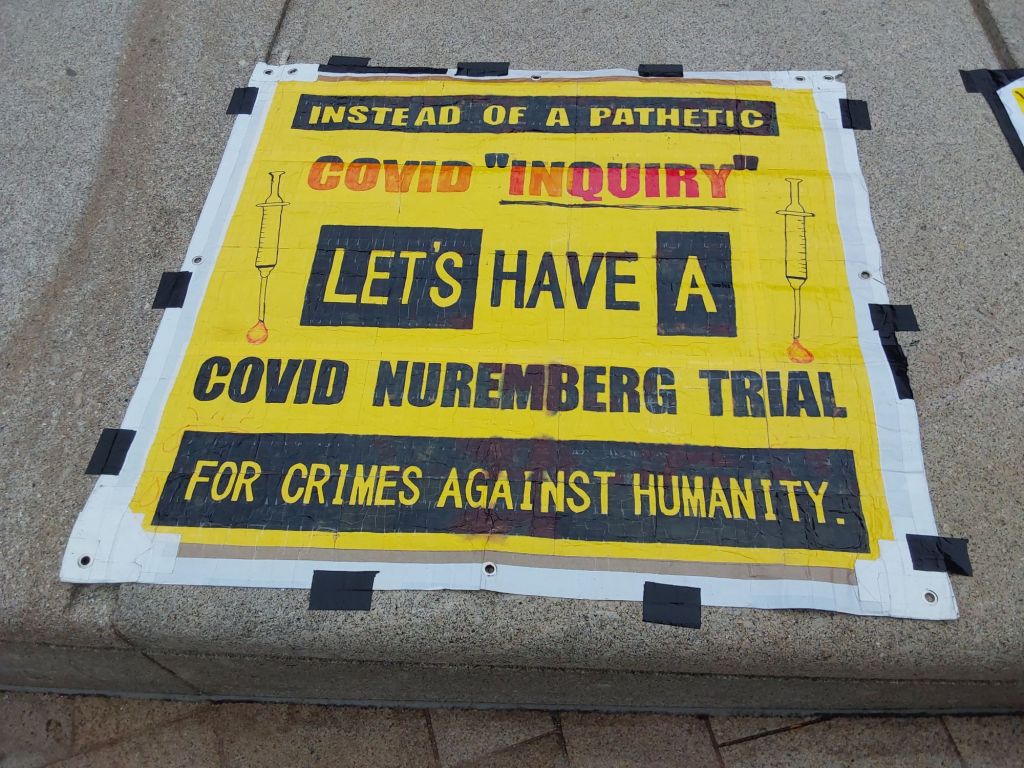



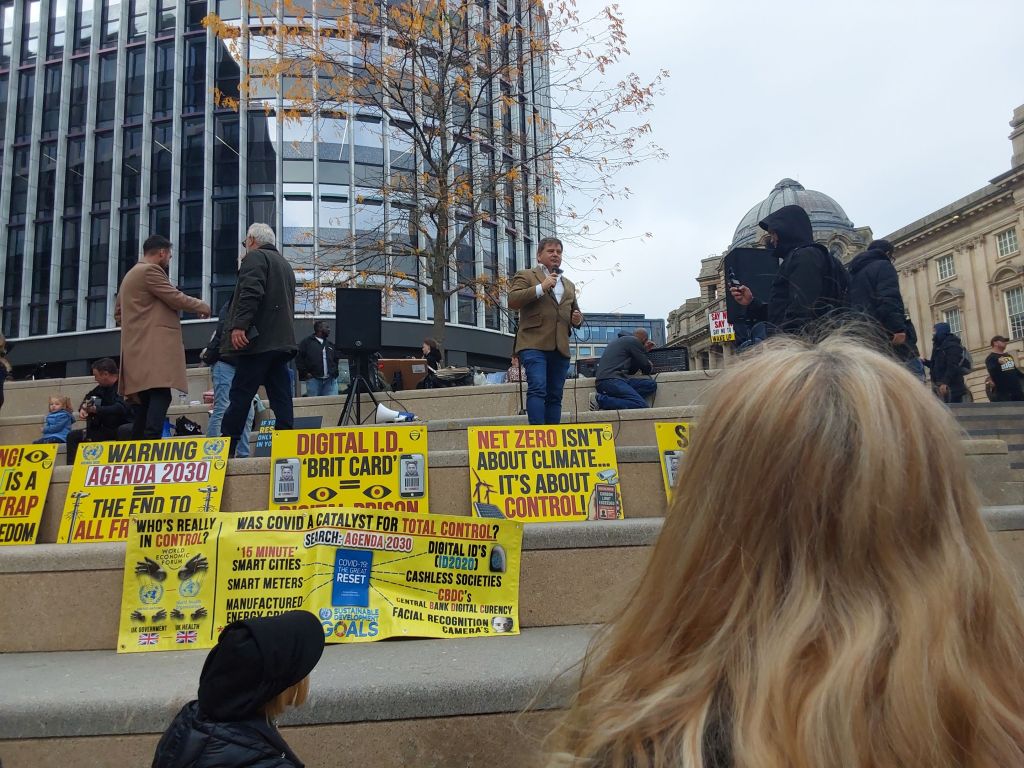

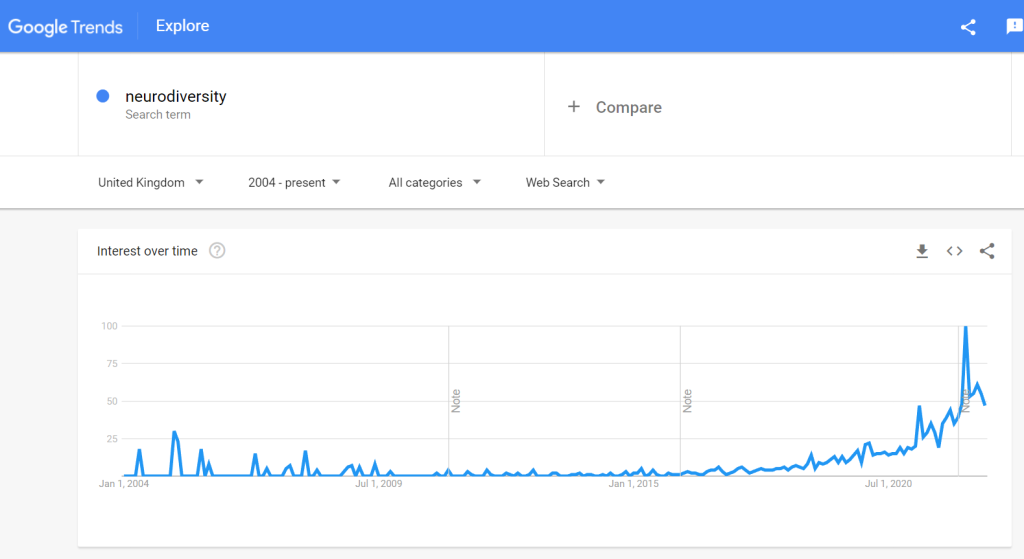
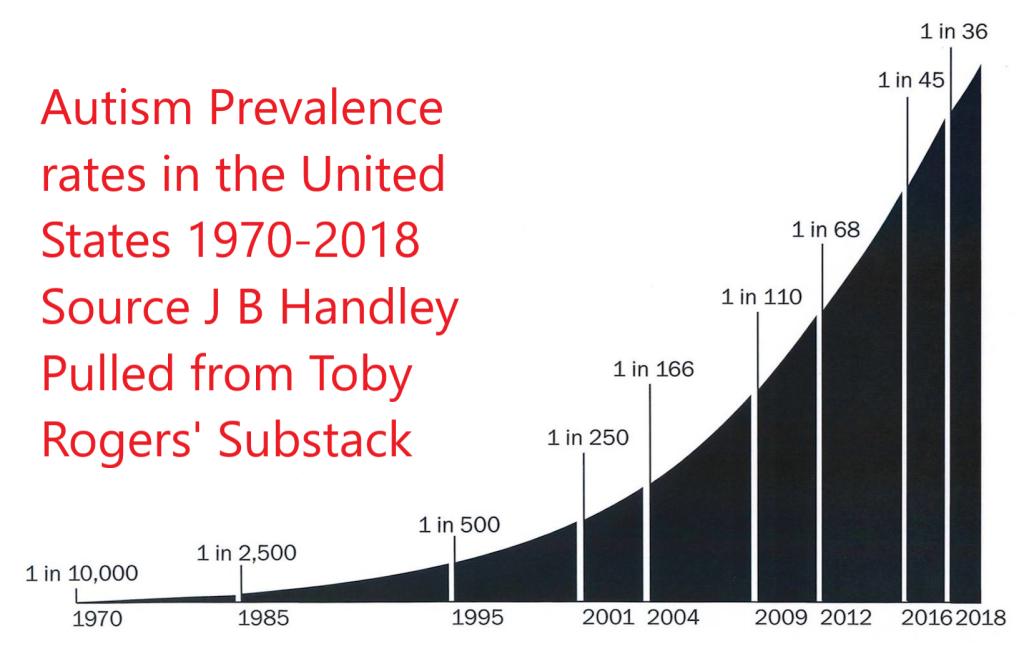


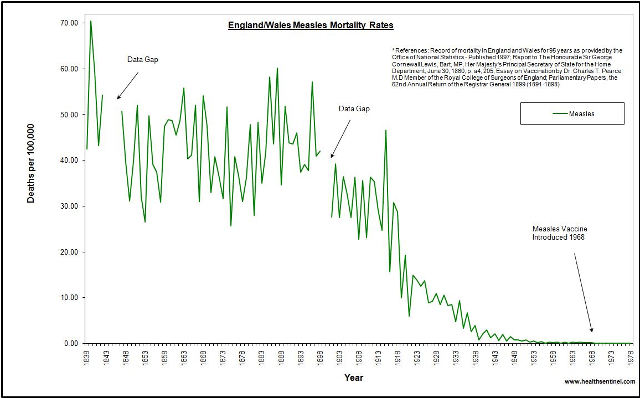



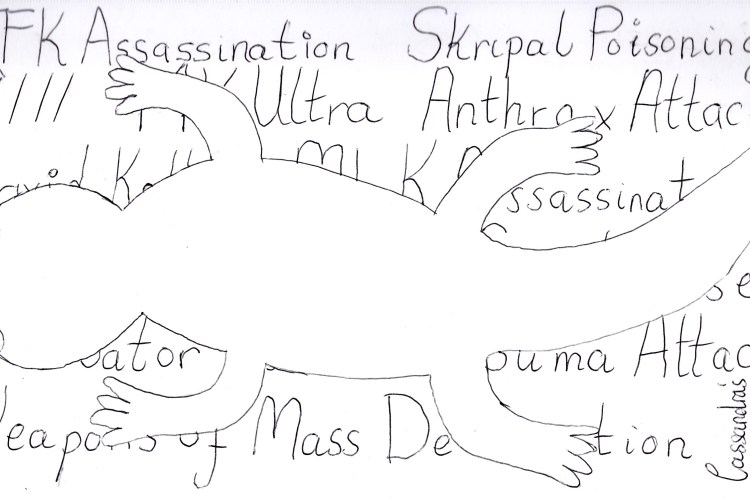
 Cassandra's Box
