The Actual Historical Practice of Vaccination

I have mentioned in previous articles the cult of sterility and cleansing that exists as part of the practice of vaccination. Images such as the white coat, sterile room, mask, etc. promote the idea of the sterile and cleanliness.
The receipt of the injection is a cult ritual. It is a sacred act. One is prepared for the receipt of the injection by the doctor, the modern day priest. The clean sterile environment, free of danger, germs, serves like the stained glass of old – to induce reverence, and as a reminder of what bounty one (or one’s child) will receive for undergoing the pain of the needle – a sterile, germ free body.
The Cult of Vaccination
However, the actual historical practice of vaccination is at odds with that sterile image. One of the paradoxes of vaccination has always been that it has sought to purify via defilement, to prevent disease by invoking it. Nowadays, the process has been so sanitised that the disease is barely invoked, being a few dead particles of virus that while bringing forward horrific injuries does not create the disease it attempts to protect from.
This was not always the case. The defilement aspect was much more obvious in historical vaccination and inoculation. Historically, inoculation/vaccination was performed by taking matter from a pustule. Sometimes, the matter was preserved on another surface before being rubbed into a wound made with a lancet; on other occasions, it was rubbed directly into the wound. For example, when performing his first vaccination, Edward Jenner took matter from a pustule on the hand of a milkmaid; her hand had become infected with cowpox from milking the cow.
THE more accurately to observe the progress of the [cowpox] infection, I selected a healthy boy, about eight years old, for the purpose of inoculation for the Cow Pox. The matter was taken from a sore on the hand of a dairymaid, who was infected by her master’s cows, and it was inserted, on the 14th of May, 1796, into the arm of the boy by means of two superficial incisions, barely penetrating the cutis, each about half an inch long.
An Inquiry Into the Causes and Effects of the Variolæ Vaccinæ
Of course, this was the deliberate spread of a cow disease to humans, a fact heavily mentioned by some of the early anti-vaccinationists:
Can any person say what may be the consequences of introducing a bestial humour—into the human frame, after a long lapse of years?
Benjamin Moseley
In reality, although vaccination purported to be cowpox inoculation, there were multiple sources of ‘vaccine lymph’, with people experimenting with sheep pox, goat pox, and horse pox (Jenner believed that the cowpox came originally from the diseased heel of horses). Equine lymph in particular was significant in its usage.
For most of the nineteenth century, the kind of vaccination practiced was largely arm-to-arm vaccination. An initial set of vaccinations would have been performed direct from the cow or from a cowpoxed milkmaid who caught the infection via handling the teat. After the vaccinations had roused pustules on the arms of those undergoing the procedure, a vaccinifer could be selected to take a fresh batch of lymph from and carry on the chain of vaccinations. The vaccinifer would usually be selected by how well the vaccination ‘took’, that is the size and shape of the pustule produced, and whether it was adjudged to be a ‘good’ pustule.
This method came under criticism and was eventually banned. The replacement method ended up going back to the cow:
By referring to the cut on this page it will be seen that the living calf or heifer is first bound down on a movable tilting table, and its belly is shaved and on the clean, tender skin of a most tender part one or two hundred cuts or scratches are then made, as shown, and into these cuts or scratches is rubbed some “seed virus,” obtained directly or indirectly from human smallpox, and other known or unknown human or animal infections. Now after the calf has been inoculated as described, it is removed from the table and allowed to stand on its feet in its stall securely tied, and carefully fed and tended and allowed to remain thus for about a week, with its one or two hundred festering wounds gradually filling up with ulcerative or suppurative disease matter. At this stage the calf is now again strapped on the table for the collection of this accumulated disease matter.
Chas Higgins
What is the point of elaborating upon this information? Simply because when looked at objectively, the idea that this practice reduced disease is rather absurd. A priori, taking lymph from a pustule on another human being or an animal had the potential to spread many other diseases that were present in the vaccine lymph. There were multiple cases of syphilis from vaccination, and observed increases in infant syphilis deaths. There were contrasting views on the reasons for this rise, with Creighton seeing cowpox as essentially a form of syphilis where others believed the syphilis was spread along with the vaccine matter. Some other anti-vaccinationists, such as Alfred Russell Wallace, pointed to an increase in pyaemia (a form of sepsis) and skin diseases.
This contrast between historical and modern practices of vaccination reveals an interesting tension in the vaccine narrative. On the one hand, anyone would have to agree that the above procedures are unsanitary and dangerous, especially pro-vaccinationists, since they lived in morbid fear of the Covid virus, a disease much milder than smallpox or syphilis. On the other hand, any pro-vaccinationist would also argue that Jenner’s smallpox vaccine, and thus the procedures described above, reduced disease and death.
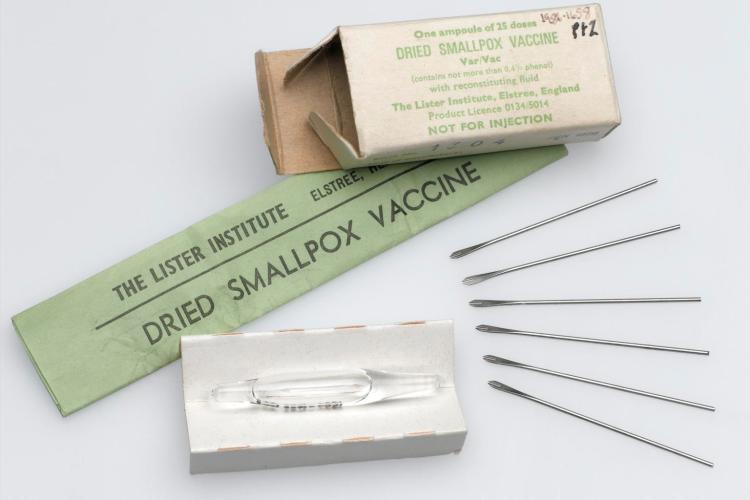
(Image via Openverse)

 Cassandra's Box