This series hopes to explore the history of British Antivaccinationism and Vaccine Scepticism. It is divided into 7 main eras: the period of Inoculation, 1721-1798; the introduction of vaccination, 1798-1853; the imposition of mandates, 1853-1898; the remaining history of the National Antivaccination League, 1898-1972; DTP Vaccine Scepticism 1972-1998; Andrew Wakefield and vaccines cause autism, 1998-2019, and Covid 19, 2020 to present. This section will look at the resistance from ordinary people to vaccination during the late 19th century.
Working Class Antivaccinationism
It had long been pointed out by antivaccinationists that the 1853 mandate was a piece of class legislation. Fines associated with non vaccination were easily payable by wealthy vaccine resistors, but ordinary resistors faced distraint (forced selling of their property) or prison.
Working class antivaccinationists saw vaccination as an attack and a threat to their bodies. They feared a threat to their employment (mandatory vaccination for employment), due to individual cases of employers attempting to force vaccination on their staff, particularly during an outbreak.
Working class people saw vaccination as an assault on their families. During the late nineteenth and early twentieth century, there was a belief among the elite that working class parenting, particularly working class mothering, was inadequate. Working class women were demonised for working (even though economic survival of the family depended on their income) and were seen as failing to contribute good children to a strong British race (see Anna Davin’s Imperialism and Motherhood). Working class people also perceived vaccination as a means of portraying their children as inherently diseased, and thus demonising them as the problem.
Vaccination was also linked to the New Poor Law, which compelled people into the workhouse if they were unable to find sufficient work to survive. The 1840 act which provided free vaccination was done via the Poor Law. Staff who were working in the vaccination program also worked in Poor Law administration. This associated vaccination with pauperism, a connection resented by working class people.
Resistance was associated with the East End of London, as well as certain working class towns, such as Leicester and Gloucester. It was also linked to other working class self improvement movements, such as the temperance movement. Examples of non compliance, other than the obvious refusing to vaccinate, included treating distraint sales as a protest venue, and physical assault against vaccination officers. (For more information about working class antivaccinationism, see the article ‘They Might as Well Brand Us’ by Nadja Durbach).
The largest display of resistance would occur in Leicester in 1885.
The Leicester Protest
Leicester was a hub of vaccination resistance. Antivaccinationist J. T. Biggs gives a very long account of Leicester and how the quarantine methods they employed after the 1871 smallpox outbreak were more successful than vaccination. Most of the city lost faith in vaccination after 1871, and there was a large amount of non-compliance with the vaccination edicts.
In 1885, there was a large protest against the mandatory vaccination laws in Leicester. This protest advocated for individual liberty and rejected the state control of working class children. Mothers stated that they wanted to protect their children from vaccination. The procession down the streets of Leicester included a horse and cow as the representations of vaccine lymph, furniture (as a representation of the distraint sales mentioned above) and an effigy of Edward Jenner. Further meetings also took place after the protest, stating the continued intent to resist vaccination.
Conclusion
Today, antivaccinationism is often portrayed by vaccinationists as a ‘privileged’ position advocated for by primarily middle-class mothers. If we look at history we can see this is far from the case and that many ordinary people were committed antivacciantionists.
This series hopes to explore the history of British Antivaccinationism and Vaccine Scepticism. It is divided into 7 main eras: the period of Inoculation, 1721-1798; the introduction of vaccination, 1798-1853; the imposition of mandates, 1853-1898; the remaining history of the National Antivaccination League, 1898-1972; DTP Vaccine Scepticism 1972-1998; Andrew Wakefield and vaccines cause autism, 1998-2019, and Covid 19, 2020 to present. This section forms part 3.2 looking at three main antivaccinationists active in the late nineteenth century, William White, Charles Creighton, and Edgar Crookshank.
William White
White authored a book called Story of a Great Delusion in 1885, looking at the history of inoculation and vaccination from an antivaccinationist perspective. It covers the entire period from the introduction of inoculation up to what was then the present day.
The book is primarily a historical account and he goes into detail not just about Jenner but the research of other important vaccinationists, such as George Pearson, another notable doctor, and William Woodville, doctor at the Smallpox Hospital in London. It explores their tense relationships and goes into more detail about Jenner’s personality (he had a significant habit of falling out with those who mostly agreed with him).
He also goes into the history of the government role in vaccination, such as the provision of vaccine lymph by the National Vaccine Establishment, and how £3,000 was budgeted for lymph, as an attempt to spread vaccination among the poor. He argues that Jenner’s ability to argue with everyone was one factor why government intervention was necessary to ensure the continuation of vaccination, rather than a reliance on private institutions.
He covers the introduction of the vaccine mandate – essentially the increasing intertwining between vaccination and government – and the introduction of ideological vaccine resistance, such as the founding of The Anti Vaccinator pamphlet by John Pickering.
Throughout the book he does make some arguments explaining why vaccination is a flawed practice, such as that it simply exchanges one disease for another while not decreasing death rate and that vaccine compulsion is purely about medical industry profit, rather than effectiveness. White believed the ineffectiveness of vaccination had been well demonstrated by the mandate introduction in 1853.
Charles Creighton
Dr. Creighton was a physician of note in the late nineteenth century, who completed a famous work on the history of epidemics in Britain. He was primarily interested in medical history rather than being a practicing doctor.
The story of how Dr. Creighton became an antivaccinationist is rather interesting. He was approached by the Encyclopedia Britannica to write an article on ‘Vaccination’ for their new edition. Feeling it was only justified to research the topic if he was going to write about it, he did – and became an ardent antivaccinationist. Perhaps surprisingly, the Encyclopedia agreed to publish whatever he wrote, so that edition ended up containing an antivaccinationist account.
He wrote two books condemning vaccination in 1887 and 1889.
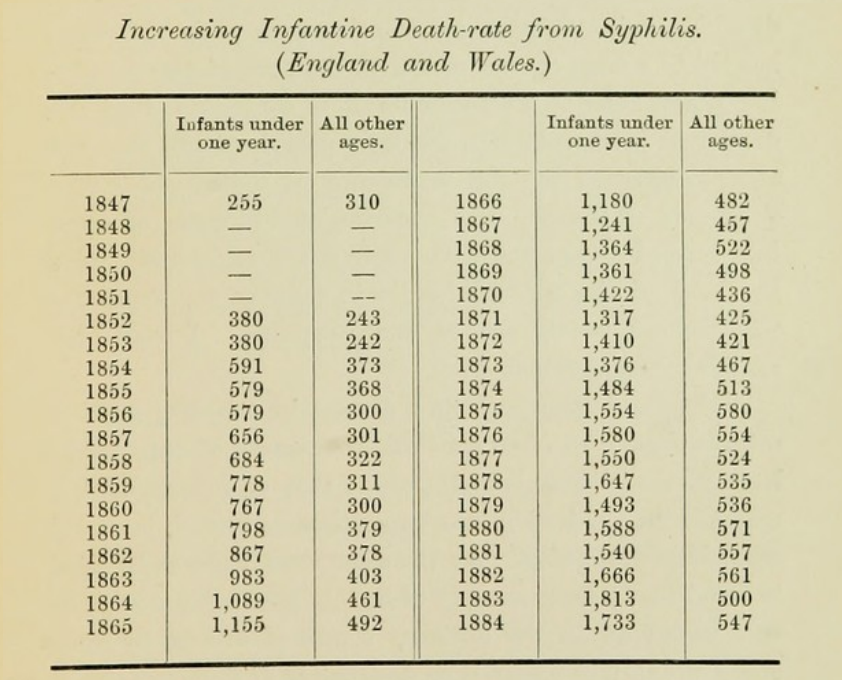
His book Cowpox and Vaccinal Syphilis goes into great detail on the topic of vaccine lymph. This included the historical disputes between Jenner and Woodville, and whether the two sources were equivalent. Jenner had issues obtaining cowpox lymph for vaccination, and this whole issue tied into the debate about ‘spurious cowpox’, which was one of Jenner’s excuses for vaccination failure. The primary argument in the book in terms of the dangers of vaccination is that cowpox is completely unlike smallpox, and is actually closer to syphilis (which was historically known also as ‘great pox’). There had been an increasing number of deaths from infantile syphilis after the vaccine mandate was introduced. In Creighton’s view, cowpox was causing this syphilis increase.
Jenner and Vaccination is a more general work on vaccination as a whole. He argues that Jenner used sleight of hand to redefine cowpox as variolae vaccinae (which literally means, cow smallpox). This manipulation led people to accept similarities between the two diseases that did not exist. Jenner also defined cowpox as a mild disease despite significant issues of ulceration to gain support for vaccination. He also argues that because Jenner used a very mild form of inoculation (deliberate infection with smallpox) to ‘test’ whether or not the vaccinated had immunity, this led to false claims of immunity. The mild (known as Suttonian, after Daniel Sutton) method of inoculation caused only a small effect anyway, so it having little to no effect after a cowpox inoculation proved nothing. He also mentioned the redefinition of smallpox as chickenpox after vaccination to avoid accusations of vaccine failure.
Creighton became involved in the National Anti-Vaccination League, and ended up being excluded from the mainstream medical community.
Edgar Crookshank
Crookshank published two volumes addressing vaccination in 1889. The second volume is a compilation of essays about vaccination and varying vaccination experiments performed by its advocates. As such we will focus on the first volume as that contains Crookshank’s actual arguments.
History and Pathology of Vaccination makes several arguments. One of the most interesting is Crookshank’s analysis of Jenner’s two different versions of his original paper on vaccination. Jenner originally tried to publish a paper on vaccination in 1796 via the Royal Society, but they rejected the paper. Instead, Jenner published the paper himself in 1798. There are significant differences between the two. Jenner did add more experiments and cases in an attempt to bolster his argument (the original paper had only contained the vaccination of James Phipps, one case). He also sought to tone down the negative effects of cowpox in the new paper, and attribute issues with the disease as incidental effects not directly caused by cowpox/vaccination.
A second argument made by Crookshank is to discuss all the different sources that were used as vaccine lymph, explored further in this post.
Conclusion
This period was the height of Britain’s history of resistance to vaccines, and this included the number and intelligence of those resisting vaccination. There are many critics who I have not covered, also active during this time, such as William Tebb and Alfred Russel Wallace. But there was more than intellectual resistance – there was popular resistance from the working class, the topic of the next article in this series.
This series hopes to explore the history of British Antivaccinationism and Vaccine Scepticism. It is divided into 7 main eras: the period of Inoculation, 1721-1798; the introduction of vaccination, 1798-1853; the imposition of mandates, 1853-1902; the remaining history of the National Antivaccination League, 1902-1972; DTP Vaccine Scepticism 1972-1998; Andrew Wakefield and vaccines cause autism, 1998-2019, and Covid 19, 2020 to present. Because most active resistance to vaccination is clustered in this period between 1853 and 1902, Part 3 will have three sub-parts, discussing initial intellectual resistance in John Gibbs and Charles Pearce, the later intellectual resistance of William White, Charles Creighton, and Edgar Crookshank, and popular class resistance.
The Vaccine Mandate
In 1853, the United Kingdom introduced mandatory smallpox vaccination. There was a fine of 20 shillings introduced for non compliance. William White covers the introduction of this mandate in detail in his 1885 book, Story of a Great Delusion. According to White, the mandate was introduced because of the organised interests of the medical profession. There was a lack of discussion on the bill in Parliament, and White states it was an “act for application to the vulgar”, i.e. the working classes. In 1861 and 1867, the level of compulsion was increased, the 1867 amendments made non vaccination a continuous offense and gave the state the power to impose multiple fines.
Prior to the mandate, there was no organised antivaccinationism. There was personal distrust of vaccination among people, particularly the working class, and an apathy of not pursuing vaccination. The mandate triggered new wave of intellectual antivaccinationism, as well as popular vaccination resistance.
John Gibbs
John Gibbs was one of the first to write pamphlets against the vaccine mandate. In 1855 he wrote a letter opposing the mandate. He argued that the mandate was an attack on liberty, and that legislators freely admitted their ignorance on vaccination – relying only on the opinions of the medical profession to pass the bill. He argued that there were statistical issues with the case for vaccination, as there was evidence that smallpox was simply replaced by other causes of death and that there was no decline in the death rate due to vaccination. He also pointed to other diseases spread by vaccination, such as erysipelas (a form of skin rash and swelling), tuberculosis and syphilis.
He drew attention to the moral issues with government forcing a medical intervention on the people and that this opposed self responsibility. Vaccination was in his view “a state religion in physic”.
Charles Pearce
Charles Pearce was an editor of a medical journal, who received papers from Gibbs, and as a result became an antivaccinationist. In 1868, he authored the short book, Vaccination Its Tested Effects, arguing that “vaccination is a crime against nature”.
Pearce points to the theory behind vaccination, that is the idea that cowpox and smallpox are “governed by the same laws” as an error believed by Jenner. He argues that vaccination is not even practised according to Jenner’s theory, since Jenner believed in a chain from horse-cow-human. Vaccine lymph had been spread from human to human for many decades at this point, and had not been anywhere near passage via a cow. He also pointed to the introduction of revaccination as a contradiction to Jenner’s theory of life long protection from vaccination.
He argued that smallpox vaccination did not save lives, by arguing that smallpox increased longevity if you survived, by the fact that there was an increase in mortality from measles after compulsory vaccination was introduced, and that smallpox vaccination could spread syphilis. He points out that there were ups and downs in smallpox due to the laws of epidemics. He believed sanitation and hygiene were the best methods to combat smallpox mortality.
Conclusion
There was increased intellectual resistance to vaccination after the smallpox vaccine mandate was introduced. This would continue to develop further, and British antivaccinationism would reach its peak between 1880-1902 with the cases made by William White, Charles Creighton and Edgar Crookshank against the practise.
The Smallpox Myth is the foundational legend of vaccinology. As goes the story, Edward Jenner realised that cowpox, a disease of the cow’s teat, provided protection against smallpox infection. It came into mass use across the nineteenth century and was mandated in a large number of countries. However there are a number of questions that can be asked regarding this foundational myth, and evidence against the hypothesis that smallpox was eliminated by vaccination.
How Deadly Was Smallpox?
One of the fundamental claims of vaccinology is that smallpox was an extremely dangerous disease that ravaged the world before vaccination. In reality, while smallpox did kill a lot of people, there is more nuance to this discussion. There are two points to consider: was smallpox any more dangerous than any other kinds of zymotic disease (a term historically used to mean eruptive fevers, infectious diseases as a class) and to what degree, and did smallpox cause excess death in epidemic years?
Taking the first question, pro-vaccinationists take the death rate of smallpox to be very high. Jurin, a figure who could be considered an early statistician of sorts in the 18th century and pro-inoculator, argued that around 1 in 6 smallpox infections resulted in death. The accepted figure by the end of the 19th century became around 18%. This is a very high rate. Of course this assumes a smallpox infection occurs, when there were many people who died without ever being infected with smallpox – which means we need more evidence than case fatality rate.
Bills of mortality recorded in London offer some evidence on this score. They show varying death rates from smallpox, depending upon whether it was an epidemic year for smallpox.
However, London data is not extrapolatable to the rest of the country. This is because London was much less sanitary than rural areas and had much higher population density, both of which facilitated the spread of smallpox and a high death rate. This is one of the main problems with the pro-vaccinationist argument – they ignore the conditions in which smallpox existed. Death rates in areas where statistical recording was less fastidious are unknown.
Death Rates from Diseases: Did Smallpox cause Excess Death?
Zymotic diseases were a rampant cause of death in the 17th and 18th centuries in cities due to the terrible sanitation and poor quality diet present in those environments. Was smallpox any worse than any of these other eruptive fevers spreading in unsanitary filth? The key question here is whether smallpox epidemics caused excess deaths, that is deaths above and beyond the average, or whether these deaths were largely interchangeable between different diseases. In order to examine this, we can look at smallpox epidemic years and see whether the overall deaths were any worse than non smallpox epidemic years.
Charles Pearce, in his book Vaccination Its Tested Effects, produced tables to show that vaccination did not lower overall death rates and that other epidemics killed as many or more due to common factors such as poor sanitation and overcrowding. William White argues that Dr. Robert Watt had demonstrated that there was in interchangeable nature to diseases as early as 1813 in Glasgow. This is important since even if vaccination was highly effective if those living in poor conditions would simply die of another disease, vaccination cannot be said to have saved lives.
The Nature of ‘Vaccine Lymph’
One of the main theoretical problems in asserting that vaccination abolished smallpox is the nature of vaccine lymph. Although the simple version of history (and the name itself) tells us that vaccine is cowpox lymph, in reality this is oversimplified.
Many different substances were used as vaccine lymph. One of the most common was to use horsepox instead of cowpox, and this lymph was used by high profile vaccinators and was in wide circulation. Another type of vaccine lymph was smallpox passed through the cow, because they believed that cowpox was smallpox somehow modified via passage through the cow. Other sources were sampled, such as sheep pox and goat pox. So long as the vaccine source raised a correct ‘Jennerian vesicle’ it was considered protective.
The use of various sources for vaccine lymph creates difficulties in believing in its effectiveness as it is difficult to argue that all the extracted sources are equivalent and thus equally protect against smallpox.
Sanitation Acknowledged – But Ignored in the case of Smallpox
There was some decline in deaths from all forms of eruptive fevers throughout the nineteenth century. This was generally due to sanitary reform that ameliorated the terrible conditions created by city living and the Industrial Revolution. Most people would acknowledge that sanitation was the cause of this decline, but dissent when it comes to smallpox. This is inconsistent logic.
Did Smallpox Decline at the Beginning of the 19th Century Due to Vaccination?
Vaccinationists point to a decline at the beginning of the 19th century as a reason to believe that smallpox declined due to vaccination. However this is flawed logic for a few reasons.
Firstly, it is possible that smallpox declined indirectly due to vaccination. Previous to vaccination, inoculation had been used (that is, deliberately infecting people with smallpox). This practise caused the spread of smallpox in some cases and introduced it to areas where it was not present. The use of cowpox, horsepox, and whatever other substances used for vaccination, regardless of their problems, were not capable of spreading smallpox. This meant that replacing inoculation with vaccination reduced the spread of smallpox but this had nothing to do with the effectiveness of the practise.
The second issue with this logic is that vaccinationists generally argue that most of the population has to be vaccinated for it to work, they call this herd immunity. Yet, whether the majority of the population was vaccinated at that time is a highly dubious proposition. Vaccination spread quite rapidly among the elite in Britain, but the working classes were a different matter. While there were some attempts by Jenner’s followers to offer free vaccination to the poor, it is doubtful this reached the 90-95% of the population required by vaccinationist claims of herd immunity. White shows evidence that under the first few years under the National Vaccine Establishment, which provided vaccination free of charge to the poor, that births far outstripped children vaccinated. This shows many working class people were not even bothering with free vaccination.
The 1871 Smallpox Outbreak
There was a very large smallpox outbreak across Europe in 1870-71. Focusing in on the United Kingdom, mandatory vaccination had been in force since 1853, nearly 20 years. Due to this policy the majority of children were vaccinated, although there were some conscientious objectors. Working class families could generally not afford the fines associated with vaccination refusal, particularly after the mandate was made more stringent in 1867.
Vaccination did not prevent this outbreak. Pro-vaccinationists tend to argue that this outbreak started with the unvaccinated, but this is not relevant. If vaccination was protective, it would not matter if the outbreak started with the unvaccinated, as the vaccinated should be protected regardless if it was effective.
The Case of Leicester
Leicester – a city in the United Kingdom – turned against vaccination after the 1871 smallpox outbreak. Most children in the city were no longer vaccinated, and in 1885, there was a huge protest against the mandatory vaccination law introduced in 1885. Instead Leicester practised quarantine to reduce smallpox infections.
Vaccinationists would predict that Leicester would have severe smallpox outbreaks and a high number of deaths. However, this was not the case. J. T. Biggs, in his book Leicester: Sanitation versus Vaccination, explained how the statistical evidence showed Leicester outperforming other more vaccinated areas in death rates.
Vaccination Declines – So Does Smallpox
After the vaccination mandates were loosened in the early 20th century, vaccinationism would predict a resurgence in smallpox. However, this did not occur. In fact, smallpox continued to decline.
Conclusion
The case for vaccination eliminating smallpox – one of the central myths of vaccinationism – is much weaker than vaccinationists would like to suggest.
This series hopes to explore the history of British Antivaccinationism and Vaccine Scepticism. It is divided into 7 main eras: the period of Inoculation, 1721-1798; the introduction of vaccination, 1798-1853; the imposition of mandates, 1853-1902; the remaining history of the National Antivaccination League, 1902-1972; DTP Vaccine Scepticism 1972-1998; Andrew Wakefield and vaccines cause autism, 1998-2019, and Covid 19, 2020 to present. This section forms part 2 looking at Jenner and his critics.
The ‘Discovery’ of Edward Jenner
In 1796, Edward Jenner performed his first vaccination. This was on an 8 year old boy called James Phipps. In this experiment, Jenner inserted into the arm of the boy matter from the teat of a cow with cowpox using a lancet. Cowpox was a disease of the cow’s udder, which caused pustules to appear on that area. It was transmitted to humans via the action of milking a diseased udder.
Jenner’s justification for doing this was that cowpox allegedly prevented smallpox. There had long been a rumour among dairy maids that they could not contract smallpox, if they had contracted cowpox. In fact, the official story or mythology of Edward Jenner states that he overheard this idea from a dairy maid when he was a teenager and was taken with testing it (this is narrated by Jenner’s sycophantic biographer, John Baron).
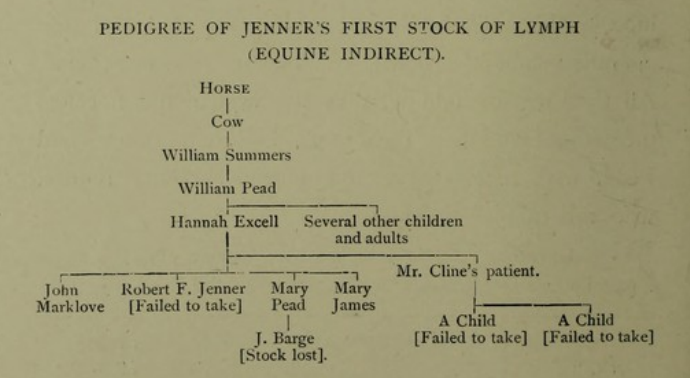
Jenner became a country doctor in Berkeley, Gloucestershire. He became a member of the Royal Society after writing a paper about cuckoos that was accepted. In 1796, when Jenner performed his first inoculation with vaccine virus (later known as vaccination) he wrote a paper outlining his theory of the origins of cowpox (he believed that it originally came from the horse, and was transferred to the cow via those who dressed diseased horse heels). He then outlined the theory that the cowpox infection prevented the smallpox infection. He used some examples of those he met in his practice who had had a cowpox infection, on whom inoculation (deliberate infection with smallpox) would not ‘take’. The failure of inoculation to take was interpreted as immunity to smallpox. He also outlined his test on James Phipps, first inserting cowpox matter and several weeks later performing inoculation on the boy. As the inoculation did not take Jenner interpreted this as proof of immunity.
The Royal Society rejected Jenner’s paper. They believed it did not have enough evidence to support it and that it might tarnish Jenner’s reputation. Jenner was still determined to publish, so he added more evidence – increasing the number of cases of vaccination. (A detailed discussion of the differences between Jenner’s first and second versions of the paper can be found in Crookshank’s book). He published it in 1798.
Pearson and Woodville
Two important figures took up Jenner’s vaccination idea, George Pearson and William Woodville. Both these doctors were vital in spreading the practise of vaccination and backing it ideologically.
William Woodville was the lead doctor at the Smallpox Hospital in London, so it can be imagined that he had significant influence over the treatment and prevention of smallpox. He took to the idea of vaccination and ran a significant number of tests. Woodville’s tests had many flaws, in particular that he sometimes attempted cowpox and smallpox inoculation very close together. However his testing was more extensive and better documented than Jenner’s.
Pearson sought to set up an institute for vaccination. This annoyed Jenner, as he was not consulted in advance regarding the project. Pearson also distributed vaccine lymph early on in the process to allow other doctors to perform vaccination, which was important as Jenner did not have vaccine lymph to give out on many occasions.
Jenner had a significant number of supporters in the medical profession. When he was put forward for a government reward in 1802, a large number of doctors spoke in his favour. The profession adopted Jenner’s theory very quickly, and it spread widely. This included across Europe, the United States, as well as many colonised countries.
Jenner’s Critics
Jenner had three main critics of his theory when it was first published. These three men were Benjamin Moseley, John Birch, and William Rowley. None of these men were antivaccination in the sense that we would understand this term today, i.e. they were not opposed to all artificial inculcating of disease. They were supporters of the old method of inoculation and sceptical of Jenner’s attempt to replace it. At this time, there were no high profile critics of both inoculation and vaccination (this tendency would only develop post vaccination mandate, from 1853).
These three men opposed the award to Jenner by the British government during the hearing on this issue in 1802.
Benjamin Moseley
Moseley was a doctor who was well known for other writings prior to his involvement in the vaccination controversy, in particular writings relating to the Caribbean.
He opposed Jenner’s method early on, and published more than one book relating to the issue. He considered that a ‘cowpox mania’ had taken over the medical profession. In his book, A Treatise on the Luis Bovilla, Or Cow Pox, he made several arguments. He stated there was no affinity between cowpox and smallpox, so there was no specific property of cowpox which meant it could prevent smallpox. He also argued that cowpox was not necessarily a mild disease. He pointed to the ulceration that often accompanied the practise.
John Birch
John Birch was a surgeon who was opposed to vaccination. In his text, Serious Reasons for objecting to the Practice of Vaccination he discusses the Royal Commitee on Vaccination. He argued that there was a large number of vaccine failures but that most of these were not admitted, and that the Committee tried to soften the language by stating that these cases only apparently had cowpox.
William Rowley
William Rowley was an active practitioner of inoculation. As such it could be said that he had a degree of vested interest in defending the practise against the new threat of vaccination. He considered inoculation to be a very safe practise that rarely led to death when performed competently. Vaccination, on the other hand, he considered both dangerous and ineffective.
Rowley authored a work called ‘Cow Pox No Security Against Smallpox Infection‘. This book has been considered a target of mockery by vaccinationists due to a couple of the images included in the book. These images claimed to show vaccination injuries, but as Rowley had titled one of them ‘The Ox Faced Boy’ he was mocked for making a linkage between vaccination and people becoming bovine.
Rowley actually collected a large number of cases, including with address details so at the time they could be checked, of vaccination injury, death, and cases of smallpox after vaccination.
He also provides an extensive list of excuses used by vaccinationists to defend their theory. These included the theory of ‘spurious cowpox’, which was outlined by Jenner in his second essay on cowpox. The idea of a ‘real’ and a ‘spurious’ cowpox allowed any cases of failure to be assigned to a spurious vaccination. He also accused vaccinationists of misdiagnosis of cases of smallpox in vaccinated people. He also states that vaccinationists formulated the excuse that even if cowpox failed to prevent the disease, it made it milder.
Conclusion
Vaccination had some significant opposition. However, it is fair to say that it had very little ideological opposition at this time. Its opponents thought it was unsafe and ineffective but advocated the earlier practise of inoculation instead rather than rejecting both. Well founded ideological opposition to vaccination would have to wait until after 1853 – the year of the UK’s smallpox vaccine mandate.
This series hopes to explore the history of British Antivaccinationism and Vaccine Scepticism. It is divided into 7 main eras: the period of Inoculation, 1721-1798; the introduction of vaccination, 1798-1853; the imposition of mandates, 1853-1902; the remaining history of the National Antivaccination League, 1902-1972; DTP Vaccine Scepticism 1972-1998; Andrew Wakefield and vaccines cause autism, 1998-2019, and Covid 19, 2020 to present. This section forms part 1, looking at the inoculators and their critics.
The History of Inoculation
Inoculation was the practise of deliberately infecting someone with smallpox. The theory behind the practise was that a person could only get smallpox once, and would then get what we would call natural immunity. Although this concept was not understood, it was observed that smallpox was only contracted once. As such, by selecting the time and place of infection, and by carrying out additional practices such as the following of certain diets, smallpox could be rendered a milder disease with a greater chance of survival.
Lady Mary Wortley Montagu observed the practise of inoculation in Turkey and had one of her children inoculated while over there. She introduced the practise to her physician, Charles Maitland, who was taken with the idea and began to practise inoculation on willing members of the elite. There was a brief fad for this practise initially, but the first wave of enthusiasm died out quite quickly, and the number of inoculations performed was still very small. Some doctors tried to collect scientific data relaying to inoculation, such as Jurin, who attempted to figure out the death rate from inoculation versus the death rate from natural smallpox infection – he calculated it at about one in 50 for inoculation versus 1 in 6 for the natural disease. On this basis, he argued for the supremacy of inoculation but acknowledged that it had some risk.
Inoculation became more widely practised later on in the 18th century and particularly in the second half of that century, with the rise of the Suttonian method of inoculation, which was less harsh on the body. Daniel Sutton was able to widely promote his method among elites, and inoculation became more popular. The Suttonian method was that in practise before it was replaced by the cowpoxing method associated with Edward Jenner.
The Masseys – The Original Anti Vaccinationists
In response to the introduction of inoculation, two men, Isaac and Edward Massey, brought objections to the table against the new practise. They could be considered the original antivaccinationists. Each of the Masseys put forward a different approach to the issue.
Edmund Massey’s religious objections
Edmund Massey was a Christian clergyman at a church in London, and he objected to inoculation on religious grounds. He preached a notable sermon in 1722 against the new practise which was distributed in written format. The first argument he uses against inoculation is that it is forbidden for man to deliberately inflict disease. He states that while the Bible furnishes examples of men healing when given divine power, there are no examples of men directly inflicting disease. Instead, God inflicts disease to test people’s faith and to punish sin. He raised the book of Job as an example of this.
Isaac Massey’s scientific objections
Isaac Massey raised scientific objections to inoculation. He was an apocethary (which was quite vaguely defined but involved working in the medical profession). In his book, A Short and Plain Account of Inoculation, he raised several different scientific objections to the practise. For example, he claimed that those who were inoculated were not necessarily getting genuine smallpox. He pointed out that it was an uncertain procedure, despite the claims of the inoculators to the contrary that factors such as age and the time of year can be controlled.
He stated that inoculation was ‘a disease of their own making and procurement’. He argued that when true smallpox is spread by inoculation, it can also spread to other people, such as in the case of the inoculation of Mary Batt, which spread smallpox and led to the death of a servant. He argued for living a sober lifestyle as a means to reduce the risk from smallpox.
In his book addressing Jurin’s statistical claims, he argues that Jurin did not allow for factors such as age, disease and poverty when calculating comparative death rates. Most who would have been inoculated when Massey was writing would have been elites, who would have had a better rate of survival from natural smallpox due to more adequate nutrition and being less likely to live in complete squalor. He thus considered that Jurin was not comparing like with like. He also pointed out that inoculation may spread other diseases. He pointed out that the initial claims of the inoculators was that the procedure was harmlessly and that this had to be revised when deaths occurred.
Conclusion
The objections to inoculation did not prevent the practise from eventually becoming widespread in certain elite circles. Inoculation formed the ideological basis for Jenner’s much more well known vaccination practise.
Smallpox vaccination was said to prevent infection with smallpox. However, there is a significant practical difficulty with this argument, aside from statistical evidence and anecdotes of vaccine failure. This is the nature of ‘vaccine lymph’ itself. Although ‘vaccine lymph’ is often considered to be cowpox, the history is a lot more complicated than this, with multiple different lymph sources in circulation. This poses a theoretical problem for those who argue that vaccination prevented smallpox, since they then have to argue that all these sources are equivalent, but this is unlikely.
Horse Grease Cowpox or Spontaneous Cowpox?
Edward Jenner argued that there was more than one form of cowpox in his essay the Inquiry. His Inquiry starts with a description of a disease of the horse, the grease, which he claims is spread to the cow:
In this Dairy Country a great number of Cows are kept, and the office of milking is performed indiscriminately by Men and Maid Servants. One of the former having been appointed to apply dressings to the heels of a Horse affected with the Grease, and not paying due attention to cleanliness, incautiously bears his part in milking the Cows, with some particles of the infectious matter adhering to his fingers. When this is the case, it commonly happens that a disease is communicated to the Cows, and from the Cows to the Dairy-maids, which spreads through the farm until most of the cattle and domestics feel its unpleasant consequences.
Jenner is clear in this text that the protection comes via the horse, through the cow, to man.
Jenner distinguishes this from spontaneous cowpox, which he considers not protective from smallpox:
It is necessary to observe, that pustulous sores frequently appear spontaneously on the nipples of Cows, and instances have occurred, though very rarely, of the hands of the servants employed in milking being affected with sores in consequence, and even of their feeling an indisposition from absorption. These pustules are of a much milder nature than those which arise from that contagion which constitutes the true Cow Pox. […] But this disease is not be considered as similar in any respect to that of which I am treating, as it is incapable of producing any specific effects on the human Constitution. However, it is of the greatest consequence to point it out here, lest the want of discrimination should occasion an idea of security from the infection of the Small Pox, which might prove delusive.
So here we have two forms of cowpox. One protects from smallpox, and one does not. Presumably, the lymph used by Jenner in his vaccinations outlined in the Inquiry was horse grease cowpox.
So where did his next set of lymph come from? Enter William Woodville.
William Woodville was the lead doctor of the Smallpox Hospital in London and interested in Jenner’s method. He was able to obtain lymph for vaccination from a cow in Grey’s Inn Lane, London. Woodville had been previously unable to directly inoculate horse grease on the cow’s teat.
Be it observed, however, that this London cowpox was not Jenner’s cowpox. It was not horsegrease cowpox, but the variety stigmatised by Jenner as spurious.
However, because Jenner had no source of lymph, the Woodville lymph became the source that was spread across the world, regardless of the fact that it wasn’t horse grease cowpox. So if we take the Jennerian distinction as legitimate, there is a significant argument that the lymph used was not protective. Even if we reject the idea that there is such thing as a horse grease cowpox, there is still the problem of which forms of lesions on a cow’s teat are protective from smallpox, since it is agreed that there is more than one form of disease on the cow’s teat.
Cowpox or Smallpox – Was Woodville’s Lymph Contaminated?
As Woodville worked at the Smallpox Hospital in London, he performed his vaccinations there. This of course meant there was a risk of a patient who may become a vaccinifer contracting smallpox, leading to smallpox being spread along with the vaccine lymph. There were also other issues with how Woodville carried out his tests. Although he ran many more tests than Jenner and was more fastidious in recording his results, in some of his cases he performed the variolous test very early on, while the cowpox pustule was still present:
Ann Pink, a tall girl, of a brown sallow complexion, aged fifteen years. This girl was inoculated with variolous matter, on the fifth day, in the same manner as Collingridge, and both tumours proceeded to maturation, though more slowly than in that case.
He then went on to use some of these cases as vaccinifers (e.g. James Crouch was vaccinated, then inoculated on the 5th day after vaccination, then used as the vaccinifer for case 21). This meant the cowpox matter may well be contaminated with smallpox matter.
As Woodville made differing observations from Jenner, regarding the eruptions on the skin, there were some cases where it seemed evident that Woodville’s patients had smallpox.
Horsepox or Cowpox: Equine Lymph Direct From the Horse
Jenner’s relationship to the horse grease theory of cowpox is not straightforward. Essentially, he advocated it initially, but then failed to mention it in his further essays, likely due to its unpopularity. For example, a notable early vaccine promoter, George Pearson, considered the horse grease part of Jenner’s ideas to be nonsense and openly said so. William White argues that Jenner did this for cynical reasons, i.e. financial gain. Later in his life, however, Jenner essentially returned to the horse and in fact used vaccination (equination?) direct rather than via the cow.
For example, he referred to using equine lymph in his correspondence:
[Mr. Melon] sent me some of his equine virus, which I have been using from arm to arm for these two months past without observing the smallest deviation in the progress and appearance of the pustules from those produced by the vaccine.
It was not just Jenner that use horsepox direct. An Italian vaccinator, Sacco, used horsepox to vaccinate.
Sacco obtained some matter from the ulcerous sores on a horse’s hocks (he gives a startling picture of huge, excavated horse sores in his Trattato of 1809), and therewith inoculated several children at the Foundling Hospital of Milan. He found that the effects were very like those of cowpox virus (as we know, in fact, that they always are) ; and, on trying the children with the variolous test, he found that they were protected just as if they had been cowpoxed.
De Carro in Vienna also used horse grease in his vaccinations.
This horse material likely ended up in wide circulation due to its usage by these prolific vaccinators.
Humanised Lymph: Did Serial Passage Affect the Disease?
As for most of the 19th century, vaccination was arm to arm, there is a possibility that passing through multiple human constitutions may have affected the disease. Essentially, this passing through multiple humans was a crude form of serial passage. In fact, people considered this in the nineteenth century as well, which is why some in the 1840s wanted to “return to the cow” and create a fresh stock of lymph (see below). They believed that the passage through multiple human constitutions had made the disease too mild to be effective against smallpox. As virologists subscribe to the idea of serial passage affecting the function of viruses, then they have to concede this is probable in the case of artificial cowpox infection. Thus the vaccine given over time is not a consistent virus but had different mutations, meaning that there is a distinct possibility of mutation away from being an effective preventative of smallpox even if Jenner’s original concoction worked (which of course, it did not).
Cowpox or Smallpox II: Smallpox Via the Cow
In the 1840s, the idea became prevalent that the lymph was no longer potent and that a stock should be raised from cows. The idea that smallpox and cowpox were the same disease became explicit (Jenner had said that horse grease was ‘the source’ of smallpox instead, although he did call cowpox variolae vaccinae i.e. cow smallpox). The reason that cowpox protected from smallpox on this view was that it was smallpox, except passed via the constitution of the cow which somehow made it milder. This idea wasn’t really explained, just asserted.
Cowpox was not a widespread disease, making it difficult to find new lymph sources. As such, there were those who attempted to deliberately infect cows with smallpox to generate these new lymph sources.
One of these men was Robert Ceely, who performed extensive experiments involving cows. He gave detailed descriptions of cowpox and also infected cows with smallpox and described the results.
Badcock was another 1840s writer, who wanted to obtain fresh lymph for vaccination:
The only satisfactory mode of obtaining, with certainty, the true vaccine that presented itself to my mind was, therefore, to inoculate a healthy cow with Small Pox matter, as the result of that operation, if any, must be cow Small Pox
Badcock used this matter for vaccination and indeed states that he vaccinated ‘several thousand’ with this lymph.
Later in the 19th century, when arm to arm vaccination was abandoned, the method of ‘pure glycerinated calf lymph’ came into vogue and emerged as the main method of vaccination. Again, this involved the deliberate infection of cows with smallpox.
The living calf or heifer is first bound down on a movable tilting table, and its belly is shaved and on the clean, tender skin of a most tender part one or two hundred cuts or scratches are then made, and into these cuts or scratches is rubbed some “seed virus,” obtained directly or indirectly from human smallpox.
Vaccinators also tried different examples of less popular material for vaccination.
One example is sheep pox:
Accordingly, when Sacco, in 1804, obtained variolous lymph from infected sheep at Capua, he gave it to Dr. Legni in the remote Sicilian province of Cattolica to try as a substitute for vaccine in the prevention of smallpox.
There were also other examples of various lymph being used – goat pox was experimented with in Madrid in 1804. Crookshank also argued that cattle plague was used for vaccine lymph in India.
The Jennerian Vesicle: The Vaccination Standard
What connects all of this? The notion of the Jennerian vesicle. Basically, the standard for ‘successful vaccination’ was whether it produced a correct ‘Jennerian vesicle’ on the arm where the matter was inserted. In other words, so long as the vesicle looked ‘correct’ the vaccination was considered to be successful. It goes without saying that this is not a scientific criteria for judging immunity to a disease. But because all these sources could raise the Jennerian vesicle, they were defended as vaccine lymph and some were widely employed.
Conclusion
The fact that so many different diseases, from so many different sources, were considered and used as vaccine lymph, poses a theoretical issue for vaccinationists. All these sources were adjudged at some point, and by some individuals to be appropriate matter for vaccination and many sources existed in circulation. Yet it is difficult theoretically to argue that all these sources were equivalent and thus, for the vaccinationist, equally effective against smallpox.
Smallpox vaccination, as practiced for most of the 19th century, was an exercise in filth spreading. It was done via arm to arm vaccination, that is by raising a pustule on one person’s arm and then using that pustule to vaccinate other people in a long chain of vaccinations which went back to an original vaccination with cow pus. This led to a significant spread of disease and vaccine death – that could be covered up by ignoring the source of the disease.
Syphilis
One disease that was spread during the practice of vaccination was syphilis.
It was of course known in the 19th century that syphilis could be spread by sexual activity and could be passed from mother to child (congenital syphilis). Over time, it became more and more obvious that vaccination could also spread syphilis, although this was denied by the authorities for many years.
Statistical evidence pointed to the increase in death from syphilis among young children under compulsory vaccination in the United Kingdom. In 1847, before compulsory vaccination, the number of deaths was 255 in England for children under 1 year. By 1884, the number of deaths had increased to 1733. The number shows a steady increase over this time period.
[Table from Creighton’s Cowpox and Vaccinal Syphilis]
There were also several anecdotes that demonstrated the possibility of syphilis after vaccination. P. A. Taylor cites cases where multiple people were given syphilis by vaccination from the same vaccinifer, for example a case where 29 out of 38 children vaccinated contracted syphilis.
Infant syphilis deaths were covered up by blaming the mother’s alleged immorality.
Tuberculosis
Tuberculosis, or consumption, was a common cause of death in the 19th century.
In the UK and Europe, consumption caused widespread public concern during the 19th and early 20th centuries. It was seen as an endemic disease of the urban poor. By 1815 it was the cause of one in four deaths in England. Up from 20% in 17th century London. In Europe, rates of tuberculosis began to rise; in the early 1600s and peaked in the 1800s when it also accounted for nearly 25% of all deaths. Between 1851 and 1910 in England and Wales four million died from consumption. More than one-third of those fatalities were aged 15 to 34; half of those aged 20 to 24, giving Consumption the name the robber of youth.
Anti-vaccinationists suspected that one of the reasons that it was so prominent was vaccination.
In all European armies, vaccination is the order of the day. On their arrival with their corps, the young soldiers are forthwith carefully revaccinated. Now, the military statistics of all countries show an enormous proportion of various forms of tuberculosis among soldiers, especially during the first and second year after their enlistment. […] To sum up, the young soldiers find with their corps material conditions of life, which, for a very large number, are superior to those of their native surroundings. […] Whence then can come these attacks of tuberculosis, so sudden, so numerous, upon subjects that, but a few months before, the council of revision rightly declared to be fit for service.
Some also believed that because cattle can be subject to tuberculosis, the ‘glycerinated calf lymph’ method of extracting vaccine matter (infecting a cow with smallpox and then extracting the matter) might pose a risk.
Leprosy
The spread of leprosy via vaccination was significant mainly in imperial possessions. As colonialism was widespread in the 19th century, one of the items imposed and cajoled onto the native populations was vaccination.
William Tebb describes the situation in Hawaii regarding leprosy. He states that it was completely unknown prior to the introduction of vaccination, but since vaccination was introduced it had spread:
In a leading article on “The Nature of Leprosy” The Lancet, July 30th, 1881, p. 186, says :—” The great Importance of the subject of the nature and mode of extension of leprosy is evident from the steady increase in certain countries into which it has been introduced. In the Sandwich Islands [i.e. Hawaii], for instance, the disease was unknown forty years ago, and now a tenth part of the inhabitants are lepers. In Honolulu, at one time quite free, there are not less than two hundred and fifty cases.”
He goes into detail about how leprosy is spread, showing that while it is not spread by casual contact, it can be spread via inoculation or anything involving piercing the skin. He gives numerous examples of leprosy caused by vaccination and travelled to multiple countries in order to investigate the issue. He found cases not just in Hawaii but also India, South Africa, and other countries. Some cases had the first symptoms at the site of vaccination.
Conclusion
Vaccination was a proven method to spread diseases in the nineteenth century, and in fact, could spread much worse diseases than smallpox (since smallpox either resulted in recovery or death in most cases, whereas these other diseases often led to a slow increase in symptoms). As such the idea that vaccination was a life saver was fatally flawed.
Vaccine deaths have always existed, and have always been denied. This is a story of some of these forgotten vaccine deaths.
Inoculation Deaths
Inoculation, or variolation, was the practice of deliberately infecting someone with smallpox. This was the practice that was used prior to the introduction of the Jennerian method of deliberately infecting people with cowpox as a method to protect from smallpox.
This practice was very dangerous. The more sensible (if that’s the right word) inoculators admitted this risk, they just argued that the odds were better with inoculation than natural infection since they had observed that people generally only got smallpox once.
A man called Jurin (a pro-inoculator) collected statistical data on the question of inoculation. He stated that inoculation had a death rate of 1 in 48 (13 in 624). But that the natural disease killed 1 in 6, so that the odds were better with inoculation (of course, what this logic ignores is that you aren’t guaranteed to get smallpox, and even if you were, you might get it many years later, meaning many life years lost to inoculation).
The Case of John Baker
When Edward Jenner entered into this discussion, he performed experiments on children to attempt to prove that cowpox protected from smallpox. This bit is well known, what is less emphasised, however, is Jenner’s arguments relating to horse grease and cowpox. Jenner believed that there was more than one form of disease of the cow’s teat – horse grease cowpox and spontaneous cowpox. In his initial text, the Inquiry, he argued that the protective form of cowpox was the horse grease form. Jenner believed that the disease was essentially artificial in the cow. The chain of events was as follows, in Jenner’s mind: the horse developed a disease known as grease which affected the heels of the horse. The farrier would have to dress the heels of the horse, causing the disease to be on his hands. However, he also did double duty milking the cow, and as such, then spread the disease to the cow’s teat. Pustules and inflammation developed on the teat as a result and this was horse grease cowpox (which could protect from smallpox).
This is relevant because Jenner wanted to compare direct horse grease with horse grease cowpox. As such, he vaccinated two children, one with horse grease direct and one with cowpox. The child vaccinated with the horse grease was John Baker, a 5-year-old. Jenner had intended to test his immunity by inoculating him for smallpox, but he was ‘rendered unfit for inoculation’, Jenner said, by a fever he caught in the workhouse. The boy died and the most plausible assumption is that he died as a result of the vaccination experiment.
‘Preserving Vaccination From Reproach’
Vaccination death has always been covered up by the medical establishment. As critics of vaccination have pointed out, one way this is done is to put the symptom on the death certificate, but not the cause of the symptom. In this way it can be stated that the child died of erysipelas or some other condition, without blaming vaccination.
What is of interest is we have one case from the 19th century where a doctor openly stated they concealed vaccination as the cause of death on a death certificate. Henry May, a physician from Birmingham (United Kingdom) stated the following in 1874:
A death from Vaccination occurred not long ago in my practice, and although I had not vaccinated the child, yet in my desire to preserve Vaccination from reproach, I omitted all mention of it from my certificate of death.
For much of the twentieth century, deaths from vaccination were higher than deaths from smallpox. Smallpox declined due to increased sanitation:
A Mr. John Cryer, an ardent anti-vaccinationist, taught school in Bradford, Eng. One day he noticed a lad of about twelve years—a new pupil in school. He questioned him: “Where did you come from?” “Sheffield, sir.” “How long have you resided there?” “Six years, sir.” “How many are there in the family ?” “Six of us, sir.” “Then you were in Sheffield during the small-pox epidemic ?” “Yes, sir.” “Did any of you have the small-pox?” “Oh, no, sir, we lived in a front street.” That last sentence tells the whole story. It is worth more than a dozen reports of Local Guardians; worth more than whole columns of statistics. It hits the nail square on the head, and locates the disease. Why didn’t the lad say: “Oh, no, sir, we were all vaccinated?”
Vaccination also declined significantly after the mandates were eased and objection clauses inserted.
Nevertheless we have multiple deaths reported from vaccination. Between 1933-1946 there were 89 child deaths from vaccination according to the official statistics. During the same time 28 died from smallpox. This will likely be a large undercount due to the concealment of vaccination deaths.
This is a very small sample of death that has occurred as a result of smallpox inoculation and vaccination.
Edward Jenner is the ‘founding father’ in vaccine ideology. The official narrative holds that Jenner was some sort of genius, who discovered cowpox inoculation and thus saved millions of lives from smallpox. So let’s discuss Edward Jenner and his theories, from a critical perspective.
Did Jenner Discover Vaccination?
The short answer to this question is no. Jenner was not the first person to practice a cowpox inoculation to protect from smallpox. A farmer called Benjamin Jesty is known to have used a needle to scratch the cowpox virus into the arms of his wife and sons several years before Jenner. The idea of cowpox protection was not invented by either, but existed as rural rumour in certain parts of the country (see below on milkmaids). The beginnings of the ideology behind vaccination already existed in the practice of smallpox inoculation, that is, deliberately infecting people with smallpox to attempt to induce a mild disease rather than risk natural infection. Inoculation goes back a long time in certain parts of the world, such as China, and was introduced into the UK in 1721 by Lady Mary Montagu. Although there is a valid distinction drawn in histories of smallpox, ideologically inoculation is vaccination as we would use the term today, that is attempting to induce a mild form of the disease via artificial means (i.e. the lancet) to avoid natural infection.1
The Milkmaid Myth
Jenner’s encounter with a milkmaid is often outlined as the first exposure of the young Jenner to the cowpox-smallpox theory of protection.
It is a story often told. The author vaguely remembers hearing it in secondary school when she studied the history of medicine. When Jenner was 13, he was said to have overheard a milkmaid discussing her alleged immunity to smallpox based upon having had a cowpox infection.
As the story goes, an English milkmaid told physician Edward Jenner that she would never get smallpox — a deadly disease and a leading cause of blindness — because she had had cowpox, a mild, uncommon illness in cattle that can spread to humans through sores on a cow’s udder. The milkmaid’s reasoning — that infection with cowpox protected her from smallpox — was a common belief among dairy workers
This is said to have interested the young Jenner in the issue of cowpox as a smallpox preventative. The story has been used for decades to promote the myth of vaccination.
Alas this story is most likely untrue.
It is one of those tales, that when one thinks about it for a moment, has a mythical quality. But we can go further than this.
The above account was first related by a man called John Baron, who was Jenner’s official biographer after his death. Baron was well known for his sycophancy, to the extent that even modern pro-vaccinationists have considered this excessive. According to Crookshank, an anti-vaccinationist who studied the issue carefully in the late nineteenth century, Fosbrooke, the first biographer of Jenner, did not mention this incident (p.127). While Crookshank does not question the whole incident, Baron’s well known sycophancy and desire to give Jenner priority for the vaccine ‘discovery’ gives him a strong motive to fabricate the tale. (And let’s be honest, the idea is rather romantic and makes a good story).
If Jenner did not originate the idea and did not perform the first vaccinations, what was his contribution? One could suggest Jenner’s writings on the topic formalising the idea. This is where Jenner does have some claim, since it seems he was the first to formally put forward in print the idea of cowpox vaccination. However, we can ask ourselves what this research actually amounted to. Men such as Baron would have us believe that Jenner’s works on the topic were filled with extensive research and strong scientific methodology. What is the truth?
Jenner’s initial paper on cowpox, An Inquiry Into the Causes and Effects of the Variolæ Vaccinæ, was published in 1798. However, there was an earlier version of the paper. Jenner was a member of the Royal Society due to a paper he had published about cuckoos. He sent this earlier version of the paper to the Royal Society in 1796 – however they rejected the paper. They thought that it might negatively affect Jenner’s reputation.
For our purposes, we will only focus on the evidence Jenner brings forward for the claim that cowpox protects against smallpox and not about Jenner’s other speculations (about the origins of cowpox, etc). If we look at the original 1796 paper, that Jenner considered worthy of Royal Society publication, we can examine the evidence Jenner had for his theory. Crookshank discusses the 1796 rejected paper in detail.
For his evidence, Jenner first lists 10 ‘cowpoxed milkers’, that is, 10 milkers who had natural cowpox infections (some a long time ago). These milkers proved insusceptible to smallpox inoculation. Then Jenner outlines the case of his first vaccination, that of the 8-year-old James Phipps. He vaccinated Phipps with cowpox, and then several weeks later inoculated him for smallpox. The inoculation did not ‘take’, thus proving in Jenner’s mind the theory of protection. This is the sum total of the evidence for cowpox inoculation in the 1796 version of the paper (Chapter 7). The 1798 paper adds some more evidence, a couple more cases of milkers and a chain of cowpox inoculations (although, it seems he only performed the inoculation test on 3 of those, plus Phipps). Jenner drew the conclusion from this evidence that cowpox provided life long protection against smallpox infection.
As we can see from this discussion, Jenner had limited evidence for his claims and draws excessive conclusions from this limited evidence.
1 for accuracy, the Chinese used a method of putting smallpox sores in the nose, but the method used in Europe involved the lancet.

 Cassandra's Box