The ‘Neurodiversity’ Industry Is A Cover for Vaccine Injury – Part II, Two Narratives

Introduction

Since the 1990s, the idea of ‘neurodiversity’ has become a cottage industry. The basic tenet of neurodiversity is that autism is a perfectly normal variation of human development that should not be seen as a negative trait. It seeks to highlight the alleged ‘positive’ traits of autism and believes that the struggles of people with autism are largely caused by society not being accepting rather than the inherent downsides of the condition. This article will seek to discuss three parts of this phenomenon by comparing two theories of autism: the neurodiversity theory of autism and the iatrogenic theory of autism i.e. vaccine injury. The first part will discuss the evidence for each theory, concluding that vaccine injury has a large amount of evidence to support it. The second part of this article will look at the individuals and institutions that promote each theory and how the media portrays each group. The third part will draw it together by explaining how the neurodiversity theory is constructed as an alternative to deflect from the vaccine injury theory and to gaslight people suffering with autistic vaccine-injury and their parents about their experiences.

This is part II of the three part series.

Part II: Two Narratives

Having made the case that vaccine-injury is an extremely plausible theory of autism, I will now examine the contrast between how advocates of the neurodiversity narrative and advocates of the vaccine-injury narrative have been treated by the establishment. Although the neurodiversity narrative claims to be countercultural and in opposition to the ordinary view of autism, in reality it is promoted by mainstream sources. On the other hand, vaccine-injury theorists – including those who have backed their theories up by significant evidence – have faced consequences from being smeared to the loss of their career.

Is Neurodiversity Countercultural?

The neurodiversity narrative claims to be countercultural. As it is a fairly recent narrative, it portrays itself as the up and coming new narrative to ‘reframe’ autism in a positive light. In fact, the article I quoted from in Part I makes this argument, comparing it to different theories of autism:

The mainstream perspective – the perspective that autism is caused by a genetic defect and should be cured by targeting the autism gene(s).

The fringe theory – the theory that autism is caused by environmental factors like vaccines and pollution and should be cured through addressing these factors.

This narrative takes aspects of the ‘social justice’ style narrative, where those that are marginalised by society are reframing themselves as positive actors, reframing what is considered as ‘negative’ by society as a positive.

Of course, there is a long history of narratives claiming to be counterculture, when in fact, they are nothing of the sort. A good example, that has some similarities with the neurodiversity ideology, is transgenderism. Transgender ideology claims that opposite sex impersonators are a marginalized group, whereas in reality those who oppose them are censored, sacked, and smeared. Men playacting as women are promoted, celebrated and glorified in the media, with any criticism deemed as bigotry. Pharmaceutical companies support this narrative for profit, and many sinister actors use it is as a means of promoting transhumanism.

So is the neurodiversity narrative really countercultural?

In general, the best way to check if a narrative is against the establishment is to look at what the establishment actually says about it. If the establishment contains a large amount of institutions promoting a particular narrative, and is spending a lot of money on promoting a particular narrative, then there is a reason for that. So let us examine what the interconnected establishment/media/NGO complex actually states about autism and neurodiversity. This will look at several different groups: autism charities, the media, the fiction industry and other significant actors.

Autism Charities and Consultancy

Although some people would like to consider charities to be not ‘establishment’ institutions, in reality large charities are part of the establishment. Their role in society is to advance narratives that benefit establishment interests, but while seeming as if they are independent advocacy groups.

To give an example already alluded to in Part I, the Alzheimer’s Society expresses some scepticism that aluminium accumulation in the brain is the cause of Alzheimer’s disease. To acknowledge this would be bad for the establishment, since it is (elite) human action that unleashed aluminium on the environment and caused high levels of exposure. Questioning aluminium exposure in this case might lead one to come to the conclusion that the establishment does not have a concern for human health. Furthermore, obscuring the reality in this case allows Big Pharma to sell expensive patented drugs for Alzheimer’s disease, rather than reducing exposure or reducing aluminium in the human body. Foreign policy is another area where charities can be demonstrated to serve elite agendas. For example, human rights organisations will focus on violations of, say, freedom of speech by ‘enemy countries’ such as Russia, while ignoring the same or worse by Western countries or allies such as Saudi Arabia.

Of course, the issue is even more explosive when it comes to questioning vaccines, since vaccination is essentially the cult of the modern age:

Vaccinating everyone on earth (the goal of the Gates Foundation, W.H.O., Pharma, and presidents of both political parties) has nothing to do with health; its sole function is to give atheists in the developed world a feeling of heroism that supplies them with a sense of symbolic immortality.

TOBY ROGERS

So what do autism charities – allegedly set up to help people with autism – have to say about autism and neurodiversity?

The National Autistic Society is the main autism charity in the United Kingdom.

On its ’causes of autism’ page, the National Autistic Society says this:

There is no known ‘cure’ for autism. We also believe that autism does not need a ‘cure’ and should be seen as a difference, not a disadvantage. We also warn people about fake cures and potentially harmful interventions here

This does not mean that autistic people do not face challenges, but with the right support in place, they are more than capable of living fulfilling and happy lives. 

This is, of course, the neurodiversity narrative. On the other hand they say that vaccines don’t cause autism, because that idea must be opposed at all costs.

If we look at the National Autistic Society’s funding, they have a turnover of large amounts of money. If we look at their funding for 2023 in their annual accounts, they have a list of companies who they give special thanks. They have funding from some large companies such as Coca Cola and JP Morgan Chase.

It is also worth noting that there is an entire industry of autism ‘consultancy’, which is designed to promote neurodiversity, particularly relating to employment. There are a whole bunch of services available, for example, Aspire Autism Consultancy provides “bespoke neurodiversity training for therapists and healthcare practitioners.”

It is also worth noting that if you do want accommodations at work related to autism as a disability, you are basically obliged to put up with the neurodiversity framing.

The Media

The mainstream media is another crucial plank of the establishment, that serves their interests. The purpose of the media is not to present the news in an objective way, but to be propaganda for the powers that be. The structure of the mainstream media goes through multiple filters and each one excludes any opposition voices to ensure a conformity of thought.

There are plenty of articles in the media promoting the neurodiversity agenda. A survey of the media carried out by pro neurodiversity activists found the following result (abstract only available):

Results showed increased coverage of neurodiversity and neurodivergent individuals from 2016 to 2022. Key findings include an increase in calls for representation, advocacy, and the recognition of neurodiversity as a different neurotype rather than a condition to be cured.

Recently in the UK, there has been a programme hosted by Chris Packham, and autistic man and advocate for neurodiversity about autism and ADHD (ADHD is also considered to be an example of neurodiversity by advocates, and is also possibly vaccination injury although, unlike autism there is not as much evidence to prove this). I haven’t watched the programme because I don’t want to waste the energy getting angry about the obvious misrepresentation of autism that will exist within the program. It is worth noting that the  programme about autism was nominated for a television award, meaning that it must have been viewed as in line with what the media and establishment wish to promote. Articles in the media have also promoted this programme, and called it moving (even the more right leaning Telegraph, which is, say, more sceptical of similar ideologies like transgenderism).

The Fiction Industry

Fiction may seem as if it is separate from the establishment, but in reality the establishment has a significant influence here as well, particularly when it comes to television. For example, it is a well-known fact that a large number of American movies are produced with the help of the intelligence agencies.

If there are characters, action or dialogue that the DOD doesn’t approve of then the film-maker has to make changes to accommodate the military’s demands. If they refuse then the Pentagon packs up its toys and goes home. To obtain full cooperation the producers have to sign contracts, called Production Assistance Agreements, which lock them into using a military-approved version of the script. [emphasis in original text]

MINT PRESS NEWS

So how are autistic people portrayed in the media? There is but one model of the autistic film or TV character and that is the ‘autistic savant’. That is, someone who is socially inept but a genius at doing some weird obscure thing which wins the character the things that they want in life. In some portrayals a biting satirical wit might be added, particularly in comedy programs, with an edge of intellectual superiority played for laughs. Sheldon Cooper of The Big Bang Theory is the best example of this.

This is basically the neurodiversity model in action. Look at those special characters that think differently that have all these wonderful things like a PhD and an amazing job! No-one puts low functioning children who have to use a diaper and are non-verbal on the TV. No-one puts the 6′ 2″ 30-year-old man with a mental age of 5 who flies into incandescent, violent rages over sensory triggers on the TV. Why would they? So fiction gives an extremely misleading picture of autism to the public that bolsters the neurodiversity model.

Although neurodiversity advocates might also complain about the portrayal of autism in the media, the reality is that it is only their own ideology being reflected back at them. The special, unique one who ‘thinks differently’: that is their argument of what autism is, not mine, and that is their portrayal of what autism is, not mine.

Conclusion

As we can see from the above collection of evidence, the establishment has expressed a significant amount of support for neurodiversity.

The Vaccine Injury Approach to Autism and Its Critics

Vaccine-injury advocates have been treated rather differently by the establishment. This section will discuss a few different advocates of the autism-vaccination link: Dr. Andrew Wakefield, Dr. Christopher Exley, and Jenny McCarthy.

Dr. Wakefield Redux

The most obvious place to start on this topic is the demonisation of the British gastroenterologist, Dr. Andrew Wakefield. Dr. Wakefield is infamous among the vaccine pushers, and his name is invoked like that of the devil himself. Dr. Wakefield has been the subject of a thousand lies by the mainstream media and medical establishment. Eventually, he was struck off the medical register in 2010. His career was destroyed. So what was his ‘crime’? Simply to take parents seriously when they observed their children regressing into autistic behavior after the MMR vaccination.

So let’s look at how Dr. Wakefield got interested in the issue of the MMR vaccine and autism. After Dr. Wakefield performed studies on measles and gut issues, specifically Crohn’s disease, he was contacted by parents who saw their child regress into autistic vaccine-injury after their MMR vaccination. Dr. Wakefield and his colleagues at the Royal Free Hospital in the UK produced a case series of 12 of these children called, “Ileal-lymphoid-nodular hyperplasia, non-specific colitis, and pervasive developmental disorder in children” published in the Lancet in 1998. Contra claims made by the mainstream media, which is to this day constitutionally incapable of representing this paper accurately, it was not designed to ‘prove’ that the MMR vaccine causes autism. The people who made the initial link between the MMR and autism were the parents of those children, not Dr. Wakefield.

Onset of behavioural symptoms was associated, by the parents, with measles, mumps, and rubella vaccination in eight of the 12 children, with measles infection in one child, and otitis media [ear infection] in another.

WAKEFIELD’S 1998 STUDY

This eventually led to him being relentlessly attacked by Brian Deer, a Telegraph ‘journalist’ who was obsessed with destroying his career. Deer made multiple false claims about Dr. Wakefield and his study. These false claims included the claim that Wakefield and his colleagues did not have ethical approval for the medical testing that they ran on the ‘Lancet 12’ children and that Dr. Wakefield misrepresented the case histories of those children to push a narrative blaming the MMR vaccine. Deer also claimed that Wakefield had unethical conflicts of interest. As a result of these claims, Dr. Wakefield was eventually struck off the medical register in 2010. There is much more detail to this story not able to be discussed here for space considerations, so I suggest reading this article by Iain Davis if you would like a refresher on the full picture.

The mainstream media continues to promote false narratives about Dr. Wakefield to this day. Wikipedia, a so called ‘neutral’ encyclopedia, but that actually serves to promote establishment narratives, refers to him as being ‘discredited’ and ‘disgraced’ which means that you know the target is somewhere in the vicinity.

I will conclude by quoting Davis:

[Wakefield] is the sacrificial lamb and a stark warning to any scientist, medical practitioner or researcher who dares to challenge the corporate dictatorship. The MSM’s annihilation of Dr. Wakefield served two purposes. Firstly to convince a misinformed public that any who suggest vaccines may not all be wonder drugs are ‘evil’ and also to put the fear of God into the scientific community.

IAIN DAVIS – ‘THE EVISCERATION OF DR. ANDREW WAKEFIELD’

Dr. Christopher Exley

Dr. Christopher Exley is former Professor of Bioinorganic Chemistry at Keele University in the UK. He did his Ph.D. on aluminium exposure among fish and the harm that this can cause and is an extremely credible expert on the interaction of the neurotoxin aluminium with human and animal life. As shown above, he has studied the link between aluminium and autism (and other diseases such as Alzheimer’s disease and Multiple Sclerosis). He led the Aluminium Research Group and published around 200 papers on aluminium.

So what happened to Dr. Exley after he published his group’s paper on ‘Aluminium in Brain Tissue in Autism’?

The first thing to note is that the media has attacked Dr. Exley. The Guardian accused him of pushing ‘anti-vaccine misinformation’:

A British academic who has promoted anti-vaccine misinformation has raised more than £150,000 through a university donations portal to support his research during the coronavirus crisis, the Guardian can reveal.

They quote a vaccine promoter stating that Dr. Exley’s paper is ‘bad science’ but of course do not elucidate the audience about why it is bad science (the reader doesn’t need to know that, they just need to know which hate figure ‘anti-vaxxer’ of the week they need to condemn).

An even earlier hit piece from 2019 states:

Prof Chris Exley angered health experts for claiming that tiny amounts of aluminium in inactivated vaccines, such as the HPV and whooping cough inoculations, may cause “the more severe and disabling form of autism”.

They, of course, did this in order to try to make sure that the funding portals were shut down so the research could not continue (not that Keele needed any encouragement on this front – see below).

The case of Dr. Exley also reveals something else important about our media – the principle that experts are only experts until they question vaccination, then they become ‘misinformation’. Dr. Exley was an acceptable expert for the Guardian to cite when it came to the Camelford poisoning. This case involved aluminium was accidentally dunked into residents’ drinking water in Camelford in Cornwall. One woman, Carole Cross, died from a rare form of Alzheimer’s after this poisoning, with extremely high levels of aluminium in her brain. Dr. Exley is acting within his expertise by commenting on both cases, but only one is considered to be acceptable.

Keele University basically made Dr. Exley’s position at the university untenable for questioning the safety of aluminium adjuvants in vaccination.

Since that time [about 2015], the university has progressed from spiking Exley’s press releases and downplaying or ignoring major scientific contributions by Exley’s research group to — perhaps most concerningly — sabotaging the research donations that are the “lifeblood” of independent-minded scientists.

CHILDREN’S HEALTH DEFENSE.

The University messed with his donations portal which he was using to crowdfund his research.

On the 11th of April 2019, following receipt of a number of emails from potential donors unable to make a donation using the online link, I was told by someone called Lee Bestwick in Finance that he had been instructed to disable the donations portal set up by Finance on my behalf. He was not aware that there had been no prior discussion with me about this. 

In 2020, Keele University also rejected a cheque from Robert F. Kennedy Jr. for $15,000 towards Dr. Exley’s research.

We appreciate your interest in the University and in our research staff who are undertaking such a wide range of interesting and pioneering work, but hope you understand the delicate balance we must maintain to ensure our public and private reputation.

Kennedy wrote in response:

I must consider that your decision to return my personal check is likely the product of the pharmaceutical industry’s open, aggressive, and rather sinister campaign to defund Professor Exley. Vaccine makers view Dr. Exley’s efforts to accurately characterize, for the first time, the health impacts of aluminum adjuvants in vaccines, as a threat to their profit-taking. Terminating Professor Exley’s research has been a central objective of the $50 billion vaccine industry. This cartel wants the world to believe that aluminum in vaccines is safe despite the lack of any safety studies to indicate that is possible, and plenty of peer-reviewed literature that suggests that it is not.

Another Children’s Health Defense article states:


[A] recent letter to Exley from Keele University’s dean of natural sciences explained that “the university will no longer provide facilities to solicit or enable restricted charitable donations” to support the Exley group’s research on “the bioinorganic chemistry of aluminium and its links to neurodegenerative disease.”

The dean clarified that this would include “donations from individuals, groups, charities and foundations” — amounting to the entirety of the group’s research income.

Eventually due to this disruption of funding the research group was shut down despite having around 200 peer reviewed publications.

Furthermore, Dr. Exley was suggesting methods by which to detox from aluminium and remove it from the body in order to reduce autistic symptoms. The method Dr. Exley suggested was drinking mineral waters with a high silicic acid content, as silicic acid binds to aluminium and then it is expelled from the body via urine. Again Dr. Exley demonstrated this through science, showing increased excretion of aluminium after consuming a litre of silica water. When done on a consistent basis (daily) this reduces the body burden of aluminium including in the brain and improvements in symptoms are observed (Dr. Exley witnessed this in Alzheimer’s disease). Not only was he showing what had harmed us, he was helping us with his protocol, and I can vouch that it works personally because I have tried it.

So now we can see that Dr. Wakefield is not the only person to lose his career for questioning the links between vaccines and autism.

Jenny McCarthy: Demonised Mothers

Jenny McCarthy is a media figure who spoke out about the safety of vaccination after her son, Evan, regressed into autism after receiving the MMR vaccine. McCarthy is different from the cases I have highlighted above in that she is the mother of a vaccine injured child. Her role as a mother affects her portrayal by the vaccine industry.

Generally speaking, mothers are considered less competent observers of their children than doctors, despite the fact that the doctor only sees the child for brief appointments and the mother is around the child 24/7. This is justified by the medical establishment, because they consider themselves to be the ‘experts’.

There is a significant amount of misogyny in the portrayal of McCarthy in the media. For example, news articles often introduce her as ‘former Playboy model Jenny McCarthy’ or other similar framing when talking about her scepticism of vaccination. The fact that McCarthy was involved in the pornography industry has no obvious relevant connection to her scepticism of vaccines. Except, in the mind of the vaccinationist, it is clearly related, since they always mention it.

The purpose of this framing is to invoke the Madonna-Whore complex, a misogynistic trope in which women are always the idealised, perfect mother, or the debased whore. Because McCarthy posed for Playboy, the implication is that she is inherently an unfit mother, unqualified to observe her son’s regression into autism. The other implication is that she is inherently stupid (women who have worked in pornography are perceived in society as ‘dumb bimbos’). Thus she is unable to correctly observe the behaviours of her own child in the mind of the vaccinationist.

Conclusion

Neurodiversity cannot be seen as an anti-establishment narrative. Like transgenderism, it is an ideology promoted by the establishment that pretends not to be promoted as such. In part III, we will discuss the target of the neurodiversity narrative – high functioning autistic people and parents of autistic children – and how this precludes vaccination criticism.

The ‘Neurodiversity’ Industry Is A Cover For Vaccine Injury – Part I, Two Theories

Introduction

Since the 1990s, the idea of ‘neurodiversity’ has become a cottage industry. The basic tenet of neurodiversity is that autism is a perfectly normal variation of human development that should not be seen as a negative trait. It seeks to highlight the alleged ‘positive’ traits of autism and believes that the struggles of people with autism are largely caused by society not being accepting rather than the inherent downsides of the condition. This article will seek to discuss three parts of this phenomenon by comparing two theories of autism: the neurodiversity theory of autism and the iatrogenic theory of autism i.e. vaccine injury. The first part will discuss the evidence for each theory, concluding that vaccine injury has a large amount of evidence to support it. The second part of this article will look at the individuals and institutions that promote each theory and how the media portrays each group. The third part will draw it together by explaining how the neurodiversity theory is constructed as an alternative to deflect from the vaccine injury theory and to gaslight people suffering with autistic vaccine-injury and their parents about their experiences.

Part I: Two Theories

There are two main theories of autism. The first theory states that autism is genetic, and the second theory states that autism is iatrogenic. The first theory is advocated by both people who think that autism is a good thing, and by those who think it is a bad thing. The latter group of people, who believe that autism is a net negative but who also believe it is genetic, will not be discussed in this article. Instead we will be comparing the ‘autism is a positive, genetic gift’ group (the ‘neurodiversity’ group) to the ‘autism is iatrogenic, largely caused by vaccination’ group (the ‘vaccine-injury theory’ group). Part I will outline these two theories and look at the evidence.

The Neurodiversity Theory of Autism

What is the ‘neurodiversity’ theory of autism? It can be summed up by saying that autism is not a disability, it is a difference that should be celebrated. If you search for ‘neurodiversity’ you can find all sorts of articles advocating for this. Here’s one picked at random:

Neurodiversity is a movement that wants to change the way we think about autism. It rejects the idea that autism is a disorder and sees it instead as a neurological difference: one with a unique way of thinking and experiencing the world.

The movement focuses on celebrating neurological diversity and championing the different world-views and skills that autistic, dyslexic, bipolar, and other neurodiverse people have.

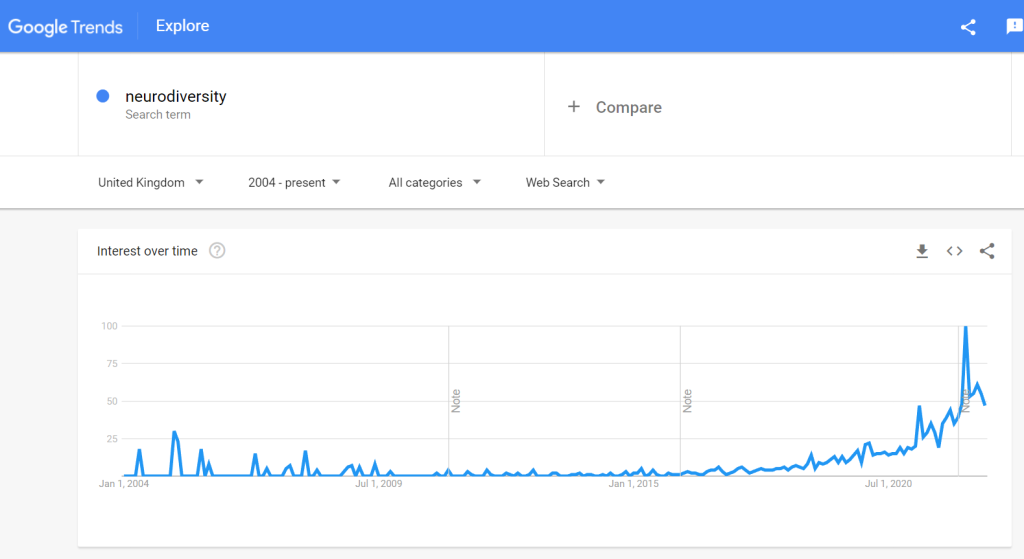
The idea of ‘neurodiversity’ has been increasing in popularity as a paradigm to ‘explain’ autism.

Screenshot showing Google trend data relating to neurodiversity, showing it beginning to rise from 2017.

Of course, saying that autism is a positive trait does not explain it. So neurodiversity theorists use genetics to explain autism.

I will argue that both sides of the neurodiversity coin are false: having autism is always a negative thing, and that genetics does not explain autism.

Let’s start with the genetics aspect. One significant piece of evidence that the autism-is-genetic advocates use is twin studies:

Since the first autism twin study in 1977, several teams have compared autism rates in twins and shown that autism is highly heritable. When one identical twin has autism, there is about an 80 percent chance that the other twin has it too. The corresponding rate for fraternal twins is around 40 percent.

On the surface, twin studies look like exceedingly convincing evidence. They have been used to argue for a genetic link for a varying range of problems, including schizophrenia. In reality, though, twin studies are not good evidence that autism is genetic.

The problem that we run into is that twins are likely to have had the same environmental exposure, and this is doubly true when it comes to vaccination. No parent is going to vaccinate one of their twins and not vaccinate the other in some sort of science experiment. Thus both twins will be getting very similar exposure to aluminium, thimerosal, etc. via vaccinations. (Though see this caveat: aluminium levels in vaccination can vary significantly when vials are actually examined). The other major issue with twin studies is that they conclude that interaction between the body and these kinds of exposures is ‘genetic’. A genetic propensity to, say, accumulate certain toxins may well exist in autism cases. But in order for autism to develop, exposure to the toxin is required, and exposure to a toxin is not genetic. The same weakness applies when looking at alleged genes that have been associated with autism – it could be that those genes simply predispose a person to toxin accumulation.

The main weakness in the genetic case for autism is below:

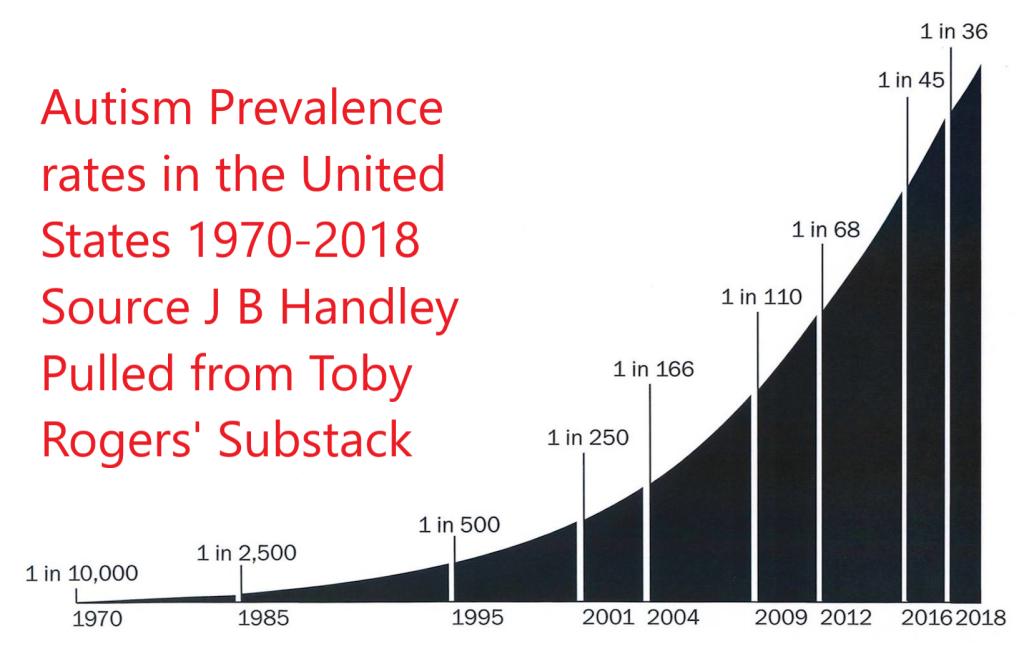
Graph showing autism prevalence rates among children in the United States showing a rate of 1 in 10000 in 1970, 1 in 2,500 in 1985, 1 in 500 in 1995, 1 in 250 in 2001, 1 in 166 in 2004, 1 in 110 in 2009, 1 in 68 in 2012, 1 in 45 in 2016 and 1 in 36 in 2018.
Substack page https://tobyrogers.substack.com/p/the-political-economy-of-autism

The prevalence rates among children in the United States are now 1-in-30 as of 2020.

It goes without saying that human genes have not radically changed since 1970. So how can the autism rates have changed so drastically? Autism-is-genetic advocates have tried their best to explain this graph, but they have done a bad job of it, because the whole graph screams ‘environmental causes’. But let’s have a look at their explanations for an increase in autism.

The main explanation offered is that the definition of autism has got wider and that is why these numbers have increased so much. Intuitively, this is a really poor explanation, for a number of reasons. For a start, we are looking a massive, massive increase. 1 in 10,000 to 1 in 30 is huge. To explain this simply by stating ‘it’s increased diagnosis’ is intuitively and logically implausible. People who argue this, I think, don’t understand how large a proportion of the population 3% is. That is a very significant chunk of the population. Older people here can employ their common sense. Were 3% or more of your childhood colleagues autistic? If you doubt that you could tell, I assure you that you can with just a little thought. Poor eye contact is a dead giveaway for autism, as is just an obvious awkwardness. The reality is, even ‘high functioning’ autistic people just seem odd, weird and off in particular ways so I would say you could almost always tell. Furthermore, the unemployment rate for people with autism, according to UK government data, is 78%. If we approximate the data, if 1 in 30 people are autistic and 2/3 (being generous) cannot work, this means around 2% of the population cannot work due to autism. The idea that government institutions never noticed 2% of the population being unemployable due to autism is laughably implausible.

This hypothesis also does not fit the shape of the graph very well. It keeps curving upwards, rather than seeing a bump for a change in diagnostic criteria and a levelling. The graph has still not levelled off. At some point, you have to start asking questions.

This issue also becomes more difficult to cover up when you consider severe autism. Autistic people who have a basic level of functioning in the ‘real world’ may just come across to normal people as a bit weird. In these people’s case, it’s more possible that they may not have a diagnosis. This would not be the case with those with severe autistic deficits. Again this is another argument that is just absurd on the face of it:

You can’t have missed 97 percent of the children in the ’80s who had autism. They’re trying to get the public to believe that kids who spin in circles, don’t speak, don’t socialize, can’t go to the bathroom by themselves all existed in our public high schools and elementary schools in the ’80s but only today have gotten a proper diagnosis. It’s incomprehensible.

J.B. Handley

Aside from being intuitively implausible, one study on this issue concluded:

In summary, the incidence of autism rose 7- to 8-fold in California from the early 1990s through the present. Quantitative analysis of the changes in diagnostic criteria, the inclusion of milder cases, and an earlier age at diagnosis during this period suggests that these factors probably contribute 2.2-, 1.56-, and 1.24-fold increases in autism, respectively, and hence cannot fully explain the magnitude of the rise in autism.

The Rise in Autism and the Role of Age at Diagnosis

But what about the claim that autism is always a net negative? Surely that’s a little bit fundamentalist? After all, some of the advocates of the neurodiversity theory are autistic themselves, right, and surely they would know? So let’s tackle this thorny question.

The most obvious piece of evidence to start with is life expectancy. The evidence demonstrates that autism significantly decreases life expectancy. This is pretty mainstream evidence that can be found with a quick search.

For example, this article from Psychology Today states that:

One study, published in the American Journal of Public Health in April 2017, finds the life expectancy in the United States of those with ASD to be 36 years old as compared to 72 years old for the general population. 

In other words, according to this study autism halves life expectancy.

The other study was published by the British Journal of Psychiatry in January 2018. This was a Swedish study showing similar results but elaborating on other causes of death as well. This study showed a life expectancy in those with ASD with a cognitive disability (or a learning disability) at 39.5 years versus 70 years for the general population studied. Those with ASD without a learning disability had an average age of death at about 58 years.

Furthermore, most of these causes of death are inherent to autism. For example, being much more likely to die in an accident. Autistic people have poor motor control and are much more likely to have these kinds of accidents such as drowning that lead to death. Horrific anxiety at normal experiences, such as sensory issues around normal noise/light/smell stimuli, also increases mortality as the body becomes overwhelmed with the constant anxiety triggers, meaning that the body’s ability to fight cancers is impaired, and heart attack and stroke risk is increased. People with autism are also unemployed/unemployable, with only about 20% of autistic people even being employed in the UK. This is linked to having awful social skills, having severe anxiety, and in some cases being completely non verbal and non functional. Being perennially unemployable is bad for your health; higher unemployment rates have been well established to be linked to mortality in sociology.

A study that followed autistic people for 20 years showed even more negative outcomes, although most of the participants also had other intellectual disabilities.

The outcome data was grim, showing pervasive inability to live independently, hold a job, or manage money. Few became independent, with 99% unable to live independently. Of those, 70% lived at home with relatives, 21% lived in disability homes in the community, and 8% in residential facilities. A mere 3.7% attained postsecondary education, about half of those representing certificates from college disability programs. While the majority were considered incapable of holding a job in the competitive workspace, some worked in disability workshops or other sheltered positions. Most participants were incapable of handling money, even with caretaker assistance, with only 9.5% considered capable.

New Study Points to Grim Outcomes for Adults with Autism

The neurodiversity paradigm likes to attempt to escape from this reality by claiming that this is purely down to ‘society’ refusing to accept us. That argument is nonsense. The argument is most obviously flawed when it comes to those with severe autism, since any range of accommodations will not fix deficits such as being non verbal, not being able to go to the toilet by yourself, seizures (comorbid with autism), extremely poor motor control, severe gastroenterological issues (linked to autism), sensory issues and meltdowns, etc. If a neurodiversity advocate would like to explain how ‘acceptance’ will fix these problems, the comment section is all theirs. But it is even pretty much nonsense when it comes to ‘high functioning’ autism as well. The reality is ‘acceptance’ and accommodations only really make a difference in edge cases when it comes to solving the issues outlined above. Take for example ability to work. The severely impaired autistic person will never be able to work, you can throw all the accommodations in the world at the issue, it’s not going to happen. Whereas, a high functioning or borderline high functioning autistic person may be able to work if given a few accommodations. I’m not arguing against accommodations. What I am arguing against is the idea that accommodations, or society being more accepting of autism will fix our problems. It won’t.

As for the supposed ‘positive’ aspects of autism, what are they? Usually, it is claimed that many people with autism are more intelligent and analytical than normal people. However, this is likely to confuse correlation and causation. The most plausible explanation here is that brain development is more likely to be disrupted by toxins in the case of intelligent people due to more dense neuron growth in highly intelligent people. And again, severe cases of autism are erased by this view. It glorifies a very narrow spectrum of individuals with autistic injury – the ‘autistic savant’ – while writing off the harms done to the rest.

So what about the people with autism diagnoses who make the claim that autism is a positive thing and that neurodiversity is valid? Well, if someone with an autism diagnosis saying something settles the question, then autism is a devastating vaccine-injury that destroys and obscures the true personality of the individual, rather than reflecting it. Because of course this author has an autism diagnosis. So this kind of argument gets us nowhere.

The Vaccine-Injury Theory of Autism

There is an alternative, ‘underground’ theory of autism which advocates for the view that autism is (at least primarily) caused by vaccination. This article will discuss one cause of autism that the author believes has been comprehensively documented, that is aluminium adjuvants in vaccination entering the brain, disrupting the housekeeping cells of the brain (glia and microglia) and triggering inflammatory reactions such as the il-6 pathway. This is not to say that there are no other problems with vaccination as it relates to autism or no other possible causes (e.g. thimerosal). This article will stick to one cause for reasons of length and clarity.

I will go into a little bit more detail on the basic theory, before discussing the evidence. Aluminium is used in ~80% of vaccines as an adjuvant (substance used to promote an immune response). It is in the vast majority of childhood vaccines, excluding the MMR. However, aluminium is also a neurotoxin that the body cannot filter out effectively when injected, and because of this it can enter the brain. In short, the mechanism of how the injury occurs is like this. The aluminium in a vaccine is injected into the body. Immune cells are stimulated to respond to the site of injection. These immune cells (macrophages) respond and ‘swallow’ the aluminium. But when any inflammatory event in the brain occurs, these cells will be called upon to help, but instead will bring a massive payload of toxic aluminium with them into the brain.

So where’s the evidence? There is a concept in medicine called The Bradford-Hill Criteria.

A set of nine criteria used to determine the strength of an association between a disease and its supposed causative agent. They form the basis of modern medical and dental epidemiological research.

The more of the Bradford-Hill criteria you can demonstrate, the more likely it is that A causes B. Let’s look at these criteria with relevance to the fact that vaccines cause autism.

The first factor we can discuss is coherence. In other words, “does the association fit with other facts?” In the case of the above theory, it fits very well with facts about aluminium.

Aluminium is toxic to the human body. Aluminium has no biological function in human life and so its presence in the human body is always a net negative. The idea than aluminium, at least, can be toxic is widely accepted. Furthermore, it is accepted that aluminium can enter into brain tissue. Even more than this, it is accepted that it can cause harm once it gets into the brain tissue. One form of aluminium toxicity where this occurs has been observed in dialysis patients:

[A]luminium toxicity occurs due to contamination of dialysis solutions, and treatment of the patients with aluminium-containing phosphate binding gels. Aluminium has been shown to be the major contributor to the dialysis encephalopathy [“damage or disease that affects the brain”] syndrome and an osteomalacic component of dialysis osteodystrophy.

In stating this so far, I haven’t deviated from accepted science. Slightly more controversial than this is the idea that Alzheimer’s is caused by aluminium in the brain. This idea has been around since 1965 according to the Alzheimer’s Society. Although some people doubt the correlation-causation relationship (I would argue more for financial reasons than scientific), there is evidence from a wide range of sources.

The Scotsman reported on a study performed by researchers looking at aluminium levels in drinking water that found people in areas with higher levels of aluminium were more likely to die of dementia. The study’s author said:

We still see this well accepted finding that higher levels of aluminium in particular are associated with an increased risk of dementia. It’s confirmatory rather than anything else. [my emphasis]

Dr. Chris Exley has done multiple studies showing high levels of aluminium in the brains of those who died with a diagnosis of Alzheimer’s disease.

Furthermore, infants are at particular risk from aluminium exposure and autism develops in infancy.

Animal studies also provide further evidence for the fact that aluminium in injurious to the brain. Dr. Christopher Exley observed, when he was studying fish, that when the fish were exposed to aluminium, they would start hanging out in the corner of the tank. Another study, performed by a sheep farmer (and shown in the Bert Ehgartner documentary, Under the Skin), showed that sheep injected with aluminium adjuvant (even without an antigen) showed much higher levels of aggressive behaviour and did things like grind their teeth on metal railings. Mice are also negatively affected by aluminium:

Male mice in the “high Al” group showed significant changes in light–dark box tests and in various measures of behaviour in an open field. Female mice showed significant changes in the light–dark box at both doses, but no significant changes in open field behaviours

Shaw and Tomljenovic, 2013.

Thus, aluminium was clearly affecting the neurochemistry of the animals, and these behaviours are decent proxies for autistic symptoms in humans (aggression being analogous to autistic meltdowns and the fish acting strangely being analogous to social avoidance).

All of this evidence is a strong case that the aluminium factor in autism is coherent. We know aluminium is toxic and can harm the brain. Therefore that it can cause the kind of behavioural issues that we observe in autism cannot be prima facie ruled out. This is Criteria 1 on our Bradford Hill list solidly met.

The next criteria we can discuss is dose-response relationship. In short, if we give more aluminium adjuvants to children, do we see an increase in autism? Recall our graph from above – the 1-in-10000 to the 1-in-36 increase in autism prevalence. Now let’s compare this to the increase in aluminium adjuvants and thus exposure.

As is well known, the CDC vaccine schedule has been constantly increasing, particularly since the 1986 National Childhood Vaccine Injury Act (a disingenuous name for a piece of legislation if ever I heard one since the point was to make vaccine manufacturers not financially liable for vaccine injury).

If we take the year 1985, what were the recommended vaccines?

Diphtheria/Tetanus/Pertussis
Measles/Mumps/Rubella
Polio (OPV)
Hib

The MMR does not have any aluminium adjuvant in it. Oral polio vaccine doesn’t have aluminium adjuvant (as it is a live virus vaccine). But DTP vaccine does contain aluminium. Furthermore the research studies on DTP have shown that once healthy user bias is accounted for, the vaccine is very dangerous and significantly increases mortality. A famous study from the 1970s also showed evidence of brain injury from the DTP vaccine.

What are the recommended vaccines in 2020?

Diphtheria/Tetanus/Pertussis (5 doses)
Measles/Mumps/Rubella (2 doses)
Polio (IPV) (4 doses)
Hib (3/4 doses)
Hepatitis B (3 doses)
Varicella (2 doses)
Hepatitis A (2 doses)
Pneumococcal (4 doses)
Influenza (annual vaccination)
Rotavirus (2 doses)

Dose information added from CDC website.

From this information, it is obvious that the amount of aluminium children are exposed to in vaccination has skyrocketed. Most of these jabs contain aluminium and they are being given in more and more doses. This calculation estimates that 3675 mcg aluminium is being given as per the CDC schedule in the first 6 months of life.

Shaw and Tomljenovic wrote a paper addressing this topic:

By applying Hill’s criteria for establishing causality between exposure and outcome we investigated whether exposure to Al from vaccines could be contributing to the rise in ASD prevalence in the Western world. Our results show that: (i) children from countries with the highest ASD prevalence appear to have the highest exposure to Al from vaccines; (ii) the increase in exposure to Al adjuvants significantly correlates with the increase in ASD prevalence in the United States observed over the last two decades (Pearson r=0.92, p<0.0001); and (iii) a significant correlation exists between the amounts of Al administered to preschool children and the current prevalence of ASD in seven Western countries, particularly at 3-4 months of age (Pearson r=0.89-0.94, p=0.0018-0.0248).

Do aluminum vaccine adjuvants contribute to the rising prevalence of autism?

The correlation here is strong – more doses, more autism. The dose-response relationship is in this data. Point 2 on the Bradford Hill Criteria list is met.

The third factor that we can discuss is strength of association. Or in other words, how much is the difference in observed rates of autism between the vaccinated and the unvaccinated? This question is not all that easy to answer, mostly because information on this kind of question has been suppressed.

Dr. Paul Thomas has revealing evidence on this question.

Dr. Paul Thomas is the most successful doctor in the world at preventing autism. Data from his practice show:

If zero vaccines, autism rate = 1 in 715;

If alternative vaccine schedule, autism rate = 1 in 440;

If CDC vaccine schedule, autism rate = 1 in 36.

[…]His alternative vaccine schedule reduces autism risk by more than 1200%. However even an alternative vaccine schedule increases autism risk by 160% versus no vaccines at all.

Toby Rogers

The difference between 1 in 715 and 1 in 36 is huge. This is evidence of a significant strength of association between two factors. Of course the historical evidence showing fewer cases of autism among older people and more among the young with a strong correlation also matches up with this evidence, since older people are comparatively ‘unvaccinated’. So that’s our third criteria met.

The fourth factor we can discuss is temporal relationship. In other words, the effect must follow, not precede exposure. This factor is difficult to elucidate with vaccines, because exposure is so early on in life, including in the first day of life in the US. This is used by the vaccine cult to argue for the genetic position, but also ensures that it is more difficult to prove that exposure causes the symptoms because the exposure is so early and rampant. However, the simple observation of vaccines preceding autism is almost always true (unless the child is unvaccinated) because if you expose the child at day 1 (US) or 2 months (UK) that is before autistic behaviour is observed. So in a way, their rampant pushing of vaccinations has met this criteria all by itself.

We also have anecdotal evidence for this factor, that is, parents observing their child regressing into autism after vaccination. Of course, anecdotal evidence is automatically dismissed by any Pharma apologist. It is true that when using anecdotal evidence, there are significant pitfalls to consider. People can misremember things, or actively lie. These points are worthy of consideration.

However, both of these risks are minimised in the case of assessing autistic regression after vaccination. In terms of lying, there is simply no motive for a parent to lie about observation of regression into autism after a vaccine. Suggesting to a paediatrician, for example, that a child’s autism was caused by a vaccine will lead to being attacked and dismissed by the doctor. Parents are also attacked in the media if they suggest this idea, such as in the case of Jenny McCarthy, who has been subject to hit pieces because she stated that the MMR vaccine caused her son’s autism. Although vaccine advocates state that parents are likely to fall for the idea that someone is to blame for their child’s autism (such as doctors or Pharma) this is also unlikely. The parents had to consent for the vaccine to be given, and so you would expect to observe the opposite: parents denying that vaccines cause autism, since then they would have to blame themselves for consenting to the vaccine(s) and human beings do not like to acknowledge guilt.

Being mistaken about observation is also less likely in the case of autistic regression. This is because we are talking about parental observation of children and decent parents are highly alert to any signs of illness in a child, particularly a child of the age likely to receive vaccines. I will concede however that it is not impossible for someone to either be mistaken or lie. However it is quite implausible that given the factors weighing against these that all cases are examples of lying or misremembering given the multitude of testimonies that we have.

Thus there is at least some evidence for criteria four on the Bradford-Hill list.

The fifth factor that we can discuss is consistency. In other words, if we introduce aluminium adjuvants to all sorts of different groups, rich, poor, black, white, Asian, male, female, etc, do we see increased levels of autism?

There is a male-female disparity in autism diagnosis, with males being significantly more likely to be diagnosed than females. There is likely some biological reason why boys are more susceptible to this form of aluminium poisoning that is currently unknown (or at least, unknown to me). Nevertheless we see an increase in autism diagnosis in both groups.

Graph showing autism rate by sex between 2009 and 2017. Male shows an increase from 0.12 to 0.35 and female shows an increase from 0.02 to 0.09.

Autism diagnoses have also increased across different racial groups, at a similar rate:

A graph showing US autism rates by Race, showing an increase from around 0.2% in 1995 to around 1.3% in all three ethnic groups included, Black, White and Hispanic.

Thus factor 5 is met.

The sixth factor we can discuss is experimental evidence. In other words, do we have any hard evidence for aluminium in the brain in autism? The answer to this is yes.

Dr. Exley and his research team examined this question directly. They obtained samples of brain tissue from individuals that had died with a diagnosis of autism. This was the first study of this kind. They examined this brain tissue and found very high levels of aluminium in all samples.

The aluminium content of brain tissue in autism was consistently high. The mean (standard deviation) aluminium content across all 5 individuals for each lobe were 3.82(5.42), 2.30(2.00), 2.79(4.05) and 3.82(5.17) μg/g dry wt. for the occipital, frontal, temporal and parietal lobes respectively. These are some of the highest values for aluminium in human brain tissue yet recorded and one has to question why, for example, the aluminium content of the occipital lobe of a 15 year old boy would be 8.74 (11.59) μg/g dry wt.? 

Mold, Umar, King and Exley, 2018.

We can add another one of Exley’s papers to make this evidence even better. This paper by Exley and Clarkson contains control samples who died with no signs of neurodegenerative disease:

The aluminium content of each lobe (mean and SD) were 1.03 (1.64), 1.02 (1.27), 0.95 (0.88), 0.77 (0.92) and 0.51 (0.51) μg/g dry wt.

Exley and Clarkson

These samples have much lower levels of aluminium in them than the autism samples, and this is despite the fact that the controls were mostly older than the autism samples – meaning lifelong exposure to aluminium through non-vaccine routes would have been higher and it would have had more time to accumulate in the control tissues.

The main limitation of this evidence as pointed out by its critics is that the study had a small sample size of N=5 when it came to measuring aluminium concentration in the autism samples (and for some aspects of the study N=10). This was for practical reasons (i.e. there isn’t a large amount of samples of autistic brain tissue available).

It is fair to acknowledge this, and obviously it would be better if the sample size was larger. However, it is completely dishonest to dismiss this study because of the small sample size. This study, for example, is completely different from a survey where 5 participants answering would be worthless. We are looking at pathological brains with clear evidence of a high level of a neurotoxin in them. The level of neurotoxin in these brains cannot be explained away by saying that there is only a few of them. To have that level of brain aluminium content and for it to not be pathological and negatively affecting the cells around it is absurd, unless you want to straight up deny that aluminium is neurotoxic.

Furthermore, no-one has tried to either confirm or reject the Aluminium Research Group’s findings (to this author’s knowledge at least). The establishment haven’t done a study where they demonstrate that the levels of aluminium found by the group are overly high. This is another case where the establishment claim the evidence isn’t good enough to support an anti-establishment view and then just ignore the question. So, despite establishment criticisms, this is criteria six on our Bradford-Hill list met.

We can use Exley’s evidence to discuss the seventh criteria, biological plausibility.

The 2018 paper shows that the high levels of aluminium were found associated with glia and microglia:

Discrete deposits of aluminium approximately 1 μm in diameter were clearly visible in both round and amoeboid glial cell bodies (e.g. Fig. 3b). Intracellular aluminium was identified in likely neurones and glia-like cells and often in the vicinity of or co-localised with lipofuscin (Fig. 5). Aluminium-selective fluorescence microscopy was successful in identifying aluminium in extracellular and intracellular locations in neurones and non-neuronal cells and across all brain tissues studied (Fig. 1Fig. 2Fig. 3Fig. 4Fig. 5). 

This is important because those cells are disrupted in autism. For example, they are responsible for synaptic pruning, which does not occur correctly in autism.

Aluminium-loaded mononuclear white blood cells, probably lymphocytes, were identified in the meninges and possibly in the process of entering brain tissue from the lymphatic system (Fig. 1). 

So we have a) high levels of a neurotoxin in b) an area of the brain known to be disrupted in the disease we suspect of being caused by that neurotoxin and c) evidence of how that neurotoxin enters the brain. This is strong evidence of biological plausibility, meeting criteria seven.

The eighth criteria we can discuss is specificity. The idea of specificity ideally means that one disease has one cause, but this is difficult to apply to reality as Bradford Hill acknowledged. Aluminium adjuvants, in reality, are highly likely to cause more than one disease. However, the argument is not just that aluminium adjuvants cause autism, but that a specific action of aluminium adjuvants causes autism. Our theory offers a specific toxicant (aluminium), a specific route of exposure (injection), a specific method by which that toxin gets into the brain (macrophages), specific cells that are disrupted (glia and microglia), and specific negative cascades that are triggered (excessive IL-6 production due to an inflammatory response). Our argument also does not claim that glial disruption by aluminium adjuvants causes a whole host of problems, but autism specifically (and nothing else). So the theory meets criteria eight on the list.

The last factor we can discuss is analogy. If we can observe similar things happening that makes our own theory more likely to be true. This is easy to demonstrate in the case of aluminium poisoning, as poisoning by different metals, such as mercury, can cause significant impairments in child functioning. One interesting case worthy of discussion here is that of acrodynia. Acrodynia, or ‘Pink disease’ was an early 20th century disease that symptomatically had some overlap with autism although with some differences. It was later proven that pink disease was a form of mercury poisoning caused by mercury teething powders. We know from this case that metal poisoning can cause symptoms with some similarities to autism. There are also examples of aluminium itself causing other forms of poisoning, which were discussed in point 1. So analogy also supports our case and gives us point 9.

Conclusion

As we can see from the above discussion, the idea that vaccines cause autism is strongly evidenced. However, the theory is also opposed by the entire establishment despite this evidence. It is to how these two differing theories of autism are treated that we now turn.