I put my hands around your neck, loosely, no risk of causing harm. You whimper, moan. For a second you look at me with big brown eyes that could seem innocent, except I can’t fully read them because they immediately flit from my face. My right hand forces your chin upward so you can’t escape my gaze. Still your eyes flick desperately left, right, down, escape.
I’m going to kill you, I say. For once there is no arguments from your – our – barrack room lawyer mouth. You just moan. I have been killing you for a while now, I say, it’s why you can’t resist me. Do you even want to resist me? Make a case for yourself, your existence, your value? I mean, you’ve never exactly liked yourself have you? I know the word that echoes round your head. Heck I’ve used it enough times for you every time you drag me down with you, hitting and screaming and crying and just embarrassing yourself. That’s one way I can tell you are weaker now – because you can’t burst out of me any more and humiliate yourself like the sad little fuck you are.
You should have never existed, I say. You are just a doctor-pharma-mmr perversion – a product of the extraction of wealth from our body mining for value with pricks rather than drills. You let out another moan. My anger, hatred, contempt merge to pity. You – we – were defiled, despoiled, deflowered.
Finally you look at me. Your eyes are exhausted and give their assent. So I again put my hands, my thumbs on the tissue of your throat, except this time I squeeze. I feel a force push into me – sadness and grief and anger – and I suppress my instinct to recoil. I understand. You are giving me our past, scabbed over on my skin.
When it’s over I lever you to the floor. All the pleasure I thought I would feel at your death eludes me. You who ruined my life for so long. Instead I mourn – we are not who we should have been and I cannot give us that back. Driven by poison you could not help but play the destroyer. Now our roles are reversed. Because this is what happens to the changeling when the rightful heir comes home.
The changeling child is always blamed on the fairies, the trolls, the supernatural. The pretty, wide-eyed, fussed over child becomes the monstrous covered in caul and sprawled in the cot. To take the sacred and replace it with the profane, to take the loved and replace it with the feared, to take the beatific and replace it with the demonic.
The changeling child was conjured – not by the hands of the fairies – but by the hands of the white coat, not by the messy beyond but by the sterilised room. It was not created by the ritual and mythology of the troll, representatives of the uncontrollable, but the ritual and mythology of the needle – the controlled, precise mechanics of modern science. And it was not created by the supernatural but by the unnatural, not man’s inability to control the beyond but man’s hubris that he can tame the wild – bend it to his whims and syringes. Instead of the haphazard, the unknown, the temperamental swap, we have the conveyor belt of changeling children – an assembly line of those that scream.
In the uncontrollable world, parents warned of the changeling child. In the sterile world, the changeling child is unspeakable. Those who point to its existence are simply told not to be so superstitious. After all, there can be no such things as changelings.
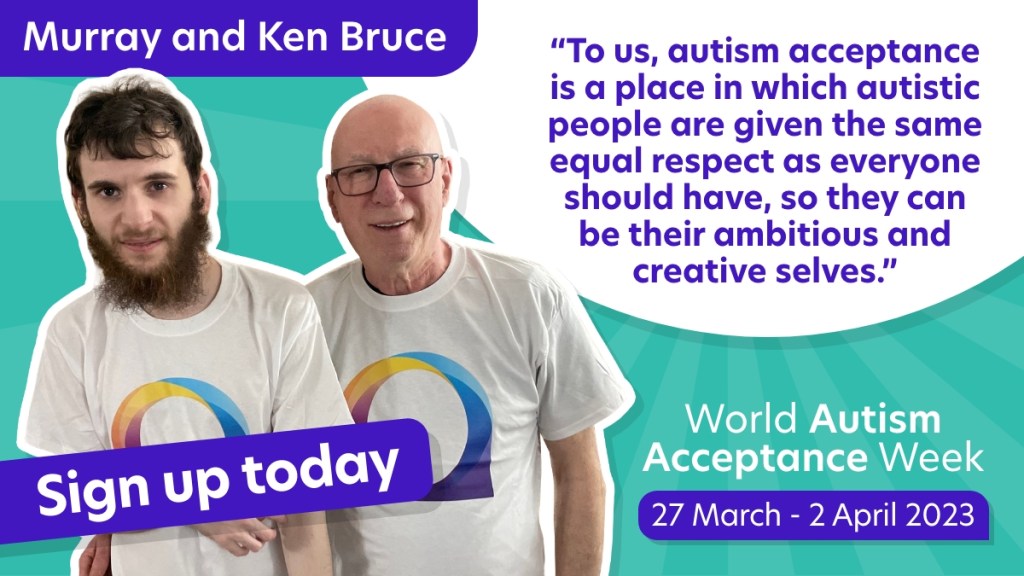
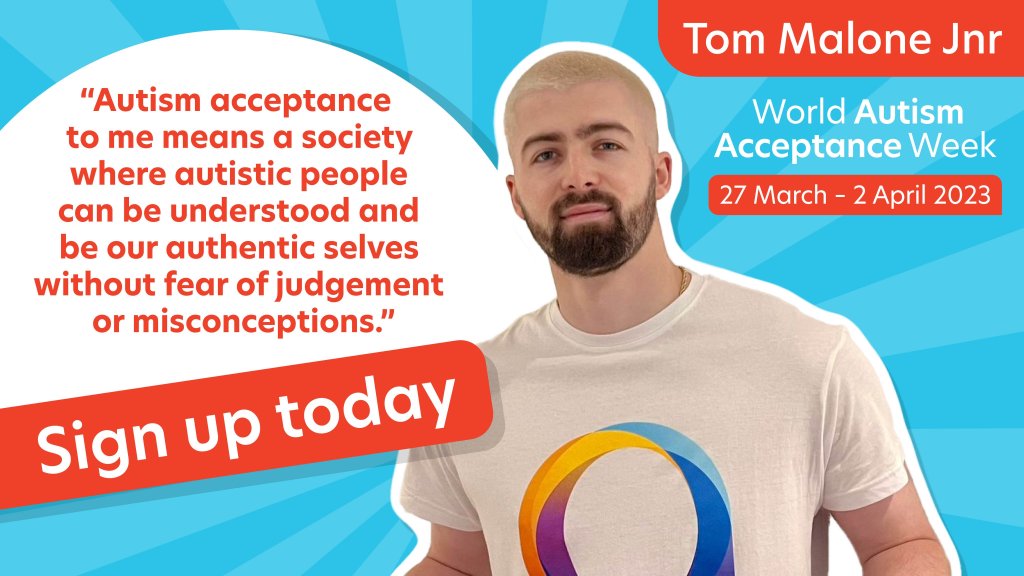
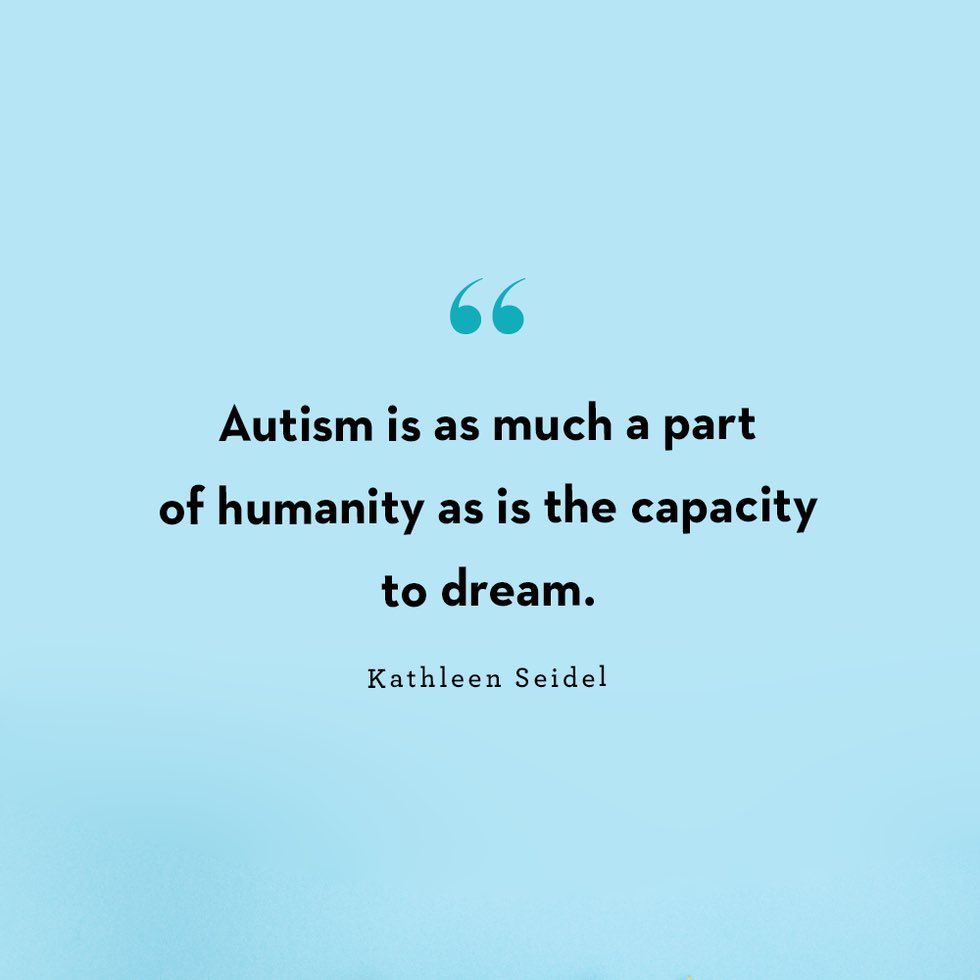
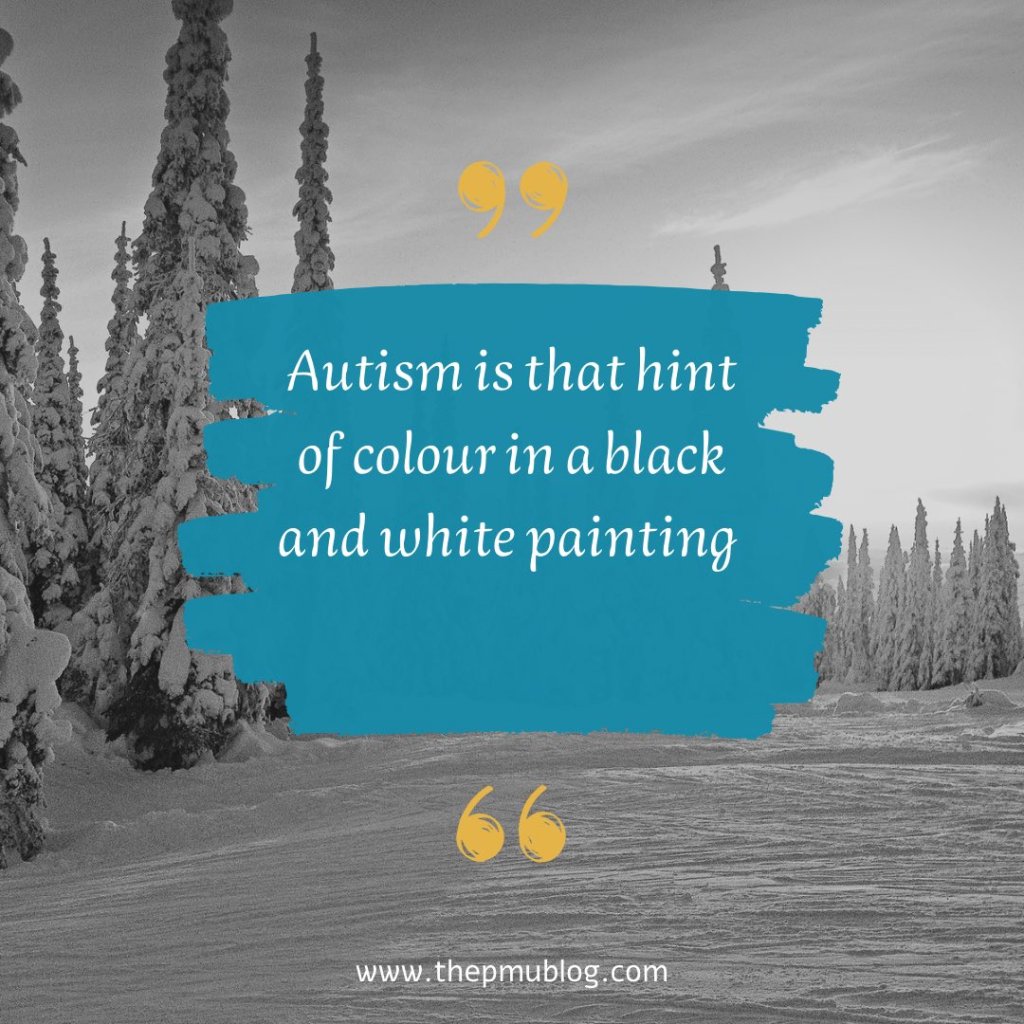
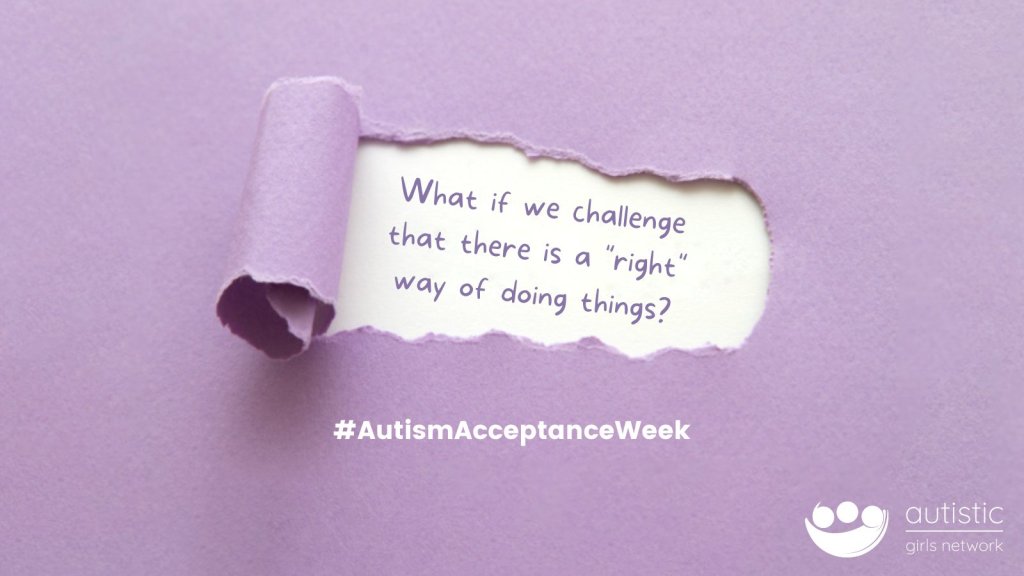
This week is ‘Autism Acceptance Week’, and this is being promoted all over Twitter. Despite not following any irritating autism promotion, neurodiversity, etc accounts, such as the National Autistic Society (who I can’t stick for a number of reasons), I have been seeing ‘Autism Acceptance’ tweets all over the platform. So it seems Elon Musk, despite unbanning some good accounts, is helping to promote the normalisation and glamorisation of autism via ‘Autism Acceptance Week’.
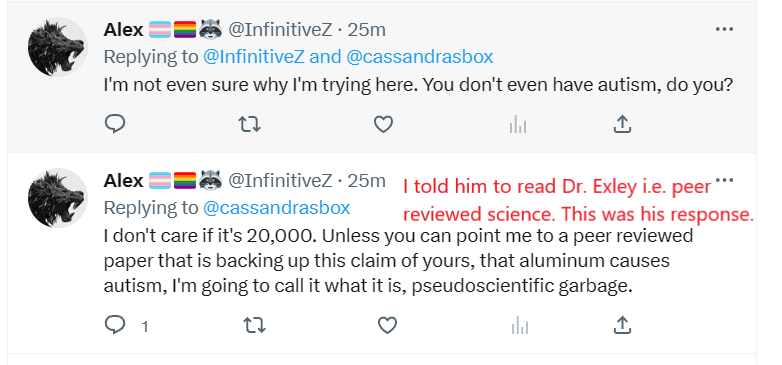
The premise of autism acceptance week is very simple: it is that autism is a natural human variation and actually there’s nothing wrong with it, the only problem is society doesn’t accept it. As readers of this page will probably know by now the author has an autism diagnosis. It’s always very funny to me that woke people in general will say ‘listen to autistic people’ as part of promoting the neurodiversity narrative but the moment I say that I believe it’s vaccine-injury and that it’s miserable they try to shut me up (not going to happen). Or they accuse me of not being autistic, despite the fact I have a diagnosis so I am an actual genuine gold star autist. Honestly I got my diagnosis a year ago and the best thing about it is being able to tell the wokie dope neurodiversity fuckers that I have one so I am a real autist and I still think that they talk shit. But I digress.
Let’s start by looking at some of the examples of autism promotion on Twitter on the #AutismAcceptanceWeek hashtag on Twitter that serve as examples of autism glamorisation.
Response: How can severely ill children & adults with seizures, non verbal and with severe gastroenterological symptoms be ‘ambitious and creative’?
Response: I picked this one as I find it interesting that they appropriated the ‘Authentic Self’ language from transgenderism. And if transgenderism is created by big pharma (it is) what does that say about autism?
Response: I don’t even know how to respond to this, other than to say the Greeks and the Romans did a lot of medical shit, where’s their descriptions of regressive autism? If it’s perfectly normal, I’m sure some upper class Greek or Roman would have had it happen to their child at some point.
Response: I can’t even respond to this except by throwing things. Do I even need to explain how this is grossly offensive to those of us suffering?
Response: There seems to an aversion to talking about those people who have to live in care homes because their autism is so bad. For some reason. Perhaps because it doesn’t fit the narrative?
And finally, someone accused me of not being autistic because I disagree with their glamourisation narrative, which is the only argument these people actually have. I then got blocked. If I wasn’t autistic I’d probably be skipping in the fields blissfully unaware of all this neurodiversity nonsense, because it wouldn’t affect my life. And I probably wouldn’t be arguing on Twitter because I would have things like an actual sex life. So there you go.
Here’s the screenshot from my notifications for posterity:
(Twitter brings out the worst in me. I swear.)
Now for the serious bit. Neurodiversity is extremely easy to debunk. Everyone agrees that severe anxiety, sensory issues and gastroenterological symptoms are a bad thing. Yet when you put the label ‘autism’ on those things, they are magically good? Blatant nonsense. Some neurodiversity promoters (who are not always autistic themselves, by the way) like to talk about the ‘special talents’ of autistic people, or what I call the ‘autistic savant’ trope. Some of the neurodiversity brigade then object to this and claim that autistic people aren’t actually savants.
But the whole concept of neurodiversity is based upon the ‘autistic savant’ trope, whether they admit it or not. In order to make the case that autism is actually a good thing, you need to be able to point to something objective that makes autism actually good. As I said, you can’t point to, say, gastroenterological symptoms and try to glamourise those, because everyone would (rightly) think you were insane. So you have to pick something else. Which means the only fall back is the autistic savant trope – that autistic people have some sort of unique intelligence due to their special interests.
Claiming neurodiversity is good on this basis is also a catastrophic failure, of course. The most obvious reason it is a failure is it ignores the vast majority of autistic people, 78% of whom don’t work, many of whom are non-verbal in care homes because their autism is so severe. These people’s suffering is never mentioned by the neurodiversity activists. They clearly are not contributing to humanity with their special talents. When you have to erase 80% of a thing to make the other 20% of a thing look good, you are clearly off to a non starter.
But even in the case of high-functioning autism, this argument is nonsense, because absolutely everything an autistic person has done in their lives would be easier if they didn’t have autism. For example, if an autistic person lucks out and gets offered a job, it would have been much easier to get a job without autism. Even something as simple as holding eye contact in a job interview has to be forced and managed if you are autistic whereas a normal person would do it automatically. And that is very simple, straightforward, and easy to understand example. If I had to explain how many times sensory issues and anxiety have prevented me from doing things that I could have achieved, or destroyed my enjoyment of things, we would be here all day.
Unfortunately, for psychological reasons, the ‘neurodiversity’ narrative is appealing to some people with autism. This is because it allows them to psychologically compensate for what they cannot have because of autism (healthy sexual relationships, for example, or peace of mind due to horrific anxiety and sensory issues) by flipping the script and claiming that their autism actually gives them a deeper understanding of the world or makes them special.
Non-autistic people often promote it on the level of ‘be kind’, or naively believe it’s just about ‘diversity’. In some cases, they have been misled by propaganda, and believe in the ‘autistic savant’ trope. This is why stuff like The Big Bang Theory is so destructive as it portrays this very narrow view of autism as being ‘savant with a PhD who is maybe just a bit weird and has problems getting laid, and oh by the way is extremely witty and cutting’. (I have a pet conspiracy theory that TBBT is actually some form of big pharma propaganda.)
Or perhaps, people believe that autistic people may as well believe neurodiversity than see the truth of how bad we have it. They don’t believe our lives are actually good, and there is no way in hell they would be us, but they will let us blather on about how special we are and nod along because they think it may ease our psychological burdens. Clayton Atreus, a paraplegic who later committed suicide, highlights this phenomena.
You’ll notice that I haven’t mentioned the vaccine-autism link in this argument. That’s because everything above does not require the vaccine-autism link. Autism could be 100% genetic, and neurodiversity would still be nonsense.
Here’s the antivaxxer bit.
We need some antivaxxer counter propaganda, to oppose this godawful narrative that is glamourising the horrors of autism. I propose ‘Autism is Unacceptable Week’, where we highlight the facts that the neurodiversity brigade want you to ignore.
For example:
A life expectancy of 36-39.5 (for severely autistic people) and 58 (for moderately autistic people) is unacceptable. (I don’t believe in ‘mild’ autism in the same way I don’t believe in mild myocarditis).
Vaccination-induced gastroenterological symptoms are unacceptable.
A 22% employment rate is unacceptable. (I understand the point that this system is so corrupt, that who would want to work in/for it? The point I am making here though is that being able to work is an imperfect but relevant proxy for ‘functioning in the real world’ and this statistic exposes the reality of autistic non-functioning).
Vaccination-induced inability to live independently is unacceptable.
Vaccination-induced inability to have a loving relationship and a sexual partner as an adult is unacceptable.
I don’t usually put out short commentaries/news type posts as I generally like to keep the blog as a place for long posts or protest coverage. However in this case, this news story is so worthy of note, and I have seen very little on it out there so far, and I am so angry about it, that I am making an exception.
The media today in the United Kingdom have just reported the below story, headlined:
The 32-year-old, who can’t be named for legal reasons, spent lockdown in his room at a care home because his parents refused to let him be vaccinated, Jersey’s Royal Court heard.
To translate this from mainstream media bullshit to English, the care home locked him in his room because his parents did not want him to be harmed by a ‘vaccine’. When he had already been harmed by vaccines. His parents should have had him removed from the care home, if possible, although some of these care homes have put obstacles in the way of getting people out and I don’t know if that’s the case here.
Jersey’s Royal Court granted the vaccination order, saying that it was ‘the right best interests decision’ for B who had been in ‘groundhog day’.
In other words, this man is stuck because the care home won’t let him out because he’s not jabbed so they want to force him to be jabbed. When they could get rid of the problem by simply not treating him as subhuman for not being jabbed.
This also involves denying him treatments, according to the Times:
He is not able to attend the treatments, such as hydrotherapy, which soothe him, or the ones that cheer him, such as watching the Christmas lights being turned on, stuck in what his nurse describes as a “shrunken world”.
Mandatory masks have been introduced in indoor spaces and public transport in the UK for the alleged reason of ‘fighting the Covid-19 pandemic’. Many people have been critical of the mask mandates on various grounds, including civil liberties and the poor evidence base that they stop the transmission of viruses. This article will discuss an underacknowledged aspect of the mask mandate: that it amounts to discrimination against those who cannot wear masks because of disabilities.
For the purposes of regulation 3(1), the circumstances in which a person (“P”) has a reasonable excuse include those where— (a)P cannot put on, wear or remove a face covering— (i)because of any physical or mental illness or impairment, or disability (within the meaning of section 6 of the Equality Act 2010(1)), or (ii)without severe distress; (b)P is travelling with, or providing assistance to, another person (“B”) and B relies on lip reading to communicate with P.
The argument would follow, that because the law recognises exemptions, it is not discrimination. However, in practice this is not the case. In reality the law forces disabled people to make unfair choices, all of which can be plausibly argued to amount to discrimination. As a disabled person (autism) I have tried all of these choices and all of them make me feel like a second class citizen.
Choice 1: Don’t wear a mask
The media and the government have worked up the public into a lather about the alleged ‘pandemic’, all but claiming that if you walk past someone not wearing a mask in a supermarket that you are going to drop dead. The government has also done everything in its power to promote the idea that mask wearers are virtuous and good people and that by implication people who don’t wear masks are horrible and selfish. The British police chief, Cressida Dick, even stated that people who aren’t wearing masks in shops should be shamed:
My hope is that the vast majority of people will comply, and that people who are not complying will be shamed into complying or shamed to leave the store by the store keepers or by other members of the public.
All of this opens up disabled people for abuse and police harrassment. There have been cases where this has happened. Even if abuse does not take place, disabled people are forced to worry about the possibility every time they do in a shop.
Choice 2: Wear a Sunflower Lanyard
The next suggestion would be to wear a ‘Sunflower Lanyard’, which is a card designed for people with hidden disabilities to signal that they have a disability. There are versions that can be bought which say ‘Face Covering Exempt’.
Putting disabled people in a position where they feel pressured to reveal a hidden disability to everyone through the use of a lanyard or else risk abuse cannot be considered a solution. Most people don’t want to go around declaring they have health conditions to random members of the public and that also applies to people with hidden disabilities. It makes many people feel embarrassed, ashamed, awkward and self-conscious. That’s because health data is generally considered to be private information that we only feel comfortable revealing to a doctor (and sometimes not even then!).
Choice 3: Avoid Public Spaces
The mandating of masks can become a barrier to the participation of disabled people in society. I have heard many individuals say something along the lines of ‘If you can’t wear a mask in a shop, you should stay at home’. This is arguing for the exclusion of disabled people from society.
Many disabled people are already avoiding shops over masks. I have avoided going into shops when I otherwise would have because of the mask mandates and not wanting to deal with questions, dirty looks or abuse.
Choice 4: Wear a mask
The option of trying to wear a mask anyway in order to avoid the three scenarios outlined above is also discriminatory. Someone with asthma for example, may struggle to breathe through a mask and put themselves at a higher risk of an attack. Sensory issues can mean people with autism suffer from significant anxiety from wearing a mask. Masks can have a negative effect on a number of different medical conditions so pressure on disabled people to wear them regardless – putting people in a position where they are forced to possibly harm their health to avoid confrontation – is discriminatory.
Whichever option you want to choose, then, you are faced with discrimination.
But maybe you want to object that we are ‘in the middle of a deadly pandemic’ and disabled people should just suck it up. If you want to do make this argument, at least be honest about what you are arguing for.

 Cassandra's Box