What Was ‘Vaccine Lymph’? The Nature of Vaccinia
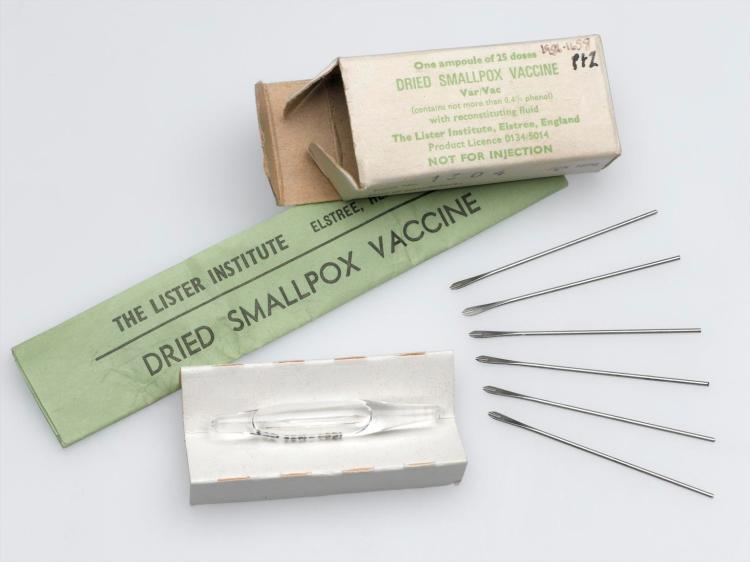
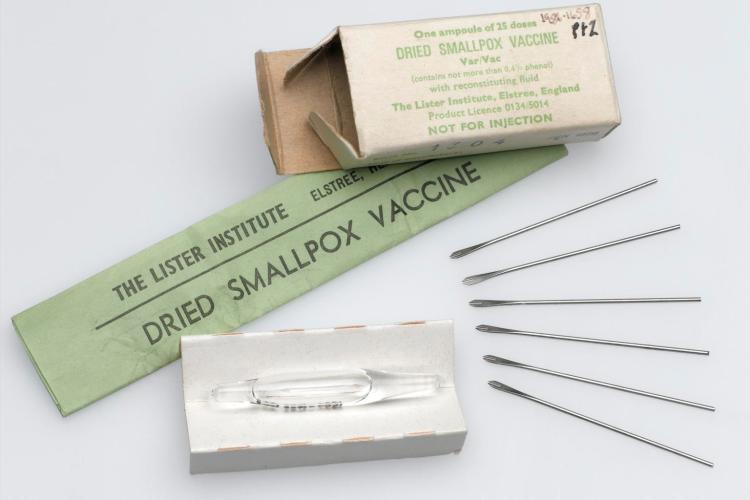
Image of Smallpox Vaccine
Dried smallpox vaccine (vaccine) by Lister Institute of Preventive Medicine is licensed under CC-BY-NC-SA 4.0

Introduction

Smallpox vaccination was said to prevent infection with smallpox. However, there is a significant practical difficulty with this argument, aside from statistical evidence and anecdotes of vaccine failure. This is the nature of ‘vaccine lymph’ itself. Although ‘vaccine lymph’ is often considered to be cowpox, the history is a lot more complicated than this, with multiple different lymph sources in circulation. This poses a theoretical problem for those who argue that vaccination prevented smallpox, since they then have to argue that all these sources are equivalent, but this is unlikely.

Horse Grease Cowpox or Spontaneous Cowpox?

Edward Jenner argued that there was more than one form of cowpox in his essay the Inquiry. His Inquiry starts with a description of a disease of the horse, the grease, which he claims is spread to the cow:

In this Dairy Country a great number of Cows are kept, and the office of milking is performed indiscriminately by Men and Maid Servants. One of the former having been appointed to apply dressings to the heels of a Horse affected with the Grease, and not paying due attention to cleanliness, incautiously bears his part in milking the Cows, with some particles of the infectious matter adhering to his fingers. When this is the case, it commonly happens that a disease is communicated to the Cows, and from the Cows to the Dairy-maids, which spreads through the farm until most of the cattle and domestics feel its unpleasant consequences.

Jenner, Inquiry

Jenner is clear in this text that the protection comes via the horse, through the cow, to man.

Jenner distinguishes this from spontaneous cowpox, which he considers not protective from smallpox:

It is necessary to observe, that pustulous sores frequently appear spontaneously on the nipples of Cows, and instances have occurred, though very rarely, of the hands of the servants employed in milking being affected with sores in consequence, and even of their feeling an indisposition from absorption. These pustules are of a much milder nature than those which arise from that contagion which constitutes the true Cow Pox. […] But this disease is not be considered as similar in any respect to that of which I am treating, as it is incapable of producing any specific effects on the human Constitution. However, it is of the greatest consequence to point it out here, lest the want of discrimination should occasion an idea of security from the infection of the Small Pox, which might prove delusive.

So here we have two forms of cowpox. One protects from smallpox, and one does not. Presumably, the lymph used by Jenner in his vaccinations outlined in the Inquiry was horse grease cowpox.
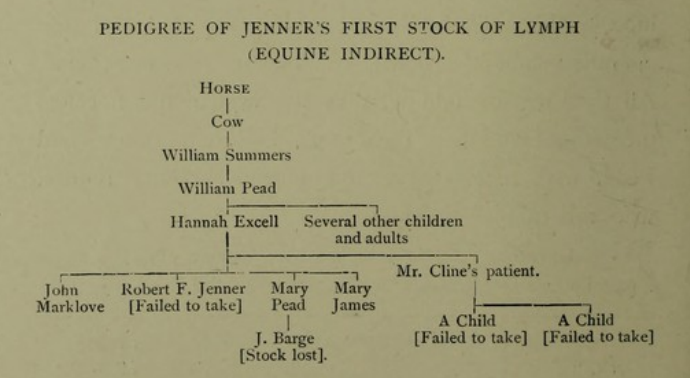
A chart showing various arm to arm vaccinations carried out by Edward Jenner. Chart reads Horse - Cow - William Summers - William Pead - Hannah Execell & several others - then 2 sets of vaccinations one by Jenner and another by Cline - then the final vaccinations with the lymph which was then lost

As we can see from this diagram (taken from Crookshank’s History and Pathology of Vaccination, Vol. 1) Jenner’s succession of arm to arm vaccinations had run out, and he had no lymph.

So where did his next set of lymph come from? Enter William Woodville.

William Woodville was the lead doctor of the Smallpox Hospital in London and interested in Jenner’s method. He was able to obtain lymph for vaccination from a cow in Grey’s Inn Lane, London. Woodville had been previously unable to directly inoculate horse grease on the cow’s teat.

Be it observed, however, that this London cowpox was not Jenner’s cowpox. It was not horsegrease cowpox, but the variety stigmatised by Jenner as spurious.

White 1885

However, because Jenner had no source of lymph, the Woodville lymph became the source that was spread across the world, regardless of the fact that it wasn’t horse grease cowpox. So if we take the Jennerian distinction as legitimate, there is a significant argument that the lymph used was not protective. Even if we reject the idea that there is such thing as a horse grease cowpox, there is still the problem of which forms of lesions on a cow’s teat are protective from smallpox, since it is agreed that there is more than one form of disease on the cow’s teat.

Cowpox or Smallpox – Was Woodville’s Lymph Contaminated?

As Woodville worked at the Smallpox Hospital in London, he performed his vaccinations there. This of course meant there was a risk of a patient who may become a vaccinifer contracting smallpox, leading to smallpox being spread along with the vaccine lymph. There were also other issues with how Woodville carried out his tests. Although he ran many more tests than Jenner and was more fastidious in recording his results, in some of his cases he performed the variolous test very early on, while the cowpox pustule was still present:

Ann Pink, a tall girl, of a brown sallow complexion, aged fifteen years. This girl was inoculated with variolous matter, on the fifth day, in the same manner as Collingridge, and both tumours proceeded to maturation, though more slowly than in that case.

Woodville, Cited in Crookshank, Vol 2

He then went on to use some of these cases as vaccinifers (e.g. James Crouch was vaccinated, then inoculated on the 5th day after vaccination, then used as the vaccinifer for case 21). This meant the cowpox matter may well be contaminated with smallpox matter.

As Woodville made differing observations from Jenner, regarding the eruptions on the skin, there were some cases where it seemed evident that Woodville’s patients had smallpox.

Horsepox or Cowpox: Equine Lymph Direct From the Horse

Jenner’s relationship to the horse grease theory of cowpox is not straightforward. Essentially, he advocated it initially, but then failed to mention it in his further essays, likely due to its unpopularity. For example, a notable early vaccine promoter, George Pearson, considered the horse grease part of Jenner’s ideas to be nonsense and openly said so. William White argues that Jenner did this for cynical reasons, i.e. financial gain. Later in his life, however, Jenner essentially returned to the horse and in fact used vaccination (equination?) direct rather than via the cow.

For example, he referred to using equine lymph in his correspondence:

[Mr. Melon] sent me some of his equine virus, which I have been using from arm to arm for these two months past without observing the smallest deviation in the progress and appearance of the pustules from those produced by the vaccine.

Jenner (1813), cited in Crookshank [Crookshank’s emphasis]

It was not just Jenner that use horsepox direct. An Italian vaccinator, Sacco, used horsepox to vaccinate.

Sacco obtained some matter from the ulcerous sores on a horse’s hocks (he gives a startling picture of huge, excavated horse sores in his Trattato of 1809), and therewith inoculated several children at the Foundling Hospital of Milan. He found that the effects were very like those of cowpox virus (as we know, in fact, that they always are) ; and, on trying the children with the variolous test, he found that they were protected just as if they had been cowpoxed.

Creighton, Jenner and Vaccination

De Carro in Vienna also used horse grease in his vaccinations.

This horse material likely ended up in wide circulation due to its usage by these prolific vaccinators.

Humanised Lymph: Did Serial Passage Affect the Disease?

As for most of the 19th century, vaccination was arm to arm, there is a possibility that passing through multiple human constitutions may have affected the disease. Essentially, this passing through multiple humans was a crude form of serial passage. In fact, people considered this in the nineteenth century as well, which is why some in the 1840s wanted to “return to the cow” and create a fresh stock of lymph (see below). They believed that the passage through multiple human constitutions had made the disease too mild to be effective against smallpox. As virologists subscribe to the idea of serial passage affecting the function of viruses, then they have to concede this is probable in the case of artificial cowpox infection. Thus the vaccine given over time is not a consistent virus but had different mutations, meaning that there is a distinct possibility of mutation away from being an effective preventative of smallpox even if Jenner’s original concoction worked (which of course, it did not).

Cowpox or Smallpox II: Smallpox Via the Cow

In the 1840s, the idea became prevalent that the lymph was no longer potent and that a stock should be raised from cows. The idea that smallpox and cowpox were the same disease became explicit (Jenner had said that horse grease was ‘the source’ of smallpox instead, although he did call cowpox variolae vaccinae i.e. cow smallpox). The reason that cowpox protected from smallpox on this view was that it was smallpox, except passed via the constitution of the cow which somehow made it milder. This idea wasn’t really explained, just asserted.

Cowpox was not a widespread disease, making it difficult to find new lymph sources. As such, there were those who attempted to deliberately infect cows with smallpox to generate these new lymph sources.

One of these men was Robert Ceely, who performed extensive experiments involving cows. He gave detailed descriptions of cowpox and also infected cows with smallpox and described the results.

Badcock was another 1840s writer, who wanted to obtain fresh lymph for vaccination:

The only satisfactory mode of obtaining, with certainty, the true vaccine that presented itself to my mind was, therefore, to inoculate a healthy cow with Small Pox matter, as the result of that operation, if any, must be cow Small Pox

Badcock

Badcock used this matter for vaccination and indeed states that he vaccinated ‘several thousand’ with this lymph.

Later in the 19th century, when arm to arm vaccination was abandoned, the method of ‘pure glycerinated calf lymph’ came into vogue and emerged as the main method of vaccination. Again, this involved the deliberate infection of cows with smallpox.

The living calf or heifer is first bound down on a movable tilting table, and its belly is shaved and on the clean, tender skin of a most tender part one or two hundred cuts or scratches are then made, and into these cuts or scratches is rubbed some “seed virus,” obtained directly or indirectly from human smallpox.

Chas Higgins

Goat Pox, Sheep Pox, and Other Follies

Vaccinators also tried different examples of less popular material for vaccination.

One example is sheep pox:

Accordingly, when Sacco, in 1804, obtained variolous lymph from infected sheep at Capua, he gave it to Dr. Legni in the remote Sicilian province of Cattolica to try as a substitute for vaccine in the prevention of smallpox.

Creighton, Jenner and Vaccination

There were also other examples of various lymph being used – goat pox was experimented with in Madrid in 1804. Crookshank also argued that cattle plague was used for vaccine lymph in India.

The Jennerian Vesicle: The Vaccination Standard

What connects all of this? The notion of the Jennerian vesicle. Basically, the standard for ‘successful vaccination’ was whether it produced a correct ‘Jennerian vesicle’ on the arm where the matter was inserted. In other words, so long as the vesicle looked ‘correct’ the vaccination was considered to be successful. It goes without saying that this is not a scientific criteria for judging immunity to a disease. But because all these sources could raise the Jennerian vesicle, they were defended as vaccine lymph and some were widely employed.

Conclusion

The fact that so many different diseases, from so many different sources, were considered and used as vaccine lymph, poses a theoretical issue for vaccinationists. All these sources were adjudged at some point, and by some individuals to be appropriate matter for vaccination and many sources existed in circulation. Yet it is difficult theoretically to argue that all these sources were equivalent and thus, for the vaccinationist, equally effective against smallpox.
Smallpox Vaccine Death Part 2: Syphilis, Tuberculosis, and Leprosy

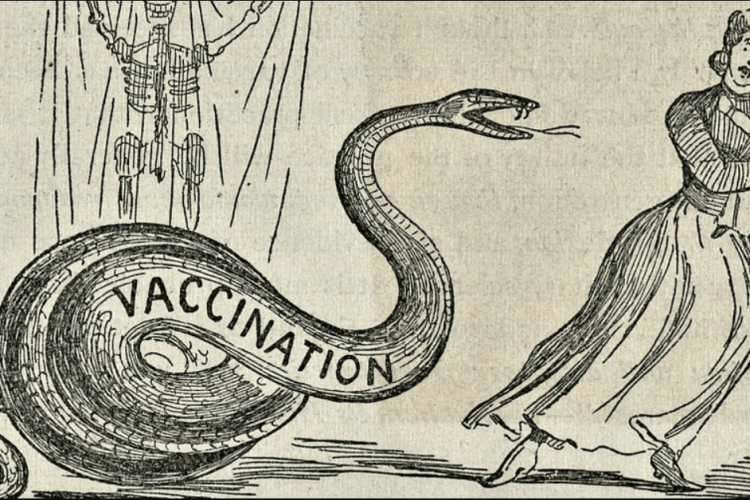
A 19th century cartoon depicting Vaccination as a Snake attacking a mother and child. The snake has a skeleton behind him.

Smallpox vaccination, as practiced for most of the 19th century, was an exercise in filth spreading. It was done via arm to arm vaccination, that is by raising a pustule on one person’s arm and then using that pustule to vaccinate other people in a long chain of vaccinations which went back to an original vaccination with cow pus. This led to a significant spread of disease and vaccine death – that could be covered up by ignoring the source of the disease.

Syphilis

One disease that was spread during the practice of vaccination was syphilis.

It was of course known in the 19th century that syphilis could be spread by sexual activity and could be passed from mother to child (congenital syphilis). Over time, it became more and more obvious that vaccination could also spread syphilis, although this was denied by the authorities for many years.

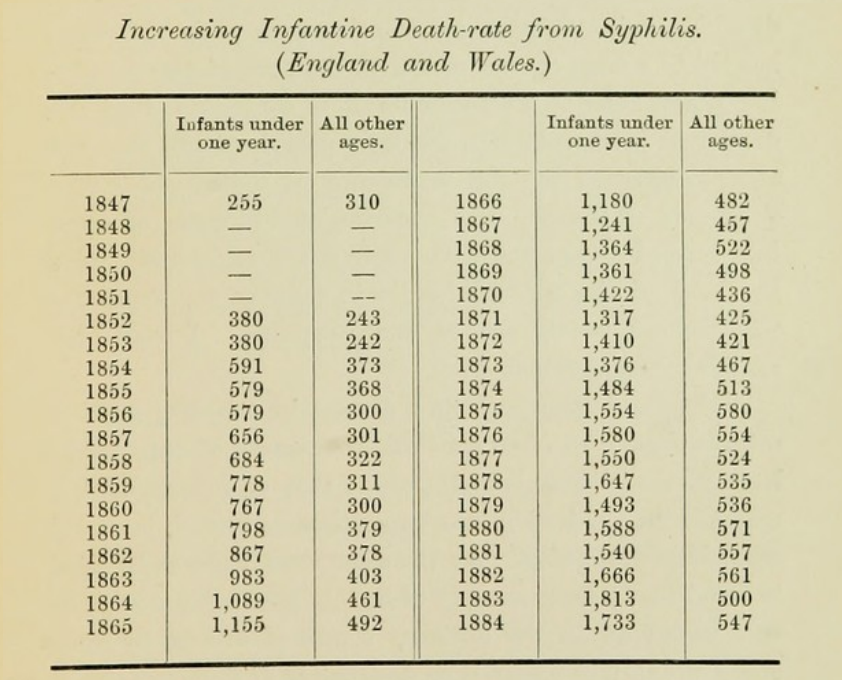
Statistical evidence pointed to the increase in death from syphilis among young children under compulsory vaccination in the United Kingdom. In 1847, before compulsory vaccination, the number of deaths was 255 in England for children under 1 year. By 1884, the number of deaths had increased to 1733. The number shows a steady increase over this time period.

Table entitled Increasing Infantine Death-rate from Syphilis (England and Wales). Shows the death rates for infants under one year and other ages in two separate columns from 1847 to 1884. The data shows a steady rise in deaths across the period.

[Table from Creighton’s Cowpox and Vaccinal Syphilis]

There were also several anecdotes that demonstrated the possibility of syphilis after vaccination. P. A. Taylor cites cases where multiple people were given syphilis by vaccination from the same vaccinifer, for example a case where 29 out of 38 children vaccinated contracted syphilis.

Infant syphilis deaths were covered up by blaming the mother’s alleged immorality.

Tuberculosis

Tuberculosis, or consumption, was a common cause of death in the 19th century.

In the UK and Europe, consumption caused widespread public concern during the 19th and early 20th centuries. It was seen as an endemic disease of the urban poor. By 1815 it was the cause of one in four deaths in England. Up from 20% in 17th century London. In Europe, rates of tuberculosis began to rise; in the early 1600s and peaked in the 1800s when it also accounted for nearly 25% of all deaths. Between 1851 and 1910 in England and Wales four million died from consumption. More than one-third of those fatalities were aged 15 to 34; half of those aged 20 to 24, giving Consumption the name the robber of youth.

Victorian Era Consumption

Anti-vaccinationists suspected that one of the reasons that it was so prominent was vaccination.

In all European armies, vaccination is the order of the day. On their arrival with their corps, the young soldiers are forthwith carefully revaccinated. Now, the military statistics of all countries show an enormous proportion of various forms of tuberculosis among soldiers, especially during the first and second year after their enlistment. […] To sum up, the young soldiers find with their corps material conditions of life, which, for a very large number, are superior to those of their native surroundings. […] Whence then can come these attacks of tuberculosis, so sudden, so numerous, upon subjects that, but a few months before, the council of revision rightly declared to be fit for service.

Dr. Perron

Some also believed that because cattle can be subject to tuberculosis, the ‘glycerinated calf lymph’ method of extracting vaccine matter (infecting a cow with smallpox and then extracting the matter) might pose a risk.

Leprosy

The spread of leprosy via vaccination was significant mainly in imperial possessions. As colonialism was widespread in the 19th century, one of the items imposed and cajoled onto the native populations was vaccination.

William Tebb describes the situation in Hawaii regarding leprosy. He states that it was completely unknown prior to the introduction of vaccination, but since vaccination was introduced it had spread:

In a leading article on “The Nature of Leprosy” The Lancet, July 30th, 1881, p. 186, says :—” The great Importance of the subject of the nature and mode of extension of leprosy is evident from the steady increase in certain countries into which it has been introduced. In the Sandwich Islands [i.e. Hawaii], for instance, the disease was unknown forty years ago, and now a tenth part of the inhabitants are lepers. In Honolulu, at one time quite free, there are not less than two hundred and fifty cases.”

Tebb, Leprosy and Vaccination

He goes into detail about how leprosy is spread, showing that while it is not spread by casual contact, it can be spread via inoculation or anything involving piercing the skin. He gives numerous examples of leprosy caused by vaccination and travelled to multiple countries in order to investigate the issue. He found cases not just in Hawaii but also India, South Africa, and other countries. Some cases had the first symptoms at the site of vaccination.

Conclusion

Vaccination was a proven method to spread diseases in the nineteenth century, and in fact, could spread much worse diseases than smallpox (since smallpox either resulted in recovery or death in most cases, whereas these other diseases often led to a slow increase in symptoms). As such the idea that vaccination was a life saver was fatally flawed.

Smallpox Vaccine Death: A Long, Ignored History

Vaccine deaths have always existed, and have always been denied. This is a story of some of these forgotten vaccine deaths.

Inoculation Deaths

Inoculation, or variolation, was the practice of deliberately infecting someone with smallpox. This was the practice that was used prior to the introduction of the Jennerian method of deliberately infecting people with cowpox as a method to protect from smallpox.

This practice was very dangerous. The more sensible (if that’s the right word) inoculators admitted this risk, they just argued that the odds were better with inoculation than natural infection since they had observed that people generally only got smallpox once.

A man called Jurin (a pro-inoculator) collected statistical data on the question of inoculation. He stated that inoculation had a death rate of 1 in 48 (13 in 624). But that the natural disease killed 1 in 6, so that the odds were better with inoculation (of course, what this logic ignores is that you aren’t guaranteed to get smallpox, and even if you were, you might get it many years later, meaning many life years lost to inoculation).

The Case of John Baker

When Edward Jenner entered into this discussion, he performed experiments on children to attempt to prove that cowpox protected from smallpox. This bit is well known, what is less emphasised, however, is Jenner’s arguments relating to horse grease and cowpox. Jenner believed that there was more than one form of disease of the cow’s teat – horse grease cowpox and spontaneous cowpox. In his initial text, the Inquiry, he argued that the protective form of cowpox was the horse grease form. Jenner believed that the disease was essentially artificial in the cow. The chain of events was as follows, in Jenner’s mind: the horse developed a disease known as grease which affected the heels of the horse. The farrier would have to dress the heels of the horse, causing the disease to be on his hands. However, he also did double duty milking the cow, and as such, then spread the disease to the cow’s teat. Pustules and inflammation developed on the teat as a result and this was horse grease cowpox (which could protect from smallpox).

This is relevant because Jenner wanted to compare direct horse grease with horse grease cowpox. As such, he vaccinated two children, one with horse grease direct and one with cowpox. The child vaccinated with the horse grease was John Baker, a 5-year-old. Jenner had intended to test his immunity by inoculating him for smallpox, but he was ‘rendered unfit for inoculation’, Jenner said, by a fever he caught in the workhouse. The boy died and the most plausible assumption is that he died as a result of the vaccination experiment.

‘Preserving Vaccination From Reproach’

Vaccination death has always been covered up by the medical establishment. As critics of vaccination have pointed out, one way this is done is to put the symptom on the death certificate, but not the cause of the symptom. In this way it can be stated that the child died of erysipelas or some other condition, without blaming vaccination.

What is of interest is we have one case from the 19th century where a doctor openly stated they concealed vaccination as the cause of death on a death certificate. Henry May, a physician from Birmingham (United Kingdom) stated the following in 1874:

A death from Vaccination occurred not long ago in my practice, and although I had not vaccinated the child, yet in my desire to preserve Vaccination from reproach, I omitted all mention of it from my certificate of death.

Henry May, cited in White 1885

20th Century Deaths

For much of the twentieth century, deaths from vaccination were higher than deaths from smallpox. Smallpox declined due to increased sanitation:

A Mr. John Cryer, an ardent anti-vaccinationist, taught school in Bradford, Eng. One day he noticed a lad of about twelve years—a new pupil in school. He questioned him: “Where did you come from?” “Sheffield, sir.” “How long have you resided there?” “Six years, sir.” “How many are there in the family ?” “Six of us, sir.” “Then you were in Sheffield during the small-pox epidemic ?” “Yes, sir.” “Did any of you have the small-pox?” “Oh, no, sir, we lived in a front street.” That last sentence tells the whole story. It is worth more than a dozen reports of Local Guardians; worth more than whole columns of statistics. It hits the nail square on the head, and locates the disease. Why didn’t the lad say: “Oh, no, sir, we were all vaccinated?”

J.M. Peebles

Vaccination also declined significantly after the mandates were eased and objection clauses inserted.

Nevertheless we have multiple deaths reported from vaccination. Between 1933-1946 there were 89 child deaths from vaccination according to the official statistics. During the same time 28 died from smallpox. This will likely be a large undercount due to the concealment of vaccination deaths.

This is a very small sample of death that has occurred as a result of smallpox inoculation and vaccination.

Image via openverse.

Examining the CASE Approach to ‘Vaccine Hesitancy’

The media and governments put a large amount of effort into attempting to manipulate people into taking vaccines, or vaccinating their children. However, these manipulation strategies also exist at the level of the paediatrician. Doctors are armed with strategies that seek to manipulate you into vaccination. Now I would suggest avoiding a doctor’s office as much as possible, but nevertheless we should take a look at the strategies they use to trick people into taking vaccines. Partly to expose the strategy, but also partly to expose how unethical they are.

The CASE approach to ‘vaccine hesitancy’ (as they insist on calling rejection of vaccination) stands for “Corroborate, About me, Science, and Explain/advise.” The analysis of CASE below draws on this linked article to demonstrate the manipulation involved in ‘combating vaccine hesitancy’.

The first thing that we observe is that they need a specific strategy for explaining their case in the first place. I would suggest that this relates quite strongly to the psychology of the physician themselves. As Vaccination is a key Pillar of Faith in allopathic medicine, any challenge to vaccination, no matter how limited, is a threat to the paradigm. I would suggest that one function of having such a strategy is to get the physician to refocus their own thoughts and not get angry at the challenger to the Vaccine Faith (as anger is unlikely to convince anyone to vaccinate).

So let’s explore the strategy. The first aspect of the strategy, Corroborate, is meant to psychologically soothe the patient/parent, by signaling that the concern is acknowledged. This is done by signaling a limited form of acknowledgement of the statement, by stating that they understand where the criticism is coming from. Of course, the doctor won’t do anything such as actually take the concern seriously, no, that would be bad now wouldn’t it. We just have to pretend to humour the anti-vax nutcase so we can get them to jab, jab, jab.

The next step is About Me, that is, explaining how they are so much more knowledgeable on this issue than you. Now, I’m sure as they are always whining about how overworked they are, they have time to read multiple papers about vaccines and much historical discussion of vaccination a week. They completely ignore the fact that many anti vaccine parents have read more literature on vaccines than they have! I would hazard a bet that I have read more literature on vaccines than your average GP and I’m still improving and absorbing information constantly.

Next comes the Science, and by Science here folks we mean repeating information on the NHS/CDC, etc website. Then the explain/advise, which is why the doctor wants you to just take the vaccine already so that they can get more money for their practice. Furthermore, their explain/advise strategy is to try and push you into getting injected immediately, one of the examples given pushes the idea of getting vaccinated ‘today’. I don’t know if anyone’s ever done fraud awareness or the like. One thing you will get told on any fraud awareness webpage is that if anyone tries to rush you into doing something such as handing over details by invoking a sense of urgency that this a red flag for fraud. Now that really sums it all up, doesn’t it?

Image Credit: Photo by Mikhail Nilov on Pexels.com

The Concept of a Chickenpox Vaccine Exposes the Bankruptcy of the Vaccine Paradigm

Image of United States Dollars with the Word 'Fraud'

In the UK, there has just been an announcement relating to the varicella (chickenpox) vaccine.

From the government:

JCVI [Joint Committee on Vaccination and Immunisation] recommends chickenpox vaccine in childhood immunisation programme

Statement

Currently, the varicella vaccine is not on the UK childhood vaccine schedule, but as of yesterday, the JVCI is seeking to change this.

The Joint Committee on Vaccination and Immunisation (JCVI) has recommended a vaccine against varicella, commonly known as chickenpox, should be added to the UK’s routine childhood immunisation programme.

The vaccine would be offered to all children in 2 doses, at 12 and 18 months of age.

The committee has submitted its recommendations to the Department of Health and Social Care (DHSC), which will take a final decision on whether to implement a programme.

It will probably be rubberstamped, so that they can start giving the vaccine as soon as possible. Of course, we should just ignore the evidence that the JCVI is corrupt and ignored real problems with the Urabe MMR vaccine. Pharma profit is clearly much more important.

The vast majority of people remember getting chickenpox as a child. What happened? You were off school for a week and itched a lot. That was about it. Nothing happened. Your parents weren’t worried. The school wasn’t worried. No one cared. You were possibly told that if you get the chickenpox young, you’re better off. And we need a vaccine for this?

The JVCI has come up with a model to address this problem. Because many people are probably thinking exactly the same as what I’m thinking, even if they support some vaccines. Kind of like when even many Covid fanatics drew the line at injecting mRNA into their five year old because there was no benefit.

The purported justification for this vaccine is some really rare, fringe cases where someone got significantly sick. As such we should inject all healthy children with chickenpox vaccines. Of course this is nuts. The model seeks to play up the risks of chickenpox, and claims that the risks have been underestimated, well of course, what else are they going to say? Now of course we should probably be a bit scpetical given the UK government’s track records with modelling (Neil Ferguson is quite strongly coming to mind at this stage).

The rate of vaccination injury is not even considered in the JVCI model. Even if we assume the vaccine is effective, a very low rate of vaccine injury will massively outweigh any benefits of saving people from chickenpox since well, chickenpox just isn’t very deadly (I can’t believe I have to point this out). Yet the JVCI page online does not mention that adverse reactions as a consideration in their model. Parents having to take a week off work is considered though. Because that is far more important than vaccine injury.

Even more horrible, they want to stick this in MMR, yes, they want to make the MMR vaccine even worse. The only mention of vaccine injury comes in this section with a reference to increased febrile seizures with a combined MMRV vaccine as opposed to MMR + V vaccines. Honestly this rearranging deck chairs on the Titanic while children are poisoned to death. Nevertheless rare, not of concern, etc, standard pro vaccine spiel.

They also seek to justify why they want to promote the vaccine at this time, since, they previously rejected the idea of chickenpox vaccines:

Due to the larger pool of varicella-susceptible children following the pandemic restrictions and, as vaccination is predicted to significantly decrease circulation of varicella, susceptible people may continue to be vulnerable to catching varicella as they head into adulthood. 

In other words, let’s use the lockdown that we did to push more of what we want: or, problem-reaction-solution.

They also state that the vaccine recommendation will put us in line with other countries like the United States. Yeah, because we really want to be in line with the United States’ vaccine insanity.

In conclusion, this rather odd sentence from the recommendation stuck out to me:

The community arm of the study estimated the quality adjusted life year (QALY) loss in cases which would not be captured in any medical datasets. This study aimed to assess the impact of mild varicella on quality of life, healthcare use and the financial and health impact on the family unit.

As we can see from the above information, a study was literally done on ‘mild varicella’ i.e. being off school and itching for a week and its effects on ‘quality of life’ and ‘the family unit’. This may seem a bit nuts but trivial, i.e. why would anyone study the effect of being mildly sick for a week? In fact it shows the deeper hubris involved in the vaccination program. All minor inconveniences caused by Nature must be abolished even if it’s being itchy for a week. Consequences? What are those? The idea of a vaccine for everything, no matter how rare or trivial, proves that vaccination is not about our health, but pharma profits and medical hubris.

Image credit Photo by Tara Winstead on Pexels.com

The Actual Historical Practice of Vaccination

I have mentioned in previous articles the cult of sterility and cleansing that exists as part of the practice of vaccination. Images such as the white coat, sterile room, mask, etc. promote the idea of the sterile and cleanliness.

The receipt of the injection is a cult ritual. It is a sacred act. One is prepared for the receipt of the injection by the doctor, the modern day priest. The clean sterile environment, free of danger, germs, serves like the stained glass of old – to induce reverence, and as a reminder of what bounty one (or one’s child) will receive for undergoing the pain of the needle – a sterile, germ free body.

The Cult of Vaccination

However, the actual historical practice of vaccination is at odds with that sterile image. One of the paradoxes of vaccination has always been that it has sought to purify via defilement, to prevent disease by invoking it. Nowadays, the process has been so sanitised that the disease is barely invoked, being a few dead particles of virus that while bringing forward horrific injuries does not create the disease it attempts to protect from.

This was not always the case. The defilement aspect was much more obvious in historical vaccination and inoculation. Historically, inoculation/vaccination was performed by taking matter from a pustule. Sometimes, the matter was preserved on another surface before being rubbed into a wound made with a lancet; on other occasions, it was rubbed directly into the wound. For example, when performing his first vaccination, Edward Jenner took matter from a pustule on the hand of a milkmaid; her hand had become infected with cowpox from milking the cow.

THE more accurately to observe the progress of the [cowpox] infection, I selected a healthy boy, about eight years old, for the purpose of inoculation for the Cow Pox. The matter was taken from a sore on the hand of a dairymaid, who was infected by her master’s cows, and it was inserted, on the 14th of May, 1796, into the arm of the boy by means of two superficial incisions, barely penetrating the cutis, each about half an inch long.

An Inquiry Into the Causes and Effects of the Variolæ Vaccinæ

Of course, this was the deliberate spread of a cow disease to humans, a fact heavily mentioned by some of the early anti-vaccinationists:

Can any person say what may be the consequences of introducing a bestial humour—into the human frame, after a long lapse of years?

Benjamin Moseley

In reality, although vaccination purported to be cowpox inoculation, there were multiple sources of ‘vaccine lymph’, with people experimenting with sheep pox, goat pox, and horse pox (Jenner believed that the cowpox came originally from the diseased heel of horses). Equine lymph in particular was significant in its usage.

For most of the nineteenth century, the kind of vaccination practiced was largely arm-to-arm vaccination. An initial set of vaccinations would have been performed direct from the cow or from a cowpoxed milkmaid who caught the infection via handling the teat. After the vaccinations had roused pustules on the arms of those undergoing the procedure, a vaccinifer could be selected to take a fresh batch of lymph from and carry on the chain of vaccinations. The vaccinifer would usually be selected by how well the vaccination ‘took’, that is the size and shape of the pustule produced, and whether it was adjudged to be a ‘good’ pustule.

This method came under criticism and was eventually banned. The replacement method ended up going back to the cow:

By referring to the cut on this page it will be seen that the living calf or heifer is first bound down on a movable tilting table, and its belly is shaved and on the clean, tender skin of a most tender part one or two hundred cuts or scratches are then made, as shown, and into these cuts or scratches is rubbed some “seed virus,” obtained directly or indirectly from human smallpox, and other known or unknown human or animal infections. Now after the calf has been inoculated as described, it is removed from the table and allowed to stand on its feet in its stall securely tied, and carefully fed and tended and allowed to remain thus for about a week, with its one or two hundred festering wounds gradually filling up with ulcerative or suppurative disease matter. At this stage the calf is now again strapped on the table for the collection of this accumulated disease matter.

Chas Higgins

What is the point of elaborating upon this information? Simply because when looked at objectively, the idea that this practice reduced disease is rather absurd. A priori, taking lymph from a pustule on another human being or an animal had the potential to spread many other diseases that were present in the vaccine lymph. There were multiple cases of syphilis from vaccination, and observed increases in infant syphilis deaths. There were contrasting views on the reasons for this rise, with Creighton seeing cowpox as essentially a form of syphilis where others believed the syphilis was spread along with the vaccine matter. Some other anti-vaccinationists, such as Alfred Russell Wallace, pointed to an increase in pyaemia (a form of sepsis) and skin diseases.

This contrast between historical and modern practices of vaccination reveals an interesting tension in the vaccine narrative. On the one hand, anyone would have to agree that the above procedures are unsanitary and dangerous, especially pro-vaccinationists, since they lived in morbid fear of the Covid virus, a disease much milder than smallpox or syphilis. On the other hand, any pro-vaccinationist would also argue that Jenner’s smallpox vaccine, and thus the procedures described above, reduced disease and death.

(Image via Openverse)

The Familiar Excuses for Smallpox Vaccine Failure

Recently, I have been reading some of the anti-vaccine literature written in the nineteenth century. There are many things fascinating about it, one of which was that the antivaxxers of the time were much less diplomatic than our antivaxxers. Take this excerpt from John Pickering, for instance:

Vaccination, then, is simply a vile, useless, mischievous, unnatural, and barbaric piece of quackery; a trade for fools, for sorcerers, snake-charmers, rain-makers, fakirs, and fetich worshippers,—not for men of education, not for men who profess acquaintance with the laws of nature.

Another notable point is the fact that the average person is probably not even aware of the fact that there were anti-vaccination activists, leagues, etc, in the nineteenth century that fought against compulsory vaccination laws.

Let’s step back a bit into the topic of this article. Vaccination in the nineteenth century meant vaccination for smallpox, as other vaccinations were not invented until late in that century. Edward Jenner was the original promoter of this practice, as an alternative to the then-practiced inoculation for smallpox. Inoculation essentially meant deliberately infecting people with smallpox, on the theory that everyone would get the disease anyway and after having it be immune, so it was better to deliberately inflict it at a time and place of choice, and with a mild version, rather than risk natural infection. As inoculation led to deaths from smallpox and risked spreading the natural infection, the idea of using vaccinia (cowpox) was an alternative approach that came to be promoted by Jenner. There was a prevalent belief that dairy maids would not get smallpox because of having cowpox, so Jenner ran experiments where he deliberately introduced cowpox to see if it would protect from smallpox.

Jenner’s conclusion was as follows:

When it has been uniformly found in such abundant instances that the human frame, when once it has felt the influence of the genuine cow-pox in the way that has been described, is never afterwards at any period of its existence assailable by the smallpox, may I not with perfect confidence congratulate my country and society at large on their beholding, in the mild form of the cow-pox, an antidote that is capable of extirpating from the earth a disease which is every hour devouring its victims; a disease that has ever been considered as the severest scourge of the human race!

III. A Continuation of Facts and Observations Relative to the Variolæ Vaccinæ, or Cow-Pox. 1800 [my emphasis]

This theory of ‘perfect security’, alas, fell apart pretty quickly. As early as 1805, William Rowley published many examples of vaccine failure. One could argue that Rowley was somewhat biased as he sought to defend the previous practice of inoculation against vaccination but nevertheless the evidence stacked up. How did the vaccinators deal with case after case of smallpox after vaccination?

Framed poster advocating vaccination against smallpox (poster) by Unknown maker is licensed under CC-BY-SA 4.0

What we see is a narrative change. Instead of the claim of ‘perfect security’ we see other claims come to the fore to defend the practice of vaccination. Some of these were that those who got smallpox after cowpox didn’t have the ‘genuine’ cowpox (a claim made by Jenner himself) or that the vaccination did not ‘take’ effectively. However by far the most interesting of these claims is that while vaccination did not always prevent infection, it did reduce the severity of the disease if you happened to contract smallpox.

Rowley refers to this argument:

But another refuge of the learned Cow-pox inoculators, after they seemed beaten out of many of their strong holds by opposing irrefutable facts, that could not be denied, then a new idea strikes the vaccinating mind, namely, that wherever Small Pox made its appearance, it would be wise to try another project — to inoculate the neighbouring children with the Cow Pox, in order to render the Small Pox milder.

Cow-pox inoculation no security against small-pox infection

Charles Pearce, writing much later, also refers to this argument made by the vaccinators:

It is no longer denied that the vaccinated do succumb small-pox, but it is contended that a certain amount protection is awarded. It is, moreover, assumed that those who recover from small-pox having been vaccinated, would probably have died had they not had some protection.

Vital Statistics: Small-pox & Vaccination in the United Kingdom of Great Britain and Ireland

This kind of argument is now starting to sound eerily familiar. This is of course exactly the same claims made regarding the Covid ‘vaccines’: initially they said that you would not get Covid, and then when it became obvious that ‘breakthrough infections’ were everywhere, the narrative changed to the Covid ‘vaccine’ preventing severe disease.

Thus we can conclude that the same goalpost-moving has been used to prop up the vaccination fraud from the beginning.

Images via openverse.

Measles Pandemic!: The Latest Big Pharma Advertising Campaign

Introduction

The idea of ‘pandemics’ and ‘outbreaks’ is one of the most convenient and effective ways for a government to sell fear and make money for their corporate backers (via vaccination drives). Although this did happen before Covid-19, such with the 2009 H1N1 ‘pandemic’, after Covid-19 the media has focused more on viruses and ‘pandemics’ in general, with random scare stories about viruses being grist to the MSM mill. Over the past few weeks, the idea of a ‘measles pandemic’ has been heavily pushed in the UK media. This article will discuss three aspects of this phenomena: the narrative, the purpose and the reality.

Part 1: The Narrative

Back in around September/October 2022, I noticed there seemed to be several random articles in the mainstream media about the ‘low uptake’ on the MMR (measles, mumps, rubella) vaccine.

For example, this article in the Daily Mail:

More than a third of children have not had their life-saving MMR vaccine in parts of England, according to official stats which illustrate why health chiefs fear a measles resurgence.

Revealed: More than a THIRD of children have NOT had both MMR jabs in parts of England as uptake rates plunge to lowest level in a DECADE amid rise of anti-vaxx myths

Another article scaremongers about the risk of ‘outbreaks’:

Outbreaks of measles and polio are now ‘likely’, top experts warned today as official statistics revealed childhood vaccination rates have plunged.

Fears measles, polio and other ‘diseases of the past’ could return as child vaccination rates drop for ALL 14 inoculations – with MMR jab uptake at a DECADE low, ‘extremely worrying’ NHS statistics reveal

This immediately raised a red flag in my mind and got me thinking they might attempt to create a ‘measles pandemic’ and that this was the first signs of a new campaign.

Now, this narrative is back.

How are they building up the notion of fear?

The media has been recently filled with stories like this:

[T]he capital could experience an outbreak of between 40,000 and 160,0000 [yes, that typo is in the article] cases, fresh analysis by the UKHSA suggests.

London at risk of major measles outbreak, UK Health Security Agency warns

Let’s go a little bit deeper into the basis of this alleged measles outbreak:

UKHSA modelling suggests that, unless MMR vaccination rates improve, London could see a measles outbreak with tens of thousands of cases.

London at risk of measles outbreaks with modelling estimating tens of thousands of cases

Wait…modelling?

We all know how successful modelling was with Covid. That is, successful at selling fear, because it certainly wasn’t successful at predicting ‘Covid cases and deaths’ since all the data it came out with were massive overestimates.

The model pdf report says:

[T]he risk of widespread transmission of measles, leading to a measles epidemic across the UK is considered low.

Risk assessment for measles resurgence in the UK

After that caveat (not mentioned in the media) we get into some nice fear porn like this:

Hospitalisation rates vary by age but range from 20 to 40%.

20% of even the fittest and healthiest age groups would be hospitalised for measles? Who believes this nonsense?

There doesn’t seem to be much of a ‘model’ in the report, their argument seems to be the lower vaccination rate in London means that the R (remember R from Covid fear porn?) is approaching 1 and this means there could be an outbreak:

[U]sing the UKHSA model, the reproduction number in London is now close to or above 1 (R=1.6, R=1.4, R=0.91) and could therefore result in an outbreak of between 40,000 and 160,000 cases.

The R rate (that is, the rate at which a virus spreads in the community, if you don’t remember it from Covid, so 1 means every infected person infects 1 other person) is calculated purely from vaccination rates among 25 and under. So far yet, this is purely hypothetical as there is no mass measles outbreak.

As to why measles has been selected for the fear campaign?

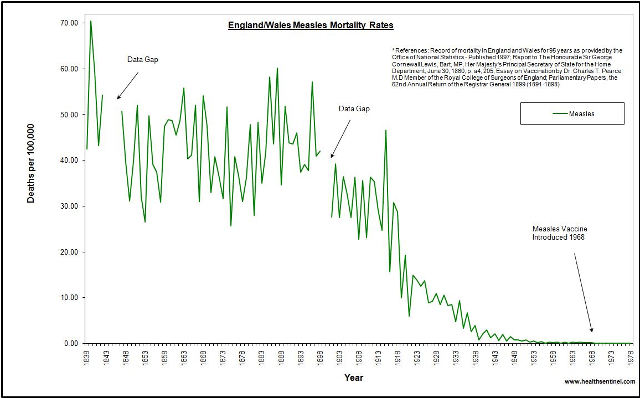
A measles outbreak seems a nice, likely candidate for a new fear campaign for a number of reasons. There is a large amount of (untrue) propaganda that a high mortality rate from measles was only stopped with the introduction of a measles vaccine.

Because measles is also a childhood disease, this evokes fear in parents that their child will die of measles. This contrasts with previous fear campaigns Covid-19, which clearly was not dangerous to children, and monkeypox/mpox/whatever-it-is-now, which largely affected gay men who had promiscuous sex.

Part 2: The Purpose

What’s the purpose of all this?

One of the main purposes is to sell MMR vaccination. Many of these articles fearmongering about measles (such as this one) have a picture of MMR vaccine vials – essentially product placement. You might not think the market would be that big – after all only young children get measles vaccines, right? But there’s actually potentially a bigger market than just young children available.

In fact, as per the UK Government, a large proportion of the population is not ‘fully vaccinated’ against measles, mumps and rubella. Why is this? Because the UK government deems that you need two doses to be ‘fully vaccinated’. The MMR vaccine (at 1 year) was introduced in 1988, but a second dose of the MMR vaccine (between 3-4) was not introduced until 1996, meaning 8 years of people not considered ‘fully protected’ who second doses can be sold to. Then there’s the people whose parents refused to let them have the MMR vaccination due to Wakefield’s paper. This group is referred to in the government press release as possibly ‘not fully vaccinated‘.

And then there are adults who were children before MMR was introduced. Presumably, these adults received a 1 dose measles single vaccine. Perhaps they are hoping that the endless fear porn will cause more people to ask their GPs for MMR vaccines. Many of the media articles stress that you can ask your GP about MMR vaccines if you are unsure of your vaccination status, as does the government press release:

Parents should check their children are fully vaccinated with 2 MMR doses, which gives 99% life-long protection, by checking their red book or with their GP practice, which younger and older adults can also do. Anyone not up-to-date should make an appointment as soon as possible.

London at risk of measles outbreaks with modelling estimating tens of thousands of cases

Another purpose is to demonise antivaxxers, and also to set up the narrative of blaming antivaxxers for any cases that occur (real or fabricated). We can see this in a recent article from the Daily Mail. Dr. Ahmad Malik, a British surgeon sceptical of the Covid jabs, recently interviewed Dr. Andrew Wakefield for his podcast. The Daily Mail immediately put out an article on Wakefield’s ‘misinformation’:

The disgraced ex-doctor and godfather of the anti-vax movement sparked fresh outrage today by claiming kids shouldn’t be given any jabs. Andrew Wakefield made the hugely controversial comments in a new podcast.

Disgraced ex-doctor and anti-vaxxer Andrew Wakefield claims he wouldn’t recommend kids get ANY jabs in new podcast, sparking fury among medics

While you do get occasional hit pieces on Wakefield in the media, why this podcast was selected for instant hatred was most likely due to the timing of its release – late July 2023. Wakefield has done multiple interviews with different alt-media (e.g. Steve Kirsch, UI Network, CHD) over the past few years without that much comment. However the timing of the release of the Malik podcast allows the media to blend this into their ‘measles pandemic’ push:

Fellow orthopaedic surgeon Dr Roshana Mehdian noted that Dr Malik was registered with the General Medical Council, the body that regulates medics in the UK. She noted that it comes ‘amidst a measles outbreak in London’.

Wakefield is ‘irresponsibly spreading’ ‘anti-vax disinformation’ ‘in the middle of an outbreak’ – where have we heard this tune before? This is a ‘measles outbreak’ that according to the article itself, consists of…85 cases.

The final function I will discuss is fear. That is pretty simple, to keep people in a state of fear so that if the government wants to revive policies like lockdowns in the future they will have an easier time of it. It has been demonstrated that people are more primed to accept authoritarian governments if there is a pandemic or illusion of a pandemic.

Part 3: The Problem

What do I mean by the problem? Vaccine failure. If we do get a resurgence of measles (which of course, is possible, although there is no evidence that this has occurred so far) vaccine failure will be the prime culprit.

The reality is that Measles/MMR vaccination has been a failure. The problem with vaccination is simple: while it is true that vaccination ‘produces antibodies’ the problem is that the manipulated solution of vaccination does not produce antibodies comparable to natural infection. This means that real immunity is not created to measles.

This is a study that Andrew Wakefield has pointed to in his discussions on measles vaccine failure. The study is called Measles Virus Neutralizing Antibodies in Intravenous Immunoglobulins: Is an Increase by Revaccination of Plasma Donors Possible? and it discusses levels of antibodies in blood donated for purposes of IVIG.

In short, levels of antibodies to measles are much lower since vaccination than they were prior to vaccination:

The study also found that adding a booster dose of the MMR vaccine only raises antibody levels in the very short term.

It’s also important to point out that all vaccination can do is put antibodies in the blood (regardless of the actual clinical meaning of those antibodies – as antivaxxers correctly argue, generating a bunch of antibodies is not proof of correlate of protection). The complex nature of the immune system is something not considered in vaccination (as discussed previously in this article). The complex responses created by natural infection are not something crudely rigging the immune system with vaccination can achieve. So if vaccination is even a failure at generation of blood antibody titers it’s a total failure.

James Lyons-Weiler also provided a helpful list of studies relating to measles vaccine failure on his substack. These are studies completed by vaccine promoters that nevertheless show real issues with measles vaccination. I cannot discuss all 25 (and of course, some of them are paywalled) but a glance at a few is worth our time.

One article from 1987 highlights vaccination failure was known even at that time:

An outbreak of measles occurred in a high school with a documented vaccination level of 98 per cent. Nineteen (70 per cent) of the cases were students who had histories of measles vaccination at 12 months of age or older and are therefore considered vaccine failures.

Measles outbreak in a vaccinated school population: epidemiology, chains of transmission and the role of vaccine failures.

One of the articles highlighted by Lyons-Weiler is co-written by Greg Poland, one of the most fanatical vaccinators on the planet. This is the guy who got tinnitus from the Covid ‘vaccine’, acknowledges he got tinnitus from the Covid ‘vaccine’ and still took a booster. So if even this guy is acknowledging limitations of measles vaccination, we must be looking at some degree of failure.

Receiving less attention, however, is the issue of vaccine failure. […][W]e and others have demonstrated that the immune response to measles vaccine varies substantially in actual field use. Multiple studies demonstrate that 2–10% of those immunized with two doses of measles vaccine fail to develop protective antibody levels, and that immunity can wane over time and result in infection (so-called secondary vaccine failure) when the individual is exposed to measles. For example, during the 1989–1991 U.S. measles outbreaks 20–40% of the individuals affected had been previously immunized with one to two doses of vaccine.

The Re-Emergence of Measles in Developed Countries: Time to Develop the Next-Generation Measles Vaccines?

For clarity we are talking about pretty small outbreaks here, so this as of yet cannot be taken as proof of mass vaccine failure. Nevertheless it demonstrates significant problems with the vaccine:

However, even with two documented doses of measles vaccine, our laboratory demonstrated that 8.9% of 763 healthy children immunized a mean of 7.4 years earlier, lacked protective levels of circulating measles-specific neutralizing antibodies [11], suggesting that even two doses of the current vaccine may be insufficient at the population level.

Meanwhile, the idea of measles ‘elimination’ via vaccination is a nonsense that is impossible, even with a mostly effective vaccine:

…measles eradication is unlikely as population immunity of 96–98% is required to prevent persisting measles endemicity [7,8,27,201]. In a recent study of measles-vaccine efficacy from 1960 to 2010, median efficacy was only 94% [28].

From an article by Poland, et al Cited by James Lyons-Weiler.

There are significant other factors concerning vaccine failure that could be considered, such as whether vaccination will drive new strains of the virus to arise, or that it may make measles more dangerous, that are beyond the scope of this article.

Conclusion

The UK government, media and establishment in general are attempting to push a fear based narrative around measles in order to sell MMR vaccination to the public and blame antivaxxers for any outbreaks. In reality, vaccine failure has been a contributing factor to outbreaks, and will continue to be so into the future.

Photo 1: by Markus Spiske on Pexels.com

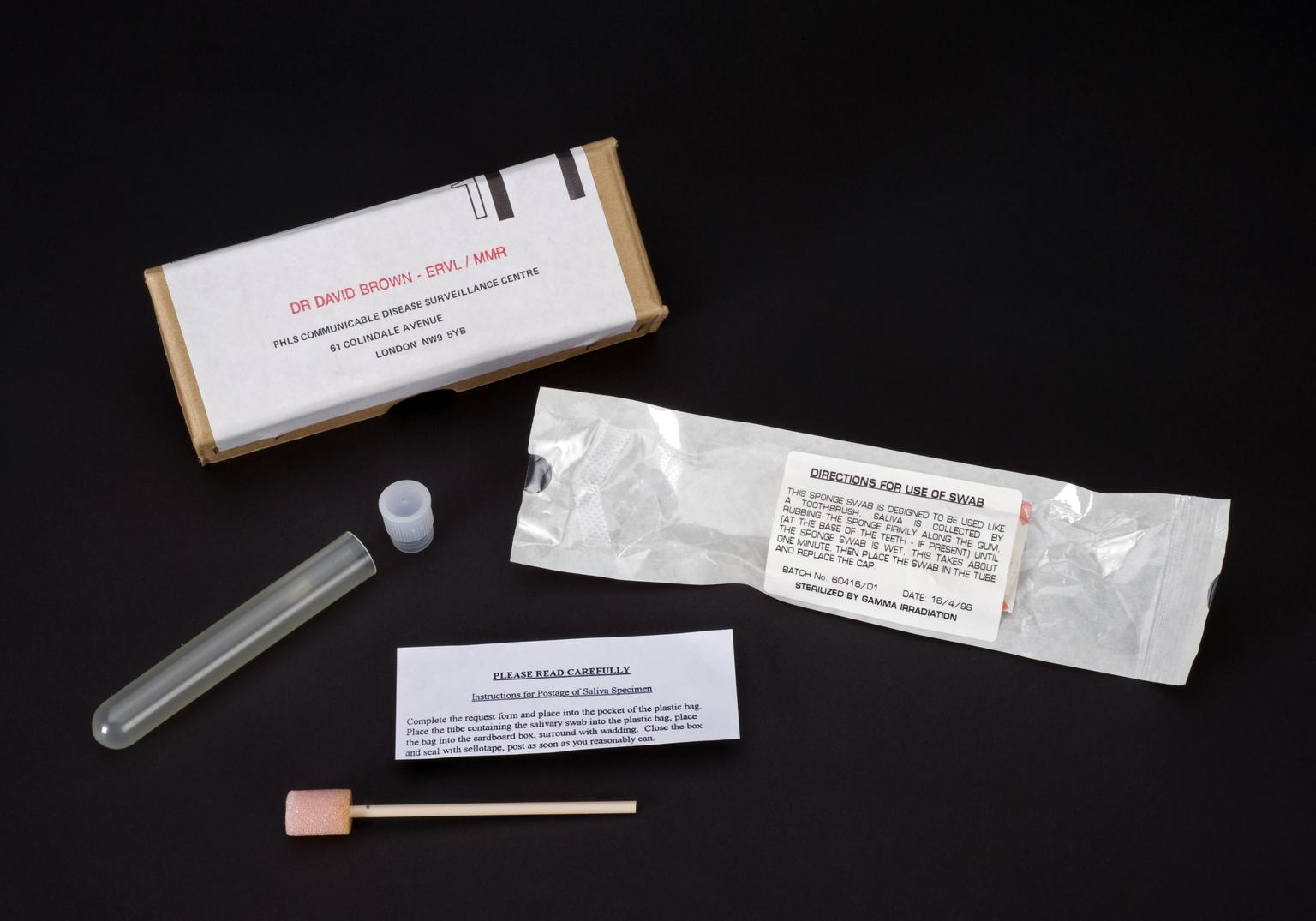
Photo 2: Swab used in measles frequency studies, London, England, 1996 (salivette) by Unknown maker is licensed under CC-BY-NC-SA 4.0 (via Openverse)

The Urabe Strain MMR Vaccine: Adverse Events and Medical Corruption

“In the area of vaccination, since its inception, the public has paid a price for an illusory peace of mind.”

Martin J Walker MA

Introduction

The MMR (Measles, Mumps, Rubella) vaccine has been subject to controversy in the United Kingdom and worldwide, due to the 1998 Lancet paper by Wakefield et al. However there is one scandal around this vaccine that has been largely forgotten, despite the fact it has affected hundreds of thousands of UK citizens who were born in the late 1980s-early 1990s. This is the story of the MMR vaccines which contained the Urabe strain of mumps – and had to be removed from the Canadian, Japanese and UK markets due to causing aseptic meningitis in certain children. This episode demonstrates the corruption of the vaccine industry and the regulatory authorities in the United Kingdom in particular and shows that the deliberate use and promotion of known unsafe vaccines did not begin with Covid-19.

The History of the MMR Vaccine

Vaccination for measles, mumps and rubella was originally introduced in the 1960s. These were originally introduced as separate doses and not as a combined vaccine. For example, the measles vaccine was originally introduced in 1963 in the United States and the mumps vaccine was introduced in the US in 1967. The combined MMR vaccine was introduced in the 1970s in the United States and Canada, but somewhat later in some other countries, and in the UK in 1988. The MMR is a live virus vaccine, so it contains versions of these three different viruses that have been attenuated via running them through cycles in tissues in a lab.

However the virus strains in the MMR vaccine have not always been the same. There are multiple different MMR vaccinations that have been used since the 1970s, and one of the key differences has been the strain of virus employed to attempt to create artificial immunity. For example, a current vaccine in use, Priorix, contains the following strains of virus:

attenuated Schwarz measles, RIT 4385 mumps derived from Jeryl Lynn strain and Wistar RA 27/3 rubella strains of viruses. 

Priorix Vaccine Page

Though there have been differing strains of measles and rubella employed, this article is concerned with the mumps strains employed in the vaccines. According to a 1994 US government report on vaccine adverse events, there are three main strains of mumps used in MMR vaccinations: Jeryl Lynn, Leningrad-3-Parkow, and Urabe AM9. There have been differing vaccines using these strains, for example, both Priorix and MMR II use the Jeryl Lynn strain of mumps. There have also been multiple MMR vaccinations using the Urabe AM9 strain; the main two of concern in this article are Trivirix/Pluserix (two names for the same vaccine – the former used in Canada, the latter elsewhere) and Immravax. Although there is evidence that other strains of mumps virus used in MMR can cause aseptic meningitis as well, the Urabe strain has a significantly higher risk of this than the Jeryl Lynn strain based on the clinical data.

The Introduction of Urabe Strain MMR & Adverse Events

Although Canada used the MMR vaccine previously, the Urabe strain MMR was first introduced in Canada in 1986. In the UK, the MMR vaccine was introduced for the first time in 1988, and two out of the three vaccines that were used contained the Urabe strain mumps. Japan introduced these vaccines in 1989.

One significant side effect of these vaccinations was aseptic meningitis:

Aseptic meningitis refers to inflammation of the meninges [area surrounding brain and spinal cord], not of the brain. It can result from a variety of infectious, toxic, chemical, or physical agents. No bacterial organism can be identified in or isolated from the cerebrospinal fluid, but serologic studies often implicate a viral etiology.

Adverse Events following Childhood Vaccines

According to the CDC, the symptoms are as follows:

  • Fever
  • Headache
  • Stiff neck
  • Photophobia (eyes being more sensitive to light)
  • Sleepiness or trouble waking up from sleep
  • Nausea
  • Irritability
  • Vomiting
  • Lack of appetite
  • Lethargy (a lack of energy)

It is possible for long-term harm to result, however, many cases resolve without long-term sequelae.

This section will discuss the evidence in detail for the conclusion that specifically the Urabe strain mumps component in these MMR vaccines causes aseptic meningitis. I will discuss multiple case reports and studies on this topic from medical journals in order to demonstrate the large amount of evidence that this vaccine causes aseptic meningitis and I will discuss the different article in the medical literature, in age order, starting with the earliest first. I will look at full articles when available and also abstracts where full articles are paywalled.

An early case report from Canada (dating from 1986, published in the medical literature 1988) reports a 14-year-old girl developing aseptic meningitis from a Urabe strain vaccine:

In October 1986 a 14-year-old girl with no history of measles-mumps-rubella vaccination was given Trivirix vaccine […] 26 days later […] she had clinical signs of aseptic meningitis.

A case of mumps meningitis: a complication of vaccination?

Another Canadian source, an article published in the Pediatric Infectious Disease Journal in 1989, has the following to say:

All cases of mumps meningoencephalitis diagnosed at our institution during the past 15 years were reviewed. There were […] 5 [cases] in 1986 to 1988. Four of the recent cases occurred 19 to 26 days after receipt of a new mumps vaccine (Urabe Am 9 strain) released in Canada in 1986.

Clinical and epidemiologic features of mumps meningoencephalitis and possible vaccine-related disease

There is no other information provided in the abstract about the course of illness in the 4 cases. The US 1994 government document mentioned above discussing the study states than none of the 4 children had sequelae in this study.

An article from the British Medical Journal, 1989, discusses another proven case of aseptic meningitis after Pluserix:

[W]e also hesitated before reporting a girl aged 3 years and 2 months who developed proved mumps meningitis 21 days after being given mumps, measles, and rubella immunisation (Pluserix). […] The mumps virus isolated from her cerebrospinal fluid was identical with the Urabe vaccine strain used in her immunisation.

Mumps meningitis after mumps, measles, and rubella vaccination

Another case report from the British context was published in the Lancet:

In 1989, Gray and Burns published two letters (Gray and Burns, 1989a,b) in The Lancet concerning a 3-year-old girl presenting with aseptic meningitis 21 days after vaccination with MMR. Fluorescent-antibody tests identified the isolated virus as mumps virus (Gray and Burns, 1989a), and soon thereafter, this virus was identified by nucleotide sequencing analysis as the Urabe strain (Gray and Burns, 1989b).

Adverse Events Associated with Childhood Vaccines: Evidence Bearing on Causality.

A 1991 article discusses Japan, where the Urabe vaccine was introduced in 1989. Japan had exactly the same issues with this vaccination as the UK and Canada:

Thirty-five children developed meningitis within 2 months after MMR vaccination during the 8-month period extending from April to November, 1989. The time lag between MMR vaccination and meningitis ranged from 14 to 28 days in the 35 cases of meningitis. The incidence of aseptic meningitis with positive mumps vaccine virus was estimated to be 0.11% (0.3% as a whole) during the 8 months from April to November and increased to 0.3% (0.7% as a whole) in September and October. We conclude that the incidence of aseptic meningitis after MMR vaccination seems to be higher than that reported previously.

A prefecture-wide survey of mumps meningitis associated with measles, mumps and rubella vaccine

Another article looking at Japan, again from 1991:

Among 630,157 recipients of measles-mumps-rubella trivalent (MMR) vaccine containing the Urabe Am9 mumps vaccine, there were at least 311 meningitis cases suspected to be vaccine-related. Meningitis was generally mild and there were no sequelae from the illness. The complication was more frequent among male than among female children.

Aseptic meningitis as a complication of mumps vaccination

For reference, the rate of Urabe strain mumps MMR vaccine meningitis would work out at about 1 in 2000 from this study.

A 1993 letter to the editor of the Archives of Disease in Childhood discusses underreporting of this vaccine complication:

Vaccine associated mumps meningitis was one of the conditions reportable to the British Paediatric Surveillance Unit (BPSU) between February 1990 and January 1992. During this two year period, 15 confirmed cases were reported. […] Based on the BPSU study the estimated risk of vaccine associated mumps meningitis in this age group was 1.5 per 100 000 vaccinations given. However when the BPSU data were supplemented by laboratory reports, a much higher rate of approximately 10 per 100 000 vaccinations was observed.

Reporting of vaccine associated mumps meningitis

A 1996 article, this time from France, sought to retroactively assess the risk of this vaccination:

Fifty-four cases of AM were reported to the regional drug surveillance centres or to the manufacturer from the time each vaccine was launched up until June 1992. Twenty cases were associated with the time off administration of a monovalent mumps vaccine and 34 with a trivalent measles, mumps and rubella vaccine (MMR).[…]  The global incidence of mumps vaccine-associated AM was 0.82/100,000 doses, which is significantly lower than the incidence in the unvaccinated population.

Aseptic meningitis after mumps vaccination

A 1996 study from Japan sought to compare the risks of Urabe containing MMR vaccines with other MMR vaccines.

The rates of virologically confirmed aseptic meningitis per 10 000 recipients were 16.6 for the standard MMR [i.e. containing Urabe strain mumps]

Adverse events associated with MMR vaccines in Japan

The rate was lower for the other MMR vaccinations.

A 1999 article acknowledges:

Aseptic meningitis is a well documented adverse event (1-4) that is attributable to the Urabe mumps strain of the combined measles-mumps-rubella (MMR) vaccine.

Outbreak of aseptic meningitis associated with mass vaccination with a urabe-containing measles-mumps-rubella vaccine: implications for immunization programs

There was a mass vaccination campaign in Salvador, Brazil with the Urabe strain MMR vaccine Pluserix. The vaccination campaign en masse injected children from 1-11 within a very short period of time, just a couple of weeks. There was a significant spike in aseptic meningitis 3 weeks after ‘Vaccination Day’, providing further evidence of the dangers of this vaccine:

We conservatively estimated the risk of aseptic meningitis to be 1 in 14,000 doses (32 cases out of 452,344 applied doses).

A 2007 article attempts to assess the risk of aseptic meningitis with the Jeryl Lynn strain vis-a-vis the Urabe strain. It states that of 6 cases identified in computerised records between Jan 1991-Sep 1992, 4 were most likely triggered by a Urabe strain MMR vaccine. It further observes that the rate of aseptic meningitis from these vaccines can be estimated at about 1/12,500, and that:

The real risk of acute neurologic consequences from the Urabe mumps component of MMR was underestimated when using case ascertainment methods that were reliant on laboratory investigations 

Risks of Convulsion and Aseptic Meningitis following Measles-Mumps-Rubella Vaccination in the United Kingdom 

As we can see from the above evidence, there are a multitude of different estimates of the rate of Urabe strain-induced vaccine meningitis. The Japanese articles give the highest estimates, with 16.6/10,000 [1 in ~602] and 311/630,157 [1 in ~2000]. Surveillance was more intense in the Japanese context, with the 1996 study that gives us 16.6/10000 being based on active surveillance. This means the study authors are actively looking for the adverse event, rather than passive surveillance where something only gets flagged up when it happens to be reported by a doctor or patient (such as VAERS or Yellow Card). This will lead to a higher number of cases reported.

Other articles originating in other countries give a lower estimate of aseptic meningitis. These articles seem to be based on retroactive studies of hospital admissions for aseptic meningitis and may be less complete than studies based upon active surveillance. Nevertheless they still give a rate of around 1 in 14,000-1 in 10,000.

However all these articles are agreed in either the suspicion or the fact that the Urabe strain MMR does cause aseptic meningitis. In many cases discussed the Urabe strain mumps was found in patient samples. In other words there is no real debate about this: the vaccine causes aseptic meningitis. I could not find a single article dissenting from the view that the vaccine is responsible for at least some observed cases of aseptic meningitis.

Political and Medical Corruption Behind the Urabe MMR Vaccine

We are immunising the children and the government is immunising us.

SmithKline Representative to MMR whistleblower, as reported to Andrew Wakefield (Callous Disregard, p. 68)

This section will focus on the UK situation only, and not upon the introduction and use of this vaccine in other countries.

Let’s start with the Guidelines for the MMR vaccination, published in the British Medical Journal in 1988 [the vaccine was introduced in October of that year]:

The vaccine will be available from two manufacturers, Smith Kline and French [Trivirix/Pluserix] and Merieux UK [Immravax]; both vaccines contain the same strains of virus: Mumps; Urabe AMI9. This has been in use in the Smith Kline and French vaccine in Europe and Asia for three to four years.

Measles, mumps, and rubella vaccine: The following guidelines on the use of the measles, mumps, and rubella vaccine have been sent by the Department of Health to all general practitioners.

The comment relating to the Urabe strain is clearly meant to imply that it is safe for use, since if if has been in use for 3-4 years, that makes it safe, right? Interestingly, there is no comment in this document regarding the strain of measles or rubella, indicating a defensiveness about the mumps vaccine strain in use.

The ‘Adverse reactions’ section says the following (in full):

As with measles vaccine, malaise, fever and/or a rash may occur, most commonly about a week after vaccination and lasting about two to three days. Parotid swelling [glands near the jaw] occasionally occurs, usually in the third week; children with postvaccination symptoms are not infectious. Parents will be given information and advice for reducing fever, including the use of paracetamol in the period 5-10 days after vaccination. Serious reactions should be reported to the Committee on Safety of Medicines using the yellow card system.

As we can see, there is no reference to the possibility of aseptic meningitis in this section. However, as we can see from the above literature, the possibility of aseptic meningitis had already been raised as an issue in the Canadian context, with cases of aseptic meningitis having been reported very soon after the vaccine’s introduction, with the two articles above from Canada highlighting some of these cases.

However it gets worse. Not only were there cases in Canada, but:

Pluserix had been licensed in numerous countries prior to 1988 but unbeknown to the British public, far from it having a good record in these countries, the vaccine had already been withdrawn in Canada, where it had been marketed as Trivirix, following the discovery of adverse reactions of aseptic meningitis. [original emphasis]

The Urabe Farrago

The Canadian Chief Medical Officer of the Ontario Ministry of Health stated all of these vaccines had to be sent back and no longer used in July 1988. Canada eventually went further and pulled the license of the vaccine in 1990.

The UK decided, essentially, to ignore the Canadian experience with these vaccines and introduce them anyway in 1988. When assessing the safety of the MMR vaccine, they used irrelevant data from countries using a completely different MMR vaccination, such as the US. This data was accepted as relevant despite the differences in the vaccinations. They rushed through a license for the Pluserix vaccine, in order that their announced MMR program could go forward as per schedule. Furthermore, the whistleblower mentioned at the top of this section, who had worked in the Canadian system and seen the harms of the vaccine, advised the JCVI that it should not be used, but he was ignored by more senior members.

As mentioned in the header, it appears the company SmithKline had no liability for these vaccinations and adverse events caused by them. Instead the government seemed to be the party liable. This situation continued; the JCVI minutes in 1993 state that the manufacturers “continue to sell the Urabe MMR without liability” (cited in Callous Disregard, p. 74). The UK stopped using the vaccines in 1992, but did not pull the license which helped to enable the use of the vaccine in other countries (such as Brazil in 1997 – see above cited article). This meant injuries caused by these vaccines continued to occur.

What can we conclude? The main concern of the UK authorities was not to ensure the safety of the vaccine, but to ensure the political success of the MMR program.

There are very powerful people in positions of great authority who have staked their reputations on the safety of MMR and they are willing to do almost anything to protect themselves.

Dr. Peter Fletcher

Conclusion

The success of a vaccination program, as defined by the establishment, has nothing to do with the safety or effectiveness of a vaccine. Instead, it is purely a political and religious construct about getting needles in arms. The corruption in vaccination programs is not a new development with the ‘Covid-19 pandemic’, instead it has existed in previous vaccine campaigns.

Appendix: Personal Comments on Urabe Strain Mumps MMR.

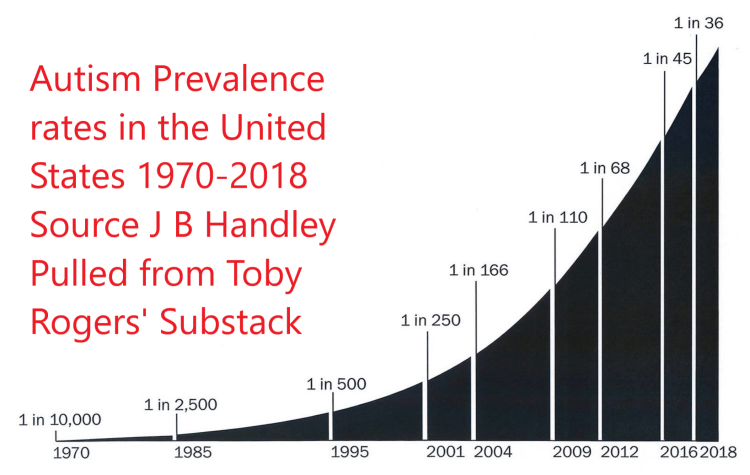
I received the MMR vaccine in 1989. At the time, 85-90% (different sources give slightly different figures) of the MMR vaccinations in use in the UK contained the Urabe strain mumps. As aseptic meningitis is a specific form of inflammation around the brain, it is not far fetched to suggest a possible link to autism (given that autism is an inflammatory disease) – although as far as I’m aware there has been no direct evidence regarding this question. Of course, the US, with its skyrocketing rates of autism never used these specific vaccines, and MMR vaccination is not the only factor to consider in autism.

With this in mind, I tried to find out specifically which MMR vaccination I received, so I wrote to my GP surgery and asked for the ‘brand and/or batch/lot’ of MMR vaccine I received. They sent me my vaccination records, which appears to not contain this information, so I was not able to confirm whether I received a Urabe-containing vaccine. However, I did receive a message from the GP surgery on my letter enclosed with the vaccination records that the surgery is a “Vaccine Positive practice” that “Vaccination is one of the greatest success stories in modern medicine” and that it “saves lives and prevents suffering.” Bear in mind, the only question I asked was about the brand and batch/lot of MMR vaccine I received: I made no reference to adverse events in any way. Apparently even asking about this basic information is too much of a question for the vaccination cult.

Image Via Openverse.

Addressing the “RFK, Jr. Hates Autistic People” Article in Salon

Robert F. Kennedy, Jr. is currently serving as an important hate figure for the mainstream media and establishment, due to his run for US President and his opposition to the mRNA/adenovirus vector covid ‘vaccines’ and scepticism of the CDC childhood vaccination schedule. In particular, his belief that vaccines cause autism is unacceptable to the establishment. That establishment, a fundamental pillar of which is the vaccine cult, finds the idea of truths stated by RFK, Jr. about vaccines becoming more widespread impossible to countenance. However the establishment has a huge problem: they have overplayed their hand with Covid by pushing such a deadly, obviously unsafe, and obviously ineffective product. This has caused many previously pro-vaccine people to be open to ideas such as ‘vaccines cause autism’ in a way that simply wasn’t the case before 2020. The establishment has now gone into defensive mode to protect the vaccine cult, as the idea that vaccines cause autism, and thus have completely destroyed lives, is something the establishment cannot admit because it will be a very big blow (possibly fatal, we can live in hope) to the vaccine paradigm.

As such, the establishment needs as many hit pieces on RFK, Jr. as they can muster. The latest anti-RFK, Jr. article is out, written by Matthew Rozsa, an autistic man very fond of the neurodiversity paradigm, claiming that RFK, Jr. hates autistic people.

I have posted a couple of responses to him on Twitter, pointing out the reality of those who are severely impaired by autism, but so far have been ignored.

So let’s break the article down. As usual, the only way I will be able to deal with such weapons-grade bullshit is by chucking some sarcasm in there. For those who happen to be new to this page, I have an autism diagnosis so I have personal experience of the lies this guy is trying to sell.

Let’s start with the subheading:

RFK Jr. says he advocates for the marginalized, but built his career spreading harmful lies about autistic people

Kennedy hasn’t ‘built his career’ talking about the issue of vaccines and autism, since this ignores all of Kennedy’s environmental work before he got into the vaccine issue and realised that mercury in vaccines was causing harm alongside the mercury in the air and water.

[E]xperts agree on one thing: The views that RFK Jr. espouses cause significant harm to real-life autistic individuals.

As opposed to what? Non-real life fake autistic individuals?

I haven’t been harmed in any way by Kennedy or anything he has said.

Autistic people have been victimized by RFK Jr. for decades.

‘Victimized for decades’. Because he agrees that vaccines cause autism. Get a grip, honestly, if you are that sensitive.

RFK Jr. has never retracted his views or apologized for his incorrect statement that thimerosal in childhood vaccines can be linked to a rise in autism. 

Because there is no reason to retract them. Mercury is toxic and causes harm to the brain. This is proven. That there is some sort of ‘good’ mercury that doesn’t harm the brain is provaxxer nonsense.

Quite to the contrary, he has started applying his formula of “use bad science to persecute marginalized groups” in brand new ways, such as falsely stating that the rise in “sexual dysphoria” is caused by “chemical exposures” despite there being extensively documented historical and scientific validation of transgender identities.

Oh we have got to get at least one reference to ‘trans women are the most marginalised people on the planet’ have we?

The so-called ‘historical’ validation of ‘transgenderism’ usually amounts to pointing to societies that had special categorisations for same-sex attracted males that classified them as some third group (and not as male). They were not considered to be actual women. The implication that these ‘third genders’ were in some way politically progressive – when they are based on homophobia and misogyny – is also false. The other argument for ‘historical’ validation of ‘transgenderism’ I have seen used is claiming that women who disguised themselves as men due to sexism to access certain positions were actually ‘transgender’, or women who had a stereotypically male role, such as Joan of Arc, were actually ‘transgender’. This is obviously regressive nonsense based on stereotypes and just a way to claim a historical lineage for modern ideas.

Also, as argued by 4thWaveNow, the phenomena of ‘trans kids’ who will die if not ‘affirmed’ has no historical basis:

Try as I might, I was unable to discover any evidence of ancient trans kids who so hated their own bodies that they demanded either psychological or medical interventions. No records of boys wanting to hack off their penises or girls desperate for “top surgery” to remove their despised breasts. It’s quite certain, given their zeal for surgical interventions, that the ancient physicians [in Greece and Rome] would have been more than happy to oblige; after all, if they could perform surgeries to treat urethral strictures and cataracts, a double mastectomy or penile remodeling would not have daunted them. Even experimental attempts would have been documented.

Hippocrates rolls in his grave: In search of the dysphoric trans tweens of yore

The ‘scientific’ validation studies are generally brain scans, claiming that men who call themselves women have more similar brains to women than men. However these studies often don’t control for homosexual attraction and if a man has already taken female hormones that will affect his brain. Of course a male having a stereotypically ‘feminine’ brain (if such a thing even exists) doesn’t make him a woman since every cell in that brain is a male cell with XY chromosomes, etc.

On the other hand, Kennedy’s assertion that certain chemicals could cause gender dysphoria, or contribute to it, is scientifically plausible. We know that phthalates mimic estrogen, for example. That this mimicking could be a factor affecting gender dysphoria in boys or men is certainly possible. I think there is a large social/monetary aspect to this, so I don’t think endocrine disruptors are the only cause of the ‘transgender’ insanity we see today. However that they could contribute is plausible (even the article linked by the writer claims that Kennedy ‘in part’ blamed chemical exposures).

Furthermore, do you care to comment on the obscenely high amount of autistic people going in for ‘gender transition’? In fact, being as you think that autism is genetic and the fact that ‘gender’ treatments like puberty blockers followed by wrong sex hormones sterilise children, shouldn’t you be calling this eugenics?

It is very common for autistic people to encounter anti-vaxxers who claim that their neurology is somehow a mistake. Because they buy into the perennial RFK Jr. assertion that vaccines cause autism and other neurological disorders, they make the next logical leap that another person’s autism is “wrong.”

Of course it is ‘wrong’. It’s a disability, therefore it involves inferior functioning in some way. That’s what the word ‘disability’ means. The implication here is that calling autism ‘wrong’ is some sort of moral judgement on the vaccine-injured person but that is not the case.

Even if this attitude is intended sympathetically rather than contemptuously (which is definitely not always the case), the anti-vaxxer logic still causes neurotypicals to ablesplain about how autism really works — or to outright discriminate against them.

You are assuming that there are two groups, neurodiversity promoting autists and ‘neurotypical’ antivaxxers. But autistic people can also be antivaxxers. I know I am one. We can also recognise that our problems come from vaccines. I do.

So do you want my back-of-a-fag-packet explanation of autism?: Autism is a form of iatrogenically induced brain/gastroenterological inflammation, in most cases created by the toxicants in vaccination such as aluminium.

Many autistic people have a dim view of RFK Jr. for that reason.

I don’t.

Steve Silberman, author of the book of “NeuroTribes: The Legacy of Autism and the Future of Neurodiversity,”

Who isn’t an autist and knows nothing about the misery of autism. I thought you didn’t want non-disabled people explaining autism to disabled people. Or is it ok if the non-disabled person wants to glamourise autism for money/clout/woke points?

Silberman ticked off two of the most infamous examples: RFK Jr. regularly using the term “vaccine-injured” to refer to autistic people

Because we are vaccine-injured. Honestly why are people so offended by this? If I refer to someone who lost a leg in a car crash as car-crash-injured no-one is going to give a shit.

and in 2015 describing vaccinated autistic children to Bill Maher by saying “their brain is gone.”

Maybe not the best turn of phrase but you know damn well what he means. You know damn well he is referring to those children who were developing normally, were given vaccine/s and horrifically regressed, lost speech, lost eye contact, lost the capacity to use toilet alone, starting having seizures, had severe gastrointestinal issues, etc.

“Grotesque statements like this present people on the spectrum as entirely lacking in humanity, agency and the potential for development — as if they were zombies,” Silberman explained. 

Nothing Kennedy has said has even implied autistic people are not human. That is a lie.

As for ‘agency’ and ‘potential for development’ well it really depends on the severity of the vaccine injury. The reality is that severely autistic people have very little agency or potential for development. If someone is so severely impaired they need 24/7 care what agency and potential do they have? You can call this statement ‘ableism’ till you’re blue in the face but it’s just fact. Of course, that may change if they receive treatment for their vaccine injuries and recover some capacities destroyed by vaccines, but you are against treatment for autism so what else do you suggest?

“He compares autistic people to Holocaust victims, which does a grave injustice to both autistic people and Jews. And even in apologizing for that comparison, he described autism as ‘shattering’ families, when some of the most loving and supportive families I know are the families of autistic people.”

Silberman isn’t the mother of those children so he can walk away at any time. I have no doubt some of these parents are genuinely supportive but he needs to try and consider the reality of caring for a severely impaired child 24/7/365. For example, they may require 24 hour supervision, cannot use the toilet alone, can have seizures (which includes risk of death). Furthermore they grow up. Imagine you are a 5′ 5″ mother attempting to subdue your severely ill, autistic, 6′, 20-year-old son when he is lashing out in a fit of violent rage due to sensory overload and then get back to me.

It is also true that the strain of severe autism on a family can lead to divorce, the severely disabled child requires all the attention 24/7 so siblings are neglected, etc. Again, this is fantasyland stuff from Silberman.

“The main problem that autistic people and their families face is the lack of support and resources across the life span, but Kennedy condemns the ‘crippling’ cost of providing disabled students with access to education, using an ableist slur to complain about resources that were fought-for by generations of disabled people and their families,” Silberman pointed out.

So this man, who isn’t autistic, is telling autistic people what our ‘main problem’ in life is. While this article preaches about ‘non-disabled people explaining autism to autistics’. Yeah piss off.

‘Crippling cost’ of so and so is a pretty stock phrase. Neurodiversity activists want to have this both ways. They want to claim autism is a disability when they want accommodations or money but then want to glamourise & claim it’s just a ‘difference’ and does not imply inferior functioning. These two claims contradict each other. Pick one.

“It increases vaccine hesitancy and people choosing not to give their kids vaccines, and that increases the resurgence of vaccine preventable diseases,”  Zoe Gross, director of Advocacy at the Autistic Self-Advocacy Network, told Salon. Perhaps the most prominent instance of this occurred in 2015, when nearly 200 people were sickened with measles despite the disease having been eradicated 15 years earlier due to parents not vaccinating their children.

Yes the point of vaccine scepticism is to try and get people to not give their children poison injections, well done for figuring that out.

I said this with Covid and I’ll say it again: ‘cases’ of a disease are irrelevant. If someone gets sick for a week with measles, so what? This nonsense that we can simply eradicate disease with the needle and we never have to be sick from anything ever is a ridiculous provaxxer fantasy.

Also do I need to bring up the graph of measles mortality decline before vaccination?

“You can see that these are people who would rather have their kids get vaccine-preventable diseases and potentially die than do something that they think erroneously risks their kids becoming autistic. That’s a pretty bleak view of autism.”

Reality is a pretty bleak view of autism.

Life expectancy of 36-39.5 for the low functioning cases, 58 for the high functioning ones, 78% unemployment rate, misery of sensory issues, high anxiety, loneliness, non verbal, seizures, can’t use the toilet on their own, gastroenterological problems…yeah why would a parent not want that for their child? If you’re offended by this, you’re offended by reality. Feel free to go off in the corner and be offended by reality but the rest of us don’t have to take you seriously.

As a result, Waltz described how in the 1990s the “‘do your own research’ crowd” created a climate wherein “autistic children were written off by most schools and psychologists, parents were left without the services they and their children needed, and autistic adults weren’t even in the conversation.”

Yeah the reason that autism got no funding was antivaxxers, because we all know that antivaxxers are all-powerful & control the reins of the government purse.

They also encouraged the view that autism is an “epidemic,” so that research goes toward “curing” it instead of things like “local charities and services that were helping children, families and adults, and diverted funds away from the research into education, social care, family support, housing and employment that would help actually existing autistic people and those who care about them.”

How is this not an epidemic? Please explain with a rational argument, and not ‘those mean antivaxxers said it’.

Again, antivaxxers aren’t the ones controlling the money. I know you all think we’ve all got mansions and shit but for the vast majority of us: no.

“His insistence that autism is a recent phenomenon caused by vaccines or chemical pollutants erases generations of autistic people who were often misdiagnosed with conditions like childhood schizophrenia, and subjected to cruel ‘treatments’ including lobotomies and brutal punishments for autistic behavior that included electric shocks,” Silberman observed.

Except those treatments were very late 19th/20th century (lobotomy) or became popular in the second half of the 19th century with origins in the 17th/18th century (electroshock), so they have been mostly used well into the vaccine & pollutant era. Schizophrenia is also quite a modern term, coined in 1900. In fact, like vaccines, these ideas are largely an invention of the modern Victorian medical paradigm. So this does not prove the long history of autism. You need to be proving the mass cases of regressive autism among peoples like the Greeks and the Romans to prove it’s normal (I say Greeks and Romans because they had good records so it would be possible to prove, but completely non-settled pre-agricultural societies where there would be little/no exposure to mercury would be best).

Furthermore, electroshock therapy is still used by psychiatry. Does Silberman consider that to be barbaric as well? I don’t have a problem condemning it, but it involves condemning the modern medical establishment and well, we can’t question ‘The Science’. We wouldn’t want to be considered ‘conspiracy theorists’ now would we?

“That’s precisely the opposite of the truth — in fact, study after study has shown that the broadening of the diagnostic criteria was instrumental in boosting estimates of autism prevalence, as I discuss at length in my book NeuroTribes.”

No-one is saying that this is completely irrelevant, but the idea of something going from 1 in 10000 to 1 in 36 just because of extra diagnostic criteria is absurd on its face.

But let’s just quote Toby Rogers:

Well perhaps the increase in autism prevalence is just the result of better awareness (and what’s called “diagnostic expansion and substitution”)? The state of California funded two multimillion dollar to examine sharply rising prevalence in the state and whether it was the result of social factors. The first study was led by pediatric epidemiologist Robert S. Byrd at UC Davis who directed a team of investigators at UC Davis and UCLA. The investigators concluded that, “The observed increase in autism cases cannot be explained by a loosening in the criteria used to make the diagnosis” and “children served by the State’s Regional Centers are largely native born and there has been no major migration of children into California that would explain the increase in autism” (Byrd et al., 2002).

The state of California revisited this question in 2009 with a study led by the top environmental epidemiologist in the state — Irva Hertz-Picciotto at the UC Davis Mind Institute. This study concluded that changes in diagnostic criteria, the inclusion of milder cases, and earlier age at diagnosis explain about a quarter to a third of the total increase in autism (Hertz-Picciotto & Delwiche, 2009). In a subsequent interview with Scientific American, Hertz-Picciotto explained that these three factors “don’t get us close” to explaining the sharp rise in autism over that time period and she urged the scientific community to take a closer look at environmental factors (Cone, 2009).

The Political Economy of Autism

The entire conspiracy theory that vaccines cause autism can be traced back to 1998, when a British doctor named Andrew Wakefield published a study in the medical journal The Lancet claiming that children who were given the measles, mumps and rubella vaccine (MMR vaccine) developed autism.

Oh goodie the obligatory Wakefield-bashing. Do they ever get tired of stating the same shit? Where would provaxxers be without Andy Wakefield to bash a few more times?

The Wakefield Gambit, as used by provaxxers, is something like this: Andrew Wakefield said that the MMR vaccine causes autism and he is a bad man and a fraud so therefore vaccines don’t cause autism. Despite obviously being fallacious, the main purpose of this argument is to erase other doctors or experts that have researched this topic (Dr. Exley, Dr. Thomas, Dr. Bradstreet, for example) by implying it’s only Dr. Wakefield who said it and then that if they can discredit him they can discredit the whole thing. Perversely this argument then ends up giving Andy Wakefield all the credit as the single handed destroyer of vaccine ‘science’ which is probably the opposite of what they want to achieve given how much they hate him.

Let’s address the actual argument. If I have said this once, I have said it a hundred times. The people who claimed that the children developed autism after the MMR vaccine were the parents of the children. Wakefield was simply willing to listen rather than automatically gaslight the parents. Read the goddamned Lancet study.

Onset of behavioural symptoms was associated, by the parents, with measles, mumps, and rubella vaccination in eight of the 12 children

Wakefield etal. Ileal-lymphoid-nodular hyperplasia, non-specific colitis, and
pervasive developmental disorder in children

“That’s not the same as saying that autistic people and their families are always just fine,” Waltz clarified. “We’ve created a society that excludes more and more people from the norm, and we could do something about that by changing our attitudes and behaviors regarding human diversity. But of course there is also that one-quarter to one-third of the autistic population who also have intellectual disabilities, and there are those with very severe sensory perceptual issues or additional medical needs (for example, due to seizure disorders, which are more common in autistic people).”

Oh now you acknowledge those severely impaired by autism. Right at the bottom. Because they aren’t glamourous enough for ~neurodiversity~.

Also the framing on these things annoys me as it tries to minimise the problem of the autism, and makes the problem about ‘lack of acceptance’. No the problem is the damn autism. Funnily enough no-one’s expressed any real hate towards me for autism but that hasn’t managed to magically cure my severe anxiety and my sensory issues (fortunately I have managed to cure the severe anxiety with Dr. Chris Exley’s method) but the neurodiversity activists pretend that if people are nice to me I would have little or no problem. That’s without even mentioning severe autism.

These individuals need help in the form of social services. What they definitely don’t need, Waltz said, is “to be someone’s ‘experiment of one’ to be put through potentially harmful therapies and treatments, not someone to be over-medicated for behavior control rather than medical need, not someone to be institutionalized or abused.”

Where has Kennedy suggested ‘over-medicating’ autistic children? I’m guessing given Kennedy’s stance on Pharma, he’d be opposed. Isn’t it the establishment who think drugs for every ‘mental health’ problem are good and that if you object you are ‘pill shaming’? This article is meant to be criticising Kennedy and well if it isn’t a claim Kennedy has made I don’t see the relevance.

Image source: Photo by Mateus Henrique on Pexels.com