The UK Media is still promoting Transgender Activism

Introduction

A few months ago, there was a UK Supreme Court ruling that stated for the purposes of the 2010 Equality Act, sex is biological, and that woman and man in the legislation refer to sex and not gender identity. Despite this rare application of common sense in a UK Court, the media is still promoting transgenderism as a desirable ideology.

Context

In a world context, the UK has had the strongest and broadest base of resistance to transgender ideology. People of different political views from conservatives to radical feminists to moderate liberals have pushed back. Both religious people and atheists have pushed back. This has led to the UK becoming known as TERF (trans exclusionary radical feminist) Island, originally meant as an insult but reclaimed as a point of pride by UK opposition to transgender ideology.

While there has also been increasing pushback in the US under Trump, much of it is based on executive orders. Executive orders that prevent a child being prescribed dangerous drugs and surgeries have a great positive effect in general but are not the same thing as the broad based opposition we see in the UK. Also, they can be overturned with a new president. In other western countries, we are still seeing victories for the transgender movement such as Self ID in Germany.

However the UK media has (deliberately) not got the message that this ideology is increasingly unpopular here. I will describe some examples below of the media doing this. Of course because these are long term projects they were commissioned before the Supreme Court ruling but still provide valuable insights into the media and this ideology.

Case 1: Munroe Bergdorf

Munroe Bergdorf is a man pretending to be a woman, who is relatively high profile in the UK.

I won’t go into his history in massive detail, but I will note that he has previously been heavily criticised for demonising all white people as violent and evil. He once said:

Once white people begin to admit that their race is the most violent and oppressive force of nature on Earth… then we can talk.

In other words, ignoring the fact that psychopathic elites and pursuit of wealth and power regardless of race are the sources of imperialist violence and instead blaming white skin colour.

Anyway, he has a new documentary out, about what else – himself. The documentary is called Love and Rage, and no, I won’t be watching. If you want a review, you can see this link.

In a promotion for this documentary, he did an interview with the ‘Metro’ newspaper. This is a free newspaper given out primarily via public transport networks. I take a copy for the cryptic crossword and happen to see this interview in the paper. Quotes and comments are based upon the interview “60 Seconds with Munroe Bergdorf” in the Friday, 4 July issue of the paper.

Much of the interview is just fluff to promote his film. However I will comment on a few things he says in the interview. One of them is to complain about being attacked on social media. Of course, since one of the main outlets for promoting transgenderism is social media, this is mildly amusing. He then equates refusing to acknowledge he is a woman with refusing to acknowledge he is a human being. Of course, even the most ‘transphobic’ person on the planet acknowledges that Bergdorf is a human being – just that he happens to be male and cannot change sex.

He then promotes falsehoods by stating that the Supreme Court ruling “has basically defined us out of the Equalities Act”. He doesn’t acknowledge that one of the nine categories under the act is “Gender Reassignment” i.e. transgenderism. Of course he can’t even get the name of the legislation correct, as it is the Equality Act, which demonstrates his complete ignorance. Now from my point of view (without getting into broader questions of the state, state authority etc.) transgenderism should not be protected in law because it is a sexual fetish (autogynephilia) and/or a sexual strategy (gay men who ‘transition’ to try and get ‘straight’ men to sleep with them). No other sexual fetishes are protected in law.

He states he will continue to be a sexual pervert and use women’s toilets and complains that ‘if you look too much like a woman’ you can’t use the men’s. Ignoring the fact that in reality, 99.9% we can tell you’re a man. Women are generally quite good at spotting them as we have to be alert to the presence of men due to sexual violence. Or as I like to say Instagram filters do not exist in real life.

That’s not all the nonsense in the interview but serves as a sample of the sort of thing being promoted in the mainstream media

Case 2: The “I Kissed a Boy” Dating Show

‘I Kissed a Boy’ is a supposedly homosexual dating show for gay men. Now I don’t watch this sort of stuff as I have no interest in it. But it came to my attention because this dating show supposedly for male homosexuals includes a woman among the cast, who calls herself Lars and pretends to be a man. Of course, these women are not homosexual males. A significant motive for this is sexual fetish, as women fetishise gay male relationships specifically, which is why they seek to be accepted as ‘gay men’. Some of these women even try and trick/pressure gay men into sex with them.

This follows the trend of seeking to redefine homosexuality as ‘same gender’ attraction rather than same sex attraction. (Of course, this also redefines heterosexuality as ‘opposite gender attraction’). Basically this dating show continues to push the ideology that people can change sex and the lie of gender identity.

From the review, it seems like the entire thing is about sex. Of course while sex and sexuality are important parts of becoming an adult it’s hardly the only thing of relevance.

Case 3: “What It Feels Like for a Girl” TV Show

A BBC TV show with this name, of course, is about a male. It is adapted from a book of the same name by a man called Paris Lees. I haven’t read the book or watched the TV series so I won’t be doing a review. Lees, like Bergdorf, is a homosexual male who pursued transgenderism. The book/TV show is meant to be a ‘coming of age’ style story where the protagonist discovers his sexuality/’gender identity’.

The Lies They Tell gave the book (which was released in 2021) the following review:

This book is simply terribly written.  Writing in dialect would be a challenge for an experienced writer and it says a lot about Lees’ ego. However, even if you take the dialect away, all we are left with is the relentless gossipy sniping of a man with almost zero ability for self-reflection.  It’s really hard to read. It has no narrative arc.

The program, of course, is getting rave reviews from the usual suspects, such as the Guardian, a liberal UK newspaper known for promoting transgender ideology.

On a final note, I always find these men calling themselves ‘girls’ entirely creepy.

Conclusion

Transgender ideology is still a prominent force in the UK media despite the recent high-profile defeat in the court system.

Cassandra’s Box Update

Apologies for the lack of updates. I am still around but dealing with temporary personal situations and other stuff.

I hope to be back with new posts in mid-March.

Thanks.

The Creation

There will come some time,

Where you will have to admit it.

At some point, some way along the feeding and spitting out of your maw, there will be too many of us. So many of us that your society heaves with it, sickens with it, dies with it. Your workers and your armies are no longer fit but cared for by broken backs, hands that could carve can only smash.

It was a mistake, you’ll say, and maybe it’s true that those first sputters of the so called little professors were some sort of accident. That the first screams were unforeseen. But plausible deniability starts to run thin when acres of us emerge from the paediatrician’s lair. When even members of your own state that there is some connection worth digging out among the filth. You just pasted on more layers and let it escalate.

Why create us? Filth breeds filth, money breeds money. To many of you, we are just the outcome of the pay cheque, the tax on your conscience to match your national insurance. To some we are much more and much less than that. The moment of creation, to perform the insemination. A secret thrill like public copulation. Except a man can create more with needles than with sperm, make Genghis Khan look an amateur.

Do you ever wish to boast of your creation? That thrill of confession, the denouement? To stare us in the eye and state ‘I did it?’ Foolish, yes, I know. It would be the moment of triumph then downfall, like the braying of a killer condemned to the noose. So instead you’re left with sordid little lies. Lies that wouldn’t hold up your ceiling if people dared to look.

When you created me, you made a mistake. You took too much to use me as your poster girl, too little to completely destroy me.

And so I exist.

For when that time comes,

To make you admit it.

Photo by Pixabay on Pexels.com

The Myth of Edward Jenner

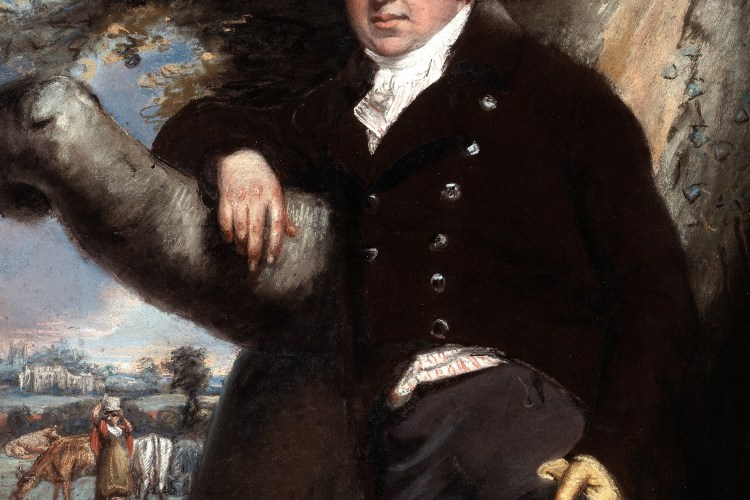
Edward Jenner is the ‘founding father’ in vaccine ideology. The official narrative holds that Jenner was some sort of genius, who discovered cowpox inoculation and thus saved millions of lives from smallpox. So let’s discuss Edward Jenner and his theories, from a critical perspective.

Did Jenner Discover Vaccination?

The short answer to this question is no. Jenner was not the first person to practice a cowpox inoculation to protect from smallpox. A farmer called Benjamin Jesty is known to have used a needle to scratch the cowpox virus into the arms of his wife and sons several years before Jenner. The idea of cowpox protection was not invented by either, but existed as rural rumour in certain parts of the country (see below on milkmaids). The beginnings of the ideology behind vaccination already existed in the practice of smallpox inoculation, that is, deliberately infecting people with smallpox to attempt to induce a mild disease rather than risk natural infection. Inoculation goes back a long time in certain parts of the world, such as China, and was introduced into the UK in 1721 by Lady Mary Montagu. Although there is a valid distinction drawn in histories of smallpox, ideologically inoculation is vaccination as we would use the term today, that is attempting to induce a mild form of the disease via artificial means (i.e. the lancet) to avoid natural infection.1

The Milkmaid Myth

Jenner’s encounter with a milkmaid is often outlined as the first exposure of the young Jenner to the cowpox-smallpox theory of protection.

It is a story often told. The author vaguely remembers hearing it in secondary school when she studied the history of medicine. When Jenner was 13, he was said to have overheard a milkmaid discussing her alleged immunity to smallpox based upon having had a cowpox infection.

As the story goes, an English milkmaid told physician Edward Jenner that she would never get smallpox — a deadly disease and a leading cause of blindness — because she had had cowpox, a mild, uncommon illness in cattle that can spread to humans through sores on a cow’s udder. The milkmaid’s reasoning — that infection with cowpox protected her from smallpox — was a common belief among dairy workers

source

This is said to have interested the young Jenner in the issue of cowpox as a smallpox preventative. The story has been used for decades to promote the myth of vaccination.

Alas this story is most likely untrue.

It is one of those tales, that when one thinks about it for a moment, has a mythical quality. But we can go further than this.

The above account was first related by a man called John Baron, who was Jenner’s official biographer after his death. Baron was well known for his sycophancy, to the extent that even modern pro-vaccinationists have considered this excessive. According to Crookshank, an anti-vaccinationist who studied the issue carefully in the late nineteenth century, Fosbrooke, the first biographer of Jenner, did not mention this incident (p.127). While Crookshank does not question the whole incident, Baron’s well known sycophancy and desire to give Jenner priority for the vaccine ‘discovery’ gives him a strong motive to fabricate the tale. (And let’s be honest, the idea is rather romantic and makes a good story).

Interestingly, a modern historian, Bolyston, has published an article suggesting that the idea is a myth and that Jenner got the idea from Fewston.

Jenner’s ‘Extensive’ Research

If Jenner did not originate the idea and did not perform the first vaccinations, what was his contribution? One could suggest Jenner’s writings on the topic formalising the idea. This is where Jenner does have some claim, since it seems he was the first to formally put forward in print the idea of cowpox vaccination. However, we can ask ourselves what this research actually amounted to. Men such as Baron would have us believe that Jenner’s works on the topic were filled with extensive research and strong scientific methodology. What is the truth?

Jenner’s initial paper on cowpox, An Inquiry Into the Causes and Effects of the Variolæ Vaccinæ, was published in 1798. However, there was an earlier version of the paper. Jenner was a member of the Royal Society due to a paper he had published about cuckoos. He sent this earlier version of the paper to the Royal Society in 1796 – however they rejected the paper. They thought that it might negatively affect Jenner’s reputation.

For our purposes, we will only focus on the evidence Jenner brings forward for the claim that cowpox protects against smallpox and not about Jenner’s other speculations (about the origins of cowpox, etc). If we look at the original 1796 paper, that Jenner considered worthy of Royal Society publication, we can examine the evidence Jenner had for his theory. Crookshank discusses the 1796 rejected paper in detail.

For his evidence, Jenner first lists 10 ‘cowpoxed milkers’, that is, 10 milkers who had natural cowpox infections (some a long time ago). These milkers proved insusceptible to smallpox inoculation. Then Jenner outlines the case of his first vaccination, that of the 8-year-old James Phipps. He vaccinated Phipps with cowpox, and then several weeks later inoculated him for smallpox. The inoculation did not ‘take’, thus proving in Jenner’s mind the theory of protection. This is the sum total of the evidence for cowpox inoculation in the 1796 version of the paper (Chapter 7). The 1798 paper adds some more evidence, a couple more cases of milkers and a chain of cowpox inoculations (although, it seems he only performed the inoculation test on 3 of those, plus Phipps). Jenner drew the conclusion from this evidence that cowpox provided life long protection against smallpox infection.

As we can see from this discussion, Jenner had limited evidence for his claims and draws excessive conclusions from this limited evidence.

1 for accuracy, the Chinese used a method of putting smallpox sores in the nose, but the method used in Europe involved the lancet.

The Covid 19 Narrative is About Destroying Our Links With the Natural World (Part 2)

Left: tree with leaves falling. Right: Tree with medical Covid-19 masks falling from it.

Introduction

In the first part of this article, I discussed the Covid-19 narrative in the context of nature. The article concluded that there were significant signs of an agenda to detach human beings from nature: firstly, in the denial of the reality of death, and secondly, through the normalisation of mRNA and adenovirus vector vaccinations.

However, the discussion of the connection between devaluing nature and the Official Covid Narrative does not end there. There are further significant links which are helping to make Klaus Schwab’s “fusion of our physical, our digital, and our biological identities” a reality. This part of the article will discuss the normalisation of nanotechnology through use of the Covid Narrative, as well as the coming ‘Smart Cities’ being pushed by the World Economic Forum.

The NanoTech New Normal

A 2004 report from the British Royal Society can serve as an introduction to the concept of nanotechnology. This report states that:

A nanometre (nm) is one thousand millionth of a metre. For comparison, a single human hair is about 80,000 nm wide, a red blood cell is approximately 7,000 nm wide and a water molecule is almost 0.3nm across. People are interested in the nanoscale (which we define to be from 100nm down to the size of atoms (approximately 0.2nm)) because it is at this scale that the properties of materials can be very different from those at a larger scale. We define nanoscience as the study of phenomena and manipulation of materials at atomic, molecular and macromolecular scales, where properties differ significantly from those at a larger scale; and nanotechnologies as the design, characterisation, production and application of structures, devices and systems by controlling shape and size at the nanometre scale. In some senses, nanoscience and nanotechnologies are not new. Chemists have been making polymers, which are large molecules made up of nanoscale subunits, for many decades and nanotechnologies have been used to create the tiny features on computer chips for the past 20 years. However, advances in the tools that now allow atoms and molecules to be examined and probed with great precision have enabled the expansion and development of nanoscience and nanotechnologies.

Institutions such as the US Government have been interested in nanotechnology for several years. The National Nanotechnology Initiative was launched by Bill Clinton and the organisation has received funding from Congress.

The cumulative NNI investment since fiscal year 2001, including the 2018 request, now totals more than $25 billion. In addition, more than $1.1 billion has been invested cumulatively since 2004 in funding for nanotechnology-based small businesses through the Small Business Innovation Research (SBIR) and Small Business Technology Transfer (STTR) programs of the participating Federal agencies. 

At first, the kinds of technologies that are being advocated for seem benign or positive developments, such as to improve the functioning of computers. The benign uses of such technologies can mean that they become more accepted in society.

However, certain uses of nanotechnology that are desired by the elite are considered to be taboo by ordinary people. In particular, the integration of nanotechnology within the human body. Much like concepts such as Genetically Modified foods, many people consider interfering with nature in this way to be immoral and playing god. A lot of people still maintain some connection with nature and do not desire nanotechnology to be used within the human body. The inculcation of mass fear around the Sars-Cov-2 virus, and the idea introduced through this fear that nature is the enemy, is a way to get around this problem.

The Covid-19 narrative is being used to slowly normalise the idea of ‘implantable biosensors’ that will monitor your health. Back in 2018, a company known as Profusa claimed to have developed these small injectable sensors that can be used to monitor all aspects of body chemistry, marketing them as a step up from fitness trackers and other wearable watch like products. Their sensors overcome issues with the body rejecting such interventions as foreign and causing inflammation in response. These sensors – injected at the surface of the skin – can be scanned via smartphone devices in order to retrieve the data they have collected. The research carried out by Profusa is supported by the Defence Advanced Research Projects Agency (DARPA), one of the main institutions pushing techno-tyranny as a ‘solution’ to Covid-19. DARPA have been interested in the notion of ‘predictive health’ for a long time and have been examining the issue since at least 2006.

The link between these technologies and Covid-19 is made explicit in this article. Profusa has developed another sensor that allegedly detects sickness with a particular virus before the person shows symptoms, a concept that Ryan Cristian has usefully called ‘Medical Precrime’. The article acknowledges that some people might be wary of the idea because of privacy concerns but brushes that aside, claiming that the sensors can only transmit information when they are scanned.

The idea of Medical Precrime ties into the War on Death, discussed in the first part of this article. Accepting the need for these sensors to tell you that you are sick involves rejecting the truth of your own body. This is a step up from the focus on RT-PCR testing to see whether or not somebody has Sars-Cov-2, even if they have no symptoms, and the whole narrative around ‘asymptomatic transmission’.

Dissociation from your own body is required to get you to accept transhumanism. If you accept your body as part of nature that you are in touch with and related to, you will not want a transhumanist future. The elite, however, want this transhumanist future whether you like it or not, so they have to develop bridging ideologies and constructs to get ordinary people to accept that future, and The Official Covid Narrative is one of these.

Endgame: The Totalitarian Smart Cities

According to the Smart Cities Readiness Guide, a smart city can be defined as such:

A smart city uses information and communications technology (ICT) to enhance its livability, workability and sustainability. First, a smart city collects information about itself through sensors, other devices and existing systems. Next, it communicates that data using wired or wireless networks. Third, it analyzes that data to understand what’s happening now and what’s likely to happen next.

Another key aspect of the Smart City is the Internet of Things, which connects all devices – from kettles and fridges to computers and mobile phones – to the internet. This kind of system would require 5G to function because otherwise there would be far too much latency within the system.

Searching online for ‘Smart Cities Covid 19’ brings up a multitude of links relating to the issue. For example, this article states that:

Density – it’s part of what makes cities bustling cosmopolitan hubs for transnational commerce and mobility. It is also what makes them particularly vulnerable to the risks of outbreaks such as COVID-19, with some experts arguing it will force a significant rethink of urban planning if we are to achieve long-term survival in a pandemic world.

This article portrays the Smart City approach as a positive way to ‘control the pandemic’ by using the ‘collective intelligence’ of people in relation to the high level of data collected by the sensors embedded within the smart city.

Another article links Covid to Smart Cities through a false ‘green’ agenda, stating that the lockdowns have reduced road traffic and that smart city technology can be used to continue this reduction in pollution and carbon emissions. For example, they claim that AI can be used to reduce congestion through steering traffic. The article then uses this idea as a lead into normalising alarms going off if people are not ‘social distancing’.

The World Economic Forum, and other elites, are deeply invested in promoting this smart city vision, and using whatever concerns of the public – from pollution to pandemics – that they feel will get people to accept this agenda. While we are allegedly living in the ‘deadliest pandemic in a century’ the elite are concerned about pushing this technology more than anything else. In November 2020, The World Economic Forum selected 36 cities to pioneer these kinds of technologies:

Cities are facing urgent challenges from the COVID-19 pandemic and other major disruptions, which are expected to culminate in a budget crisis that could reach $1 trillion in the United States alone. They need data and innovation to become more resilient, responsive and efficient. Yet there is no global framework for how cities should use these technologies, or the data they collect, in a way that protects the public interest.

In reality, despite the PR lavished on Smart Cities, such a system would be a heavily controlled one, where there would be no ability to dissent from what the elite want. Every move and every possible piece of data would be tracked. AI would begin to control more and more of people’s lives through the processing and analysis of the endless data collected from the multitude of sensors. There would be no privacy, and the elite could make rebellion essentially impossible, by cutting off every single device that an attempted rebel owns – even their heating or fridge. And there would be no room for things that the elite are not able to control in this new dystopia – including the natural world.

Conclusion

We must defend the value of nature and the natural, as well as our own connections with nature and the cycles of life, in order to fight the Covid-19 Narrative. This narrative begins with the denial of death as a natural process but ends with everything in our lives being controlled through the mechanism of technology. In a smart city where everything is controlled through sensors, monitoring, and artificial intelligence, there is no room for nature and the natural. Even humanity itself will become modified by mRNA gene therapy and concepts like Elon Musk’s Neuralink which will connect people to computers and thus into the Smart Cities themselves. Here we end up at Klaus Schwab’s dreaded “fusion of our physical, our digital and our biological identities.”