The Concept of a Chickenpox Vaccine Exposes the Bankruptcy of the Vaccine Paradigm

Image of United States Dollars with the Word 'Fraud'

In the UK, there has just been an announcement relating to the varicella (chickenpox) vaccine.

From the government:

JCVI [Joint Committee on Vaccination and Immunisation] recommends chickenpox vaccine in childhood immunisation programme

Statement

Currently, the varicella vaccine is not on the UK childhood vaccine schedule, but as of yesterday, the JVCI is seeking to change this.

The Joint Committee on Vaccination and Immunisation (JCVI) has recommended a vaccine against varicella, commonly known as chickenpox, should be added to the UK’s routine childhood immunisation programme.

The vaccine would be offered to all children in 2 doses, at 12 and 18 months of age.

The committee has submitted its recommendations to the Department of Health and Social Care (DHSC), which will take a final decision on whether to implement a programme.

It will probably be rubberstamped, so that they can start giving the vaccine as soon as possible. Of course, we should just ignore the evidence that the JCVI is corrupt and ignored real problems with the Urabe MMR vaccine. Pharma profit is clearly much more important.

The vast majority of people remember getting chickenpox as a child. What happened? You were off school for a week and itched a lot. That was about it. Nothing happened. Your parents weren’t worried. The school wasn’t worried. No one cared. You were possibly told that if you get the chickenpox young, you’re better off. And we need a vaccine for this?

The JVCI has come up with a model to address this problem. Because many people are probably thinking exactly the same as what I’m thinking, even if they support some vaccines. Kind of like when even many Covid fanatics drew the line at injecting mRNA into their five year old because there was no benefit.

The purported justification for this vaccine is some really rare, fringe cases where someone got significantly sick. As such we should inject all healthy children with chickenpox vaccines. Of course this is nuts. The model seeks to play up the risks of chickenpox, and claims that the risks have been underestimated, well of course, what else are they going to say? Now of course we should probably be a bit scpetical given the UK government’s track records with modelling (Neil Ferguson is quite strongly coming to mind at this stage).

The rate of vaccination injury is not even considered in the JVCI model. Even if we assume the vaccine is effective, a very low rate of vaccine injury will massively outweigh any benefits of saving people from chickenpox since well, chickenpox just isn’t very deadly (I can’t believe I have to point this out). Yet the JVCI page online does not mention that adverse reactions as a consideration in their model. Parents having to take a week off work is considered though. Because that is far more important than vaccine injury.

Even more horrible, they want to stick this in MMR, yes, they want to make the MMR vaccine even worse. The only mention of vaccine injury comes in this section with a reference to increased febrile seizures with a combined MMRV vaccine as opposed to MMR + V vaccines. Honestly this rearranging deck chairs on the Titanic while children are poisoned to death. Nevertheless rare, not of concern, etc, standard pro vaccine spiel.

They also seek to justify why they want to promote the vaccine at this time, since, they previously rejected the idea of chickenpox vaccines:

Due to the larger pool of varicella-susceptible children following the pandemic restrictions and, as vaccination is predicted to significantly decrease circulation of varicella, susceptible people may continue to be vulnerable to catching varicella as they head into adulthood. 

In other words, let’s use the lockdown that we did to push more of what we want: or, problem-reaction-solution.

They also state that the vaccine recommendation will put us in line with other countries like the United States. Yeah, because we really want to be in line with the United States’ vaccine insanity.

In conclusion, this rather odd sentence from the recommendation stuck out to me:

The community arm of the study estimated the quality adjusted life year (QALY) loss in cases which would not be captured in any medical datasets. This study aimed to assess the impact of mild varicella on quality of life, healthcare use and the financial and health impact on the family unit.

As we can see from the above information, a study was literally done on ‘mild varicella’ i.e. being off school and itching for a week and its effects on ‘quality of life’ and ‘the family unit’. This may seem a bit nuts but trivial, i.e. why would anyone study the effect of being mildly sick for a week? In fact it shows the deeper hubris involved in the vaccination program. All minor inconveniences caused by Nature must be abolished even if it’s being itchy for a week. Consequences? What are those? The idea of a vaccine for everything, no matter how rare or trivial, proves that vaccination is not about our health, but pharma profits and medical hubris.

Image credit Photo by Tara Winstead on Pexels.com

The Urabe Strain MMR Vaccine: Adverse Events and Medical Corruption

“In the area of vaccination, since its inception, the public has paid a price for an illusory peace of mind.”

Martin J Walker MA

Introduction

The MMR (Measles, Mumps, Rubella) vaccine has been subject to controversy in the United Kingdom and worldwide, due to the 1998 Lancet paper by Wakefield et al. However there is one scandal around this vaccine that has been largely forgotten, despite the fact it has affected hundreds of thousands of UK citizens who were born in the late 1980s-early 1990s. This is the story of the MMR vaccines which contained the Urabe strain of mumps – and had to be removed from the Canadian, Japanese and UK markets due to causing aseptic meningitis in certain children. This episode demonstrates the corruption of the vaccine industry and the regulatory authorities in the United Kingdom in particular and shows that the deliberate use and promotion of known unsafe vaccines did not begin with Covid-19.

The History of the MMR Vaccine

Vaccination for measles, mumps and rubella was originally introduced in the 1960s. These were originally introduced as separate doses and not as a combined vaccine. For example, the measles vaccine was originally introduced in 1963 in the United States and the mumps vaccine was introduced in the US in 1967. The combined MMR vaccine was introduced in the 1970s in the United States and Canada, but somewhat later in some other countries, and in the UK in 1988. The MMR is a live virus vaccine, so it contains versions of these three different viruses that have been attenuated via running them through cycles in tissues in a lab.

However the virus strains in the MMR vaccine have not always been the same. There are multiple different MMR vaccinations that have been used since the 1970s, and one of the key differences has been the strain of virus employed to attempt to create artificial immunity. For example, a current vaccine in use, Priorix, contains the following strains of virus:

attenuated Schwarz measles, RIT 4385 mumps derived from Jeryl Lynn strain and Wistar RA 27/3 rubella strains of viruses. 

Priorix Vaccine Page

Though there have been differing strains of measles and rubella employed, this article is concerned with the mumps strains employed in the vaccines. According to a 1994 US government report on vaccine adverse events, there are three main strains of mumps used in MMR vaccinations: Jeryl Lynn, Leningrad-3-Parkow, and Urabe AM9. There have been differing vaccines using these strains, for example, both Priorix and MMR II use the Jeryl Lynn strain of mumps. There have also been multiple MMR vaccinations using the Urabe AM9 strain; the main two of concern in this article are Trivirix/Pluserix (two names for the same vaccine – the former used in Canada, the latter elsewhere) and Immravax. Although there is evidence that other strains of mumps virus used in MMR can cause aseptic meningitis as well, the Urabe strain has a significantly higher risk of this than the Jeryl Lynn strain based on the clinical data.

The Introduction of Urabe Strain MMR & Adverse Events

Although Canada used the MMR vaccine previously, the Urabe strain MMR was first introduced in Canada in 1986. In the UK, the MMR vaccine was introduced for the first time in 1988, and two out of the three vaccines that were used contained the Urabe strain mumps. Japan introduced these vaccines in 1989.

One significant side effect of these vaccinations was aseptic meningitis:

Aseptic meningitis refers to inflammation of the meninges [area surrounding brain and spinal cord], not of the brain. It can result from a variety of infectious, toxic, chemical, or physical agents. No bacterial organism can be identified in or isolated from the cerebrospinal fluid, but serologic studies often implicate a viral etiology.

Adverse Events following Childhood Vaccines

According to the CDC, the symptoms are as follows:

  • Fever
  • Headache
  • Stiff neck
  • Photophobia (eyes being more sensitive to light)
  • Sleepiness or trouble waking up from sleep
  • Nausea
  • Irritability
  • Vomiting
  • Lack of appetite
  • Lethargy (a lack of energy)

It is possible for long-term harm to result, however, many cases resolve without long-term sequelae.

This section will discuss the evidence in detail for the conclusion that specifically the Urabe strain mumps component in these MMR vaccines causes aseptic meningitis. I will discuss multiple case reports and studies on this topic from medical journals in order to demonstrate the large amount of evidence that this vaccine causes aseptic meningitis and I will discuss the different article in the medical literature, in age order, starting with the earliest first. I will look at full articles when available and also abstracts where full articles are paywalled.

An early case report from Canada (dating from 1986, published in the medical literature 1988) reports a 14-year-old girl developing aseptic meningitis from a Urabe strain vaccine:

In October 1986 a 14-year-old girl with no history of measles-mumps-rubella vaccination was given Trivirix vaccine […] 26 days later […] she had clinical signs of aseptic meningitis.

A case of mumps meningitis: a complication of vaccination?

Another Canadian source, an article published in the Pediatric Infectious Disease Journal in 1989, has the following to say:

All cases of mumps meningoencephalitis diagnosed at our institution during the past 15 years were reviewed. There were […] 5 [cases] in 1986 to 1988. Four of the recent cases occurred 19 to 26 days after receipt of a new mumps vaccine (Urabe Am 9 strain) released in Canada in 1986.

Clinical and epidemiologic features of mumps meningoencephalitis and possible vaccine-related disease

There is no other information provided in the abstract about the course of illness in the 4 cases. The US 1994 government document mentioned above discussing the study states than none of the 4 children had sequelae in this study.

An article from the British Medical Journal, 1989, discusses another proven case of aseptic meningitis after Pluserix:

[W]e also hesitated before reporting a girl aged 3 years and 2 months who developed proved mumps meningitis 21 days after being given mumps, measles, and rubella immunisation (Pluserix). […] The mumps virus isolated from her cerebrospinal fluid was identical with the Urabe vaccine strain used in her immunisation.

Mumps meningitis after mumps, measles, and rubella vaccination

Another case report from the British context was published in the Lancet:

In 1989, Gray and Burns published two letters (Gray and Burns, 1989a,b) in The Lancet concerning a 3-year-old girl presenting with aseptic meningitis 21 days after vaccination with MMR. Fluorescent-antibody tests identified the isolated virus as mumps virus (Gray and Burns, 1989a), and soon thereafter, this virus was identified by nucleotide sequencing analysis as the Urabe strain (Gray and Burns, 1989b).

Adverse Events Associated with Childhood Vaccines: Evidence Bearing on Causality.

A 1991 article discusses Japan, where the Urabe vaccine was introduced in 1989. Japan had exactly the same issues with this vaccination as the UK and Canada:

Thirty-five children developed meningitis within 2 months after MMR vaccination during the 8-month period extending from April to November, 1989. The time lag between MMR vaccination and meningitis ranged from 14 to 28 days in the 35 cases of meningitis. The incidence of aseptic meningitis with positive mumps vaccine virus was estimated to be 0.11% (0.3% as a whole) during the 8 months from April to November and increased to 0.3% (0.7% as a whole) in September and October. We conclude that the incidence of aseptic meningitis after MMR vaccination seems to be higher than that reported previously.

A prefecture-wide survey of mumps meningitis associated with measles, mumps and rubella vaccine

Another article looking at Japan, again from 1991:

Among 630,157 recipients of measles-mumps-rubella trivalent (MMR) vaccine containing the Urabe Am9 mumps vaccine, there were at least 311 meningitis cases suspected to be vaccine-related. Meningitis was generally mild and there were no sequelae from the illness. The complication was more frequent among male than among female children.

Aseptic meningitis as a complication of mumps vaccination

For reference, the rate of Urabe strain mumps MMR vaccine meningitis would work out at about 1 in 2000 from this study.

A 1993 letter to the editor of the Archives of Disease in Childhood discusses underreporting of this vaccine complication:

Vaccine associated mumps meningitis was one of the conditions reportable to the British Paediatric Surveillance Unit (BPSU) between February 1990 and January 1992. During this two year period, 15 confirmed cases were reported. […] Based on the BPSU study the estimated risk of vaccine associated mumps meningitis in this age group was 1.5 per 100 000 vaccinations given. However when the BPSU data were supplemented by laboratory reports, a much higher rate of approximately 10 per 100 000 vaccinations was observed.

Reporting of vaccine associated mumps meningitis

A 1996 article, this time from France, sought to retroactively assess the risk of this vaccination:

Fifty-four cases of AM were reported to the regional drug surveillance centres or to the manufacturer from the time each vaccine was launched up until June 1992. Twenty cases were associated with the time off administration of a monovalent mumps vaccine and 34 with a trivalent measles, mumps and rubella vaccine (MMR).[…]  The global incidence of mumps vaccine-associated AM was 0.82/100,000 doses, which is significantly lower than the incidence in the unvaccinated population.

Aseptic meningitis after mumps vaccination

A 1996 study from Japan sought to compare the risks of Urabe containing MMR vaccines with other MMR vaccines.

The rates of virologically confirmed aseptic meningitis per 10 000 recipients were 16.6 for the standard MMR [i.e. containing Urabe strain mumps]

Adverse events associated with MMR vaccines in Japan

The rate was lower for the other MMR vaccinations.

A 1999 article acknowledges:

Aseptic meningitis is a well documented adverse event (1-4) that is attributable to the Urabe mumps strain of the combined measles-mumps-rubella (MMR) vaccine.

Outbreak of aseptic meningitis associated with mass vaccination with a urabe-containing measles-mumps-rubella vaccine: implications for immunization programs

There was a mass vaccination campaign in Salvador, Brazil with the Urabe strain MMR vaccine Pluserix. The vaccination campaign en masse injected children from 1-11 within a very short period of time, just a couple of weeks. There was a significant spike in aseptic meningitis 3 weeks after ‘Vaccination Day’, providing further evidence of the dangers of this vaccine:

We conservatively estimated the risk of aseptic meningitis to be 1 in 14,000 doses (32 cases out of 452,344 applied doses).

A 2007 article attempts to assess the risk of aseptic meningitis with the Jeryl Lynn strain vis-a-vis the Urabe strain. It states that of 6 cases identified in computerised records between Jan 1991-Sep 1992, 4 were most likely triggered by a Urabe strain MMR vaccine. It further observes that the rate of aseptic meningitis from these vaccines can be estimated at about 1/12,500, and that:

The real risk of acute neurologic consequences from the Urabe mumps component of MMR was underestimated when using case ascertainment methods that were reliant on laboratory investigations 

Risks of Convulsion and Aseptic Meningitis following Measles-Mumps-Rubella Vaccination in the United Kingdom 

As we can see from the above evidence, there are a multitude of different estimates of the rate of Urabe strain-induced vaccine meningitis. The Japanese articles give the highest estimates, with 16.6/10,000 [1 in ~602] and 311/630,157 [1 in ~2000]. Surveillance was more intense in the Japanese context, with the 1996 study that gives us 16.6/10000 being based on active surveillance. This means the study authors are actively looking for the adverse event, rather than passive surveillance where something only gets flagged up when it happens to be reported by a doctor or patient (such as VAERS or Yellow Card). This will lead to a higher number of cases reported.

Other articles originating in other countries give a lower estimate of aseptic meningitis. These articles seem to be based on retroactive studies of hospital admissions for aseptic meningitis and may be less complete than studies based upon active surveillance. Nevertheless they still give a rate of around 1 in 14,000-1 in 10,000.

However all these articles are agreed in either the suspicion or the fact that the Urabe strain MMR does cause aseptic meningitis. In many cases discussed the Urabe strain mumps was found in patient samples. In other words there is no real debate about this: the vaccine causes aseptic meningitis. I could not find a single article dissenting from the view that the vaccine is responsible for at least some observed cases of aseptic meningitis.

Political and Medical Corruption Behind the Urabe MMR Vaccine

We are immunising the children and the government is immunising us.

SmithKline Representative to MMR whistleblower, as reported to Andrew Wakefield (Callous Disregard, p. 68)

This section will focus on the UK situation only, and not upon the introduction and use of this vaccine in other countries.

Let’s start with the Guidelines for the MMR vaccination, published in the British Medical Journal in 1988 [the vaccine was introduced in October of that year]:

The vaccine will be available from two manufacturers, Smith Kline and French [Trivirix/Pluserix] and Merieux UK [Immravax]; both vaccines contain the same strains of virus: Mumps; Urabe AMI9. This has been in use in the Smith Kline and French vaccine in Europe and Asia for three to four years.

Measles, mumps, and rubella vaccine: The following guidelines on the use of the measles, mumps, and rubella vaccine have been sent by the Department of Health to all general practitioners.

The comment relating to the Urabe strain is clearly meant to imply that it is safe for use, since if if has been in use for 3-4 years, that makes it safe, right? Interestingly, there is no comment in this document regarding the strain of measles or rubella, indicating a defensiveness about the mumps vaccine strain in use.

The ‘Adverse reactions’ section says the following (in full):

As with measles vaccine, malaise, fever and/or a rash may occur, most commonly about a week after vaccination and lasting about two to three days. Parotid swelling [glands near the jaw] occasionally occurs, usually in the third week; children with postvaccination symptoms are not infectious. Parents will be given information and advice for reducing fever, including the use of paracetamol in the period 5-10 days after vaccination. Serious reactions should be reported to the Committee on Safety of Medicines using the yellow card system.

As we can see, there is no reference to the possibility of aseptic meningitis in this section. However, as we can see from the above literature, the possibility of aseptic meningitis had already been raised as an issue in the Canadian context, with cases of aseptic meningitis having been reported very soon after the vaccine’s introduction, with the two articles above from Canada highlighting some of these cases.

However it gets worse. Not only were there cases in Canada, but:

Pluserix had been licensed in numerous countries prior to 1988 but unbeknown to the British public, far from it having a good record in these countries, the vaccine had already been withdrawn in Canada, where it had been marketed as Trivirix, following the discovery of adverse reactions of aseptic meningitis. [original emphasis]

The Urabe Farrago

The Canadian Chief Medical Officer of the Ontario Ministry of Health stated all of these vaccines had to be sent back and no longer used in July 1988. Canada eventually went further and pulled the license of the vaccine in 1990.

The UK decided, essentially, to ignore the Canadian experience with these vaccines and introduce them anyway in 1988. When assessing the safety of the MMR vaccine, they used irrelevant data from countries using a completely different MMR vaccination, such as the US. This data was accepted as relevant despite the differences in the vaccinations. They rushed through a license for the Pluserix vaccine, in order that their announced MMR program could go forward as per schedule. Furthermore, the whistleblower mentioned at the top of this section, who had worked in the Canadian system and seen the harms of the vaccine, advised the JCVI that it should not be used, but he was ignored by more senior members.

As mentioned in the header, it appears the company SmithKline had no liability for these vaccinations and adverse events caused by them. Instead the government seemed to be the party liable. This situation continued; the JCVI minutes in 1993 state that the manufacturers “continue to sell the Urabe MMR without liability” (cited in Callous Disregard, p. 74). The UK stopped using the vaccines in 1992, but did not pull the license which helped to enable the use of the vaccine in other countries (such as Brazil in 1997 – see above cited article). This meant injuries caused by these vaccines continued to occur.

What can we conclude? The main concern of the UK authorities was not to ensure the safety of the vaccine, but to ensure the political success of the MMR program.

There are very powerful people in positions of great authority who have staked their reputations on the safety of MMR and they are willing to do almost anything to protect themselves.

Dr. Peter Fletcher

Conclusion

The success of a vaccination program, as defined by the establishment, has nothing to do with the safety or effectiveness of a vaccine. Instead, it is purely a political and religious construct about getting needles in arms. The corruption in vaccination programs is not a new development with the ‘Covid-19 pandemic’, instead it has existed in previous vaccine campaigns.

Appendix: Personal Comments on Urabe Strain Mumps MMR.

I received the MMR vaccine in 1989. At the time, 85-90% (different sources give slightly different figures) of the MMR vaccinations in use in the UK contained the Urabe strain mumps. As aseptic meningitis is a specific form of inflammation around the brain, it is not far fetched to suggest a possible link to autism (given that autism is an inflammatory disease) – although as far as I’m aware there has been no direct evidence regarding this question. Of course, the US, with its skyrocketing rates of autism never used these specific vaccines, and MMR vaccination is not the only factor to consider in autism.

With this in mind, I tried to find out specifically which MMR vaccination I received, so I wrote to my GP surgery and asked for the ‘brand and/or batch/lot’ of MMR vaccine I received. They sent me my vaccination records, which appears to not contain this information, so I was not able to confirm whether I received a Urabe-containing vaccine. However, I did receive a message from the GP surgery on my letter enclosed with the vaccination records that the surgery is a “Vaccine Positive practice” that “Vaccination is one of the greatest success stories in modern medicine” and that it “saves lives and prevents suffering.” Bear in mind, the only question I asked was about the brand and batch/lot of MMR vaccine I received: I made no reference to adverse events in any way. Apparently even asking about this basic information is too much of a question for the vaccination cult.

Image Via Openverse.

Tory Party Conference Protest 2 October 2022

This was a fun day.

Let’s start with who was there.

Save Our Rights

As promised, there was a small contingent of anti-lockdown/scamdemic protesters from the group Save Our Rights. They are now putting some of their focus on authoritarian bills being passed by the Tory government, and were out there to oppose that.

Signs leaning against a wall reading 'Say No to Dr. WHO - Stealing our Sovereignty', 'MPs Partied but stopped you seeing loved ones', 'Boycotts Bill - Stealing all our rights for ethical businesses', 'Public Order Bill - Stealing your right to protest'.
Man holing a sign saying 'Tory Tyranny: You Masked for It!'
This guy won the sign of the day award.

The Anti-Brexit Liberals

Yes, the anti-Brexit liberals were there and they did some dancing around too.

Protesters with EU flags

A group of people opposing smart motorways.

Protesters with signs reading 'Smart Motorways Kill'

Jewish people supporting Palestine.

This group was protesting the attempts by the Tories to prevent boycott of Israeli goods.

People wearing yellow shirts with signs reading 'Not in Our Name', 'Stop the Boycott Bill'.

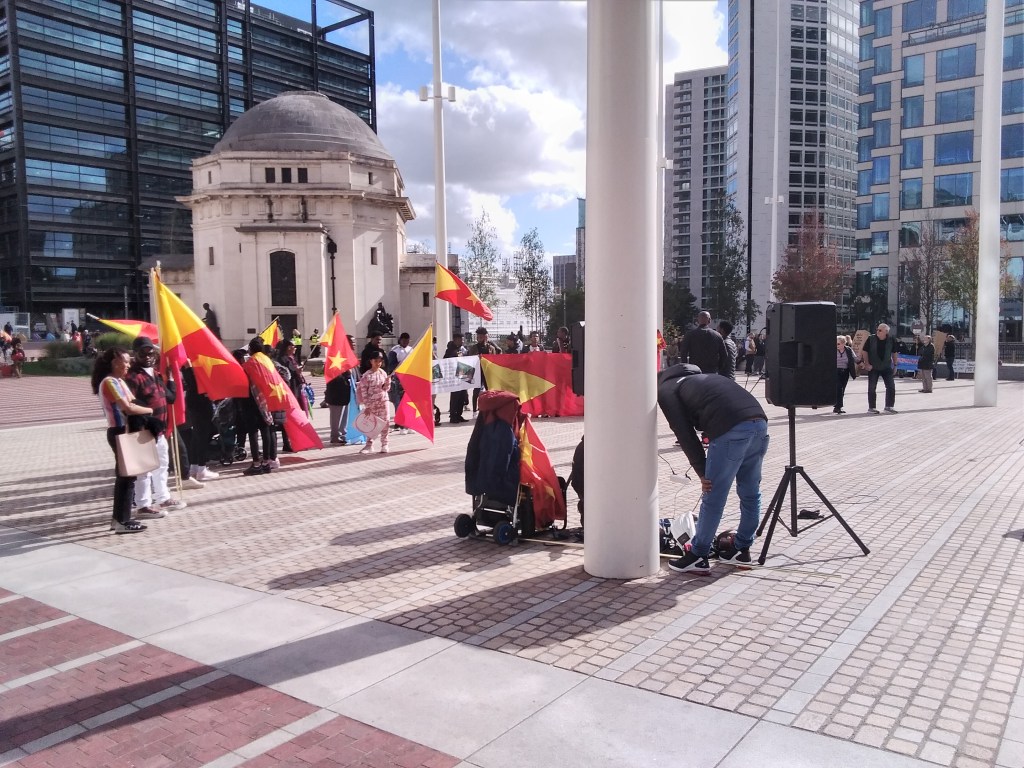
A group of people protesting against what is going on in Tigray.

Protesters holding yellow and red flags.

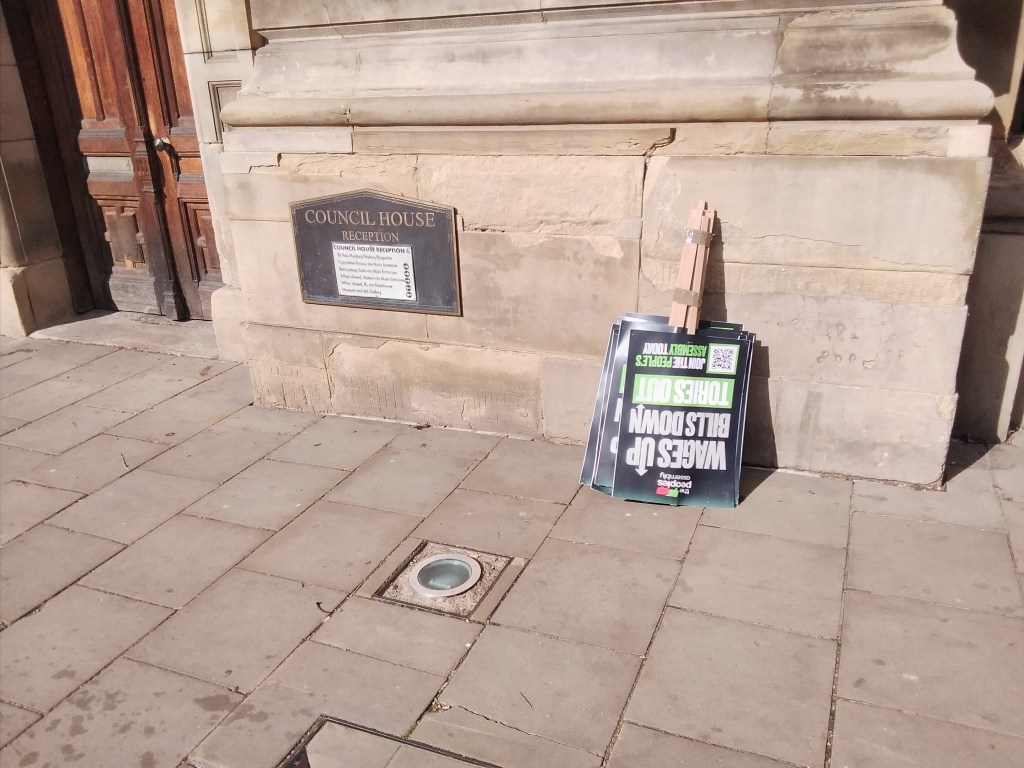
The People’s Assembly.

Signs leaning against a wall upside down reading 'Wages Up Bills Down Tories Out'

Extinction Rebellion.

Woman in Liz Truss Costume holding sign saying 'Power Crisis? We have the Power, You have the Crisis'. On her right stands man dressed as Jacob Rees-Mogg.

A whole cavalcade of left leaning political groups and unions.

Protesters standing on steps leading up to the square.

There was also an anti-Iranian government protest in a completely different place that converged on Centenary Square later on.

…and me, there to represent the Free Julian Assange message.

The leftist groups were in Victoria Square, and the others were in Centenary Square. (For those who don’t know the geography these are 5min away from each other).

The left-wing protest in Victoria Square was due to kick off at 1pm. The other protesters in Centenary Square were there earlier. The left wingers also went for a march around the city centre before convening on Centenary Square about 3pm.

I was hanging around Centenary Square between about 11.20 and 12.30 (mostly) and was able to get film footage of many of the different groups and their causes. I went to Victoria Square to film there. Just before 1pm, Jacob Rees-Mogg walked right next to the protest where he predictably got heckled. I followed the hecklers round from Victoria Square to Centenary Square and the entrance to the Tory Party Conference. Lots of lovely messages got yelled at Rees-Mogg as you can see from these clips (he is visible in the second video, but not the first).

Rees Mogg Being Heckled.
More footage of Rees-Mogg being Heckled.

By the time I got back to Victoria Square some of the speeches had started. I didn’t bother filming all of these. It was a similar lineup to the Enough is Enough protest of activist trade union types. Instead I was able to get some footage of RMT boss Mick Lynch liaising with his supporters:

I also have lots of footage of the crowd at various different points, there are some bits and pieces of the speeches on them. I also have some footage of Mick Lynch speaking to the crowd, as he was the most high-profile person in attendance.

Protesters holding a mocked up Coffin while dressed in black walking down the road.
RIP NHS protesters.

Then there was the march, which went round the city centre and then looped back to Centenary Square.

It was the biggest protest in Birmingham I had seen in a while. For further footage of the events see my youtube/odysee/rumble/bitchute channels.

Enough is Enough Rally Birmingham 1st October 2022

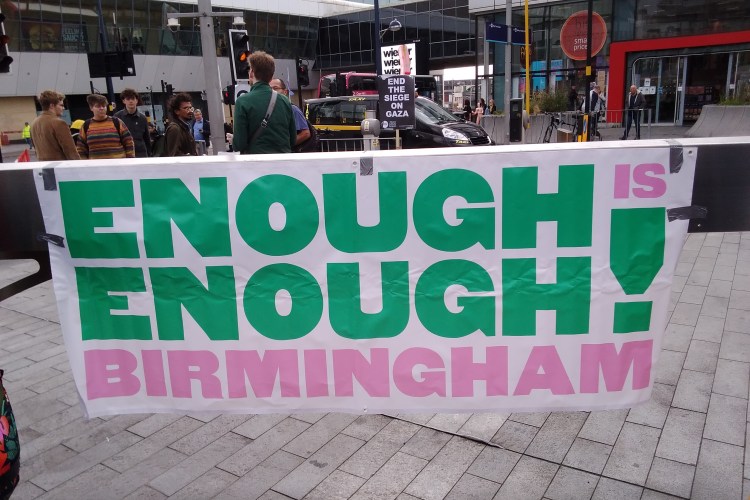
Banner reading Enough Is Enough Birmingham. Sign in the background reads 'End the Siege on Gaza'.

I attended the rally organised by Enough is Enough outside New Street Station in Birmingham.

I was there early in order to leaflet attendees about Julian Assange, and in particular the event in London on the 8th October. Every obscure leftist political party was there handing out literature and selling their papers. The RMT and the other rail unions were there for a picket line alongside the protest.

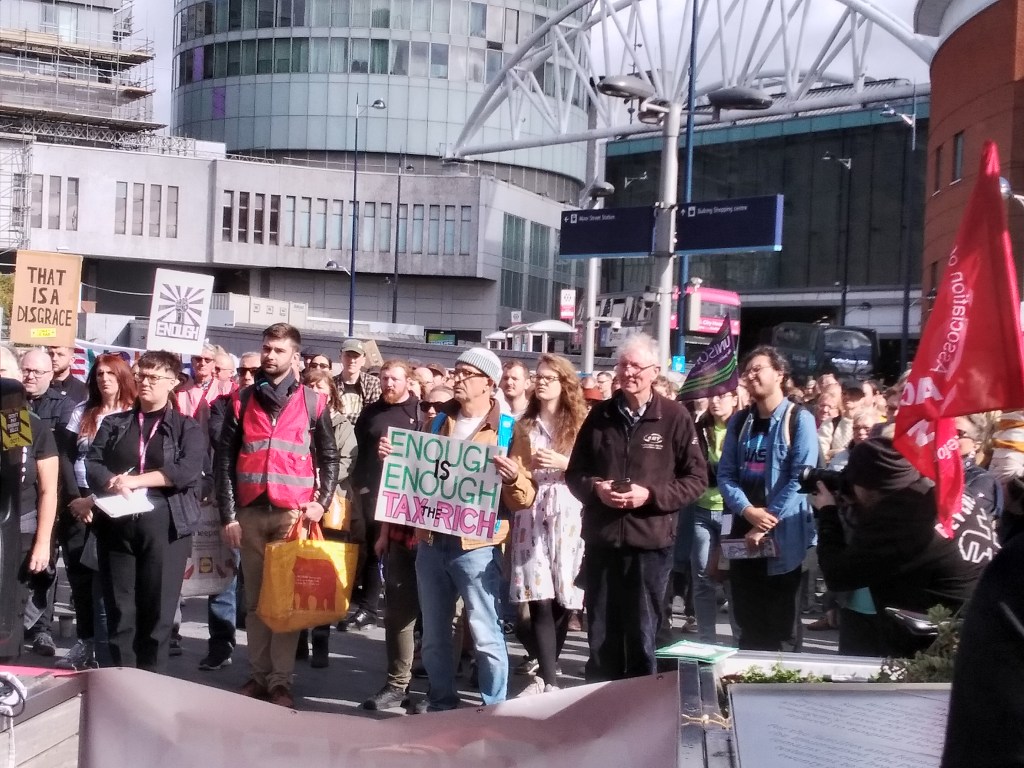
The turnout was pretty decent to be fair.

Man holds sign reading ' Enough is Enough, Tax the Rich'

The demands of the Enough is Enough movement can be seen here. In summary, it’s standard soft-left fare: higher wages and lowering energy bills, as well as supporting the current rail and postal strikes. It was mostly a mix of fringe leftist groups, striking workers, millennial types with rainbow badges, the usual sort of people who turn up to these kinds of events. As far as I know, there was no presence from Labour Party MPs or councilors.

The speeches were the usual thing you get at these kinds of events. Several union workers stood up and spoke about the strikes, such as the rail strikes and the postal office strikes. A couple of female activists spoke on the issues of foodbanks and rented housing, respectively.

With the speeches and placards at these kinds of events, they are always framed in a particular way that I think is misleading. In other words, they talk about ‘the Tory government’. Now, as is pretty obvious from this website, I hate the current incumbents in Westminster. But the subtext here is that if we had a Labour government – things would be different. No, they would not. Look at Keir Starmer, for god’s sake. The man openly declares that he is ‘Zionist without qualification’ and his Crown Prosecution Service told the Swedish government not to drop the fraudulent ‘rape’ investigation into Julian Assange. If you think he is going to do a damn thing for you, you are naive beyond belief. He might be a bit less brazen than Liz Truss but that is about it.

Furthermore, the word ‘lockdown’ was not mentioned by any of the speakers. Lockdown is obviously a massive cause of the current economic crisis, but the unions were happy to support it as it meant they got furlough money (let’s just be honest here). If you know anything about how economies work, you will know that you can’t disrupt local, national and international supply chains via lockdowns for months on end and have no economic consequences from that. Instead, the left cheered lockdowns and in fact, demanded harder lockdowns, and those of us who pointed out that lockdowns would crash the economy were mocked as ‘valuing the economy over human life’.

I don’t want ordinary people to have to suffer economic hardship, but I also feel like the kind of speeches on display narrow the focus in a way that is unhelpful. One thing that was not mentioned, for example, is the push towards Central Digital Bank Currencies on the part of a multitude of states. Governments around the world are looking to abolish cash as a means to increase control. Why not bring this up? After all, this would hurt vulnerable people the most, such as people who are homeless. The answer is because the debate is corralled into a limited framework in which broader causative factors are not considered, instead being reduced down into the personal evils of ‘the Tory government’.

Or what about the fact that a year or so ago, care home workers were fired if they refused to take an extremely dangerous experimental injection proven to cause strokes, myocarditis and sudden death? Why not bring that up as an example of a monstrous policy pursued by these psychopathic elites? Well, that would contradict the fact that the left has done nothing but push the Covid scam for two years and to be honest, I think a lot of them would rather quietly forget about it. Basically no one was wearing a mask or bothering with any ‘social distancing’ at the protest, so they are clearly not worried about the ‘threat of Covid’ they told us we were monsters for ignoring for two years. In my view the left’s compliance with this scam cannot be forgotten so quickly and so easily. I personally will never forget how us ‘granny killers’, ‘conspiracy theorists’ and ‘anti-vaxxers’ were treated.

I would almost always rather that people protest than don’t protest, but the limitations of these kind of events are abundantly clear unfortunately. The left will not get anywhere until it admits its mistakes and that is something that is very unlikely to happen, as it would require an honesty that does not exist within the milieu, whether from sinister motives (such as sheepdogging) or simply ignorance or ideological blindness.

Human Rights Act Reform Consultation

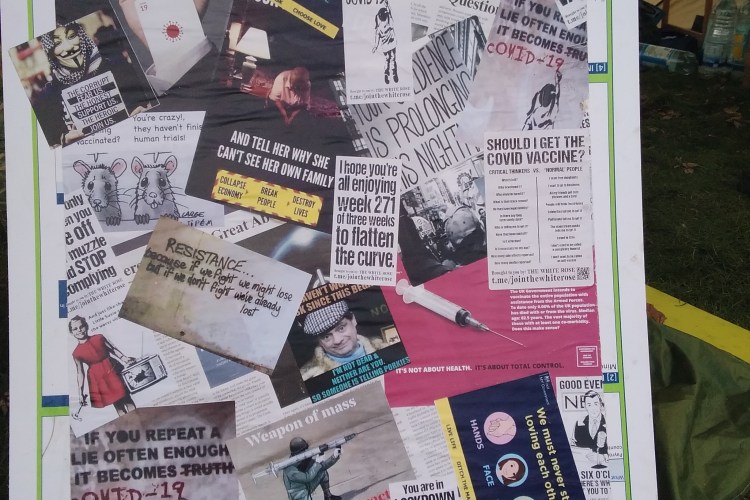
A sign showing a large number of overlapped stickers with messages opposing the Covid 19 narrative.

Introduction

The British government, while currently appearing less authoritarian than some other Western governments due to the removal of many ‘Covid restrictions’, is seeking other ways to create a punishing authoritarian regime. Some of these I have already discussed, such as the Police Bill and the Nationality Bill, and others I have not, such as the Online Harms Bill (which seeks to ban ‘Covid misinformation’). One of the most important authoritarian moves is the reform of the Human Rights Act which has now been put out to consultation by the government. This article will look at the consultation and what is in it.

The Consultation Document

The Government has provided a document to read alongside the consultation. This document is extremely long and goes in to a lot of random detail. My guess is that the idea is to make the entire thing as intimidating as possible, so that people do not bother to respond. The questions (also listed on the page) on are also very technical and legalistic and so hard to understand. I’ve got to admit that I am not the best with legal jargon myself.

Fortunately there are already a couple of guides out there to help with filling in the consultation. It can be done via email or through an online link. The guides I have found so far for filling this in:

Here are the questions copied and pasted from the UK consultation document. You’ll see what I mean about obtuse when you have a look:

  • Question 1: We believe that the domestic courts should be able to draw on a wide range of law when reaching decisions on human rights issues. We would welcome your thoughts on the illustrative draft clauses found after paragraph 4 of Appendix 2, as a means of achieving this.
  • Question 2: The Bill of Rights will make clear that the UK Supreme Court is the ultimate judicial arbiter of our laws in the implementation of human rights. How can the Bill of Rights best achieve this with greater certainty and authority than the current position?
  • Question 3: Should the qualified right to jury trial be recognised in the Bill of Rights? Please provide reasons.
  • Question 4: How could the current position under section 12 of the Human Rights Act be amended to limit interference with the press and other publishers through injunctions or other relief?
  • Question 5: The government is considering how it might confine the scope for interference with Article 10 to limited and exceptional circumstances, taking into account the considerations above. To this end, how could clearer guidance be given to the courts about the utmost importance attached to Article 10? What guidance could we derive from other international models for protecting freedom of speech?
  • Question 6: What further steps could be taken in the Bill of Rights to provide stronger protection for journalists’ sources?
  • Question 7: Are there any other steps that the Bill of Rights could take to strengthen the protection for freedom of expression?
  • Question 8: Do you consider that a condition that individuals must have suffered a ‘significant disadvantage’ to bring a claim under the Bill of Rights, as part of a permission stage for such claims, would be an effective way of making sure that courts focus on genuine human rights matters? Please provide reasons.
  • Question 9: Should the permission stage include an ‘overriding public importance’ second limb for exceptional cases that fail to meet the ‘significant disadvantage’ threshold, but where there is a highly compelling reason for the case to be heard nonetheless? Please provide reasons.
  • Question 10: How else could the government best ensure that the courts can focus on genuine human rights abuses?
  • Question 11: How can the Bill of Rights address the imposition and expansion of positive obligations to prevent public service priorities from being impacted by costly human rights litigation? Please provide reasons.
  • Question 12: We would welcome your views on the options for section 3: Option 1: Repeal section 3 and do not replace it; Option 2: Repeal section 3 and replace it with a provision that where there is ambiguity, legislation should be construed compatibly with the rights in the Bill of Rights, but only where such interpretation can be done in a manner that is consistent with the wording and overriding purpose of the legislation. We would welcome comments on the above options, and the illustrative clauses in Appendix 2.
  • Question 13: How could Parliament’s role in engaging with, and scrutinising, section 3 judgments be enhanced?
  • Question 14: Should a new database be created to record all judgments that rely on section 3 in interpreting legislation?
  • Question 15: Should the courts be able to make a declaration of incompatibility for all secondary legislation, as they can currently do for Acts of Parliament?
  • Question 16: Should the proposals for suspended and prospective quashing orders put forward in the Judicial Review and Courts Bill be extended to all proceedings under the Bill of Rights where secondary legislation is found to be incompatible with the Convention rights? Please provide reasons.
  • Question 17: Should the Bill of Rights contain a remedial order power? In particular, should it be: a. similar to that contained in section 10 of the Human Rights Act; b. similar to that in the Human Rights Act, but not able to be used to amend the Bill of Rights itself; c. limited only to remedial orders made under the ‘urgent’ procedure; or d. abolished altogether? Please provide reasons.
  • Question 18: We would welcome your views on how you consider section 19 is operating in practice, and whether there is a case for change.
  • Question 19: How can the Bill of Rights best reflect the different interests, histories and legal traditions of all parts of the UK, while retaining the key principles that underlie a Bill of Rights for the whole UK?
  • Question 20: Should the existing definition of public authorities be maintained, or can more certainty be provided as to which bodies or functions are covered? Please provide reasons.
  • Question 21: The government would like to give public authorities greater confidence to perform their functions within the bounds of human rights law. Which of the following replacement options for section 6(2) would you prefer? Please explain your reasons. Option 1: Provide that wherever public authorities are clearly giving effect to primary legislation, then they are not acting unlawfully; or Option 2: Retain the current exception, but in a way which mirrors the changes to how legislation can be interpreted discussed above for section 3.
  • Question 22: Given the above, we would welcome your views on the most appropriate approach for addressing the issue of extraterritorial jurisdiction, including the tension between the law of armed conflict and the Convention in relation to extraterritorial armed conflict.
  • Question 23: To what extent has the application of the principle of ‘proportionality’ given rise to problems, in practice, under the Human Rights Act? We wish to provide more guidance to the courts on how to balance qualified and limited rights. Which of the below options do you believe is the best way to achieve this? Please provide reasons. Option 1: Clarify that when the courts are deciding whether an interference with a qualified right is ‘necessary’ in a ‘democratic society’, legislation enacted by Parliament should be given great weight, in determining what is deemed to be ‘necessary’. Option 2: Require the courts to give great weight to the expressed view of Parliament, when assessing the public interest, for the purposes of determining the compatibility of legislation, or actions by public authorities in discharging their statutory or other duties, with any right. We would welcome your views on the above options, and the draft clauses after paragraph 10 of Appendix 2.
  • Question 24: How can we make sure deportations that are in the public interest are not frustrated by human rights claims? Which of the options, below, do you believe would be the best way to achieve this objective? Please provide reasons. Option 1: Provide that certain rights in the Bill of Rights cannot prevent the deportation of a certain category of individual, for example, based on a certain threshold such as length of imprisonment; Option 2: Provide that certain rights can only prevent deportation where provided for in a legislative scheme expressly designed to balance the strong public interest in deportation against such rights; and/or Option 3: provide that a deportation decision cannot be overturned, unless it is obviously flawed, preventing the courts from substituting their view for that of the Secretary of State.
  • Question 25: While respecting our international obligations, how could we more effectively address, at both the domestic and international levels, the impediments arising from the Convention and the Human Rights Act to tackling the challenges posed by illegal and irregular migration?
  • Question 26: We think the Bill of Rights could set out a number of factors in considering when damages are awarded and how much. These include: a. the impact on the provision of public services; b. the extent to which the statutory obligation had been discharged; c. the extent of the breach; and d. where the public authority was trying to give effect to the express provisions, or clear purpose, of legislation. Which of the above considerations do you think should be included? Please provide reasons.
  • Question 27: We believe that the Bill of Rights should include some mention of responsibilities and/or the conduct of claimants, and that the remedies system could be used in this respect. Which of the following options could best achieve this? Please provide reasons. Option 1: Provide that damages may be reduced or removed on account of the applicant’s conduct specifically confined to the circumstances of the claim; or Option 2: Provide that damages may be reduced in part or in full on account of the applicant’s wider conduct, and whether there should be any limits, temporal or otherwise, as to the conduct to be considered.
  • Question 28: We would welcome comments on the options, above, for responding to adverse Strasbourg judgments, in light of the illustrative draft clause at paragraph 11 of Appendix 2.
  • Question 29: We would like your views and any evidence or data you might hold on any potential impacts that could arise as a result of the proposed Bill of Rights. In particular: a. What do you consider to be the likely costs and benefits of the proposed Bill of Rights? Please give reasons and supply evidence as appropriate. b. What do you consider to be the equalities impacts on individuals with particular protected characteristics of each of the proposed options for reform? Please give reasons and supply evidence as appropriate. c. How might any negative impacts be mitigated? Please give reasons and supply evidence as appropriate.

The consultation allows you to only answer some of these questions and ignore others. To he honest I am going to ignore most of them and only focus on a few. I used the email method because I didn’t want to make arguments on the uber technical questions.

Questions 4/5/6/7: Free Expression

I looked at two bits that they mentioned in their consultation:

The government is committed to ensuring that the biggest social media companies protect users from abuse and harm, and in doing so ensuring that everyone can enjoy their right to freedom of expression free from the fear of abuse.

The government wishes to explore ways of strengthening the protection for freedom of expression in the Human Rights Act, mindful as always of the government’s primary duty to protect national security and keep its citizens safe.

Basically, ‘harm’ and ‘abuse’ can mean anything and ‘national security’ can also mean anything.

Question 8/9: Preliminary stages

  • These will be abused by the government to prevent cases they don’t like coming to court.
  • The examples that they gave on the consultation are very small uses of public money
  • Problematic to introduce this over a few frivolous cases, even if those cases lead to slight waste of public funds.

Question 22: Extraterritoriality

  • Concerns that they government will try to change this to prevent their soldiers being prosecuted for war crimes

Questions 26/27: Compensation

  • Deflects attention from the abuse and towards the individual making the claim
  • Divides the population into ‘good’ citizens worthy of rights and ‘bad’ citizens who are unworthy
  • Behaviour could mean anything such as attending a protest the government doesn’t like
  • May be used to discriminate against certain races, religions, etc. or against people who don’t agree with a state narrative e.g. the unvaxxed

General comments on the concept of a ‘rights culture’ and the public interest

See Naked Emperor’s post above on this one. Basically they are trying to put more emphasis on obligations to society. In other words another possible means to attempt forced injections in the ‘public interest’.

Cost of Living Protest Birmingham 12th February 2022

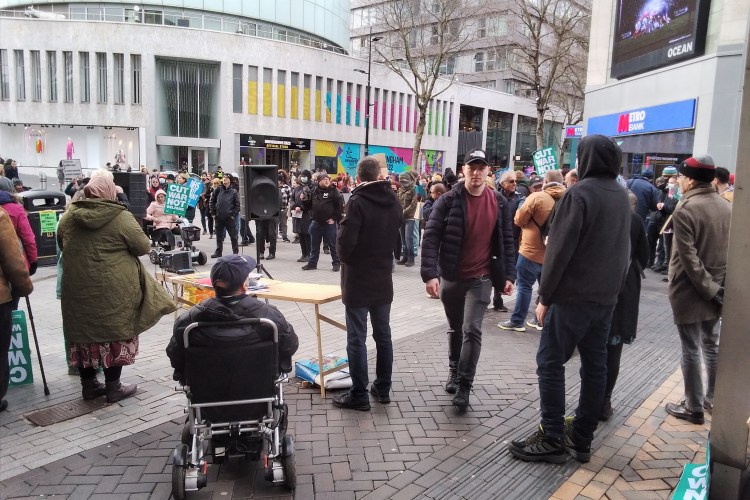
Protesters opposite Metro Bank in Birmingham City Centre.

This was a protest organised by the usual suspects on the left, who to be honest I find generally tiresome at this point. This included the unions – Unite and the National Education Union – and the People’s Assembly. In other words, the lockdown fanatics that advocated for the situation we now find ourselves in regarding the economy – and those who mocked people like me for pointing out the devastation that lockdown would inflict on working people.

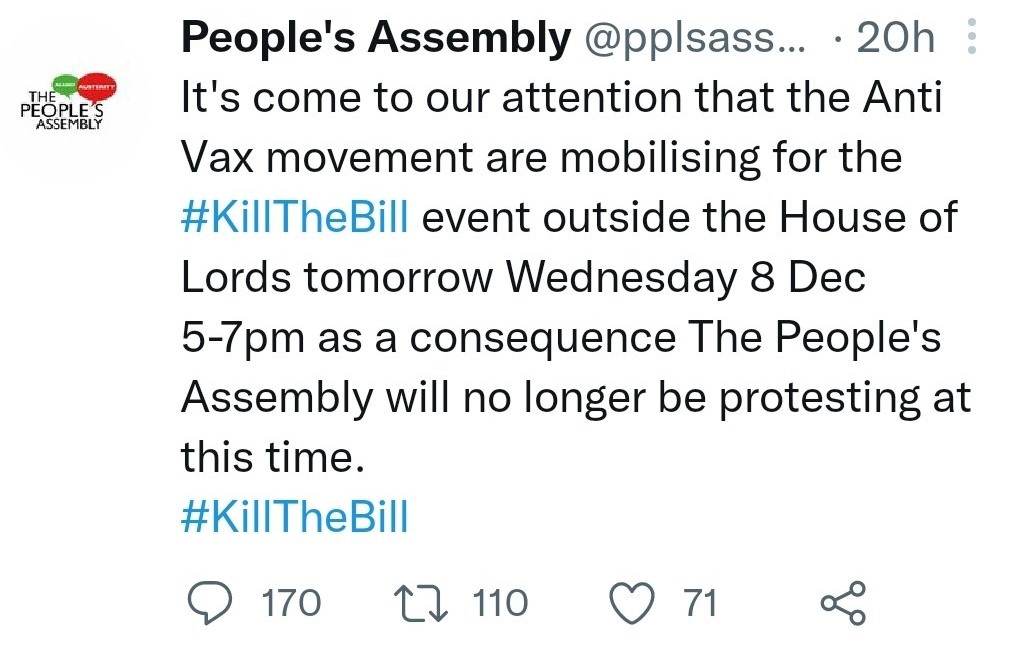
People’s Assembly even went so far as to refuse to protest alongside ‘anti-vaxxers’ against the draconian Policing Bill:

Screenshot of Tweet from "People's Assembly": It has come to our attention that the Anti Vax movement are mobilising for the #KillTheBill event outside the House of Lords tomorrow Wednesday 8 Dec 5-7pm as a consequence the People's Assembly will no longer be protesting at this time. #KillTheBill
They later deleted this because of the backlash but here it is for posterity. As you can see it is a ratio’d tweet.

I primarily went to the protest in order to provide coverage of the event, rather than to take part. I have lost faith in the traditional and modern left to do anything useful due to their Corona fanaticism, advocacy for working class destroying lockdowns, harmful and useless (in terms of stopping viruses) face masks, and mocking and smearing anyone who even questions a dodgy Big Pharma product as an ‘anti-vaxxer’.

The framing that was present during the speeches is exactly what you would expect regarding Corona, complaining about the old staples such as ‘useless PPE’, ‘dodgy contracts’ etc., which does not get to the heart of the matter. The oblique framing of the ‘the Tories making us pay for the pandemic’ was present, but no mention of the horrific consequences of locking down and how it has harmed working class people. (The only speaker to use the word ‘lockdown’ was Nila from Stop the War coalition, from what I heard, which was not all of it due to wind noise).

Then we get the typical complaining about left wing bugbears such as Tommy Robinson (I believe he is only highlighting grooming gang victims to push a particular narrative, but the left has failed on this issue, see below), ‘The Tory government’ (as if Labour wouldn’t do the same thing), Brexit (as if this topic has any relevance to anything at this point and I say this as a Brexit/Lexit voter), etc. Though one of the speakers did call out Prince Andrew for being a pedophile and the royal family for protecting him, so maybe common sense hasn’t completely left the building.

I don’t want working class people to have to pay more money for energy bills etc., especially since they were the primary victims of lockdowns. I think that is fairly obvious. The question is how we tackle the problem. In general, even though I disagree with capitalist economics I have become a lot more sceptical of calling on the (capitalist) state to do anything about anything, since they will just use it to push more pain onto working people (a good example is the environment: while it’s clear that many things humans are doing are negatively affecting the environment, any state action is likely to be more authoritarian nonsense that will punish the working class like carbon based digital IDs). Unlike libertarians I believe that this authoritarianism is inherently interlinked with the capitalist system.

Alternative systems within the current one such as opting out as much as possible and doing other things within the freedom based community are a good idea. However, they are difficult to implement in practice given that people still have to survive within the current system (e.g. people have to go to work full time, leaving limited time and energy for alternatives). Such suggestions can come across as a bit naïve in some cases though I advocate them where realistically possible.

I have uploaded some of the footage onto my Bitchute channel of the speeches that were audible and not ruined by wind noise.

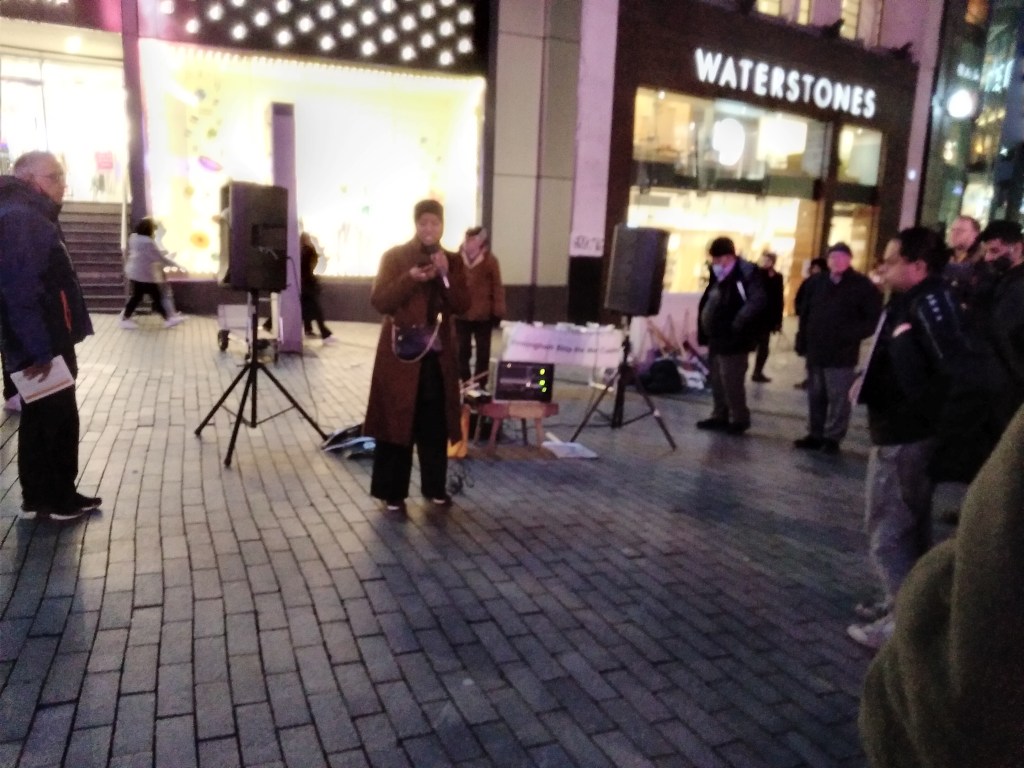
Protesters outside Waterstones in the City Centre. Signs read 'Tax the Rich'.

RE Tommy Robinson: Robinson wants to promote the idea that foreign or Muslim men are inherently a threat to women and girls, which is false (even though I do believe Islamic ideology to be misogynistic, it does not follow that all men from these backgrounds will rape children). However the left has ignored the grooming gang victims because they were victims of Asian men and that does not fit their own narrative of foreign/Muslim men not being a threat to women and girls. In reality a minority of men of all races are a violent threat to women and girls (which is one reason why we have separate spaces for women and men). Robinson ignores victims of white men, whereas the misogyny of the current left causes them to brush over the problem. The left also allows for more abuse of women and girls to take place by pushing transgender ideology, which states that any man is a woman if he declares himself to be so (including violent males). The women from Stand up to Racism claimed that their slogan involved justice for the victims, I wasn’t there so I can’t say, but there is no evidence of that in the signage.

Anti-Nationality and Borders Bill Protest Birmingham 27th January 2022

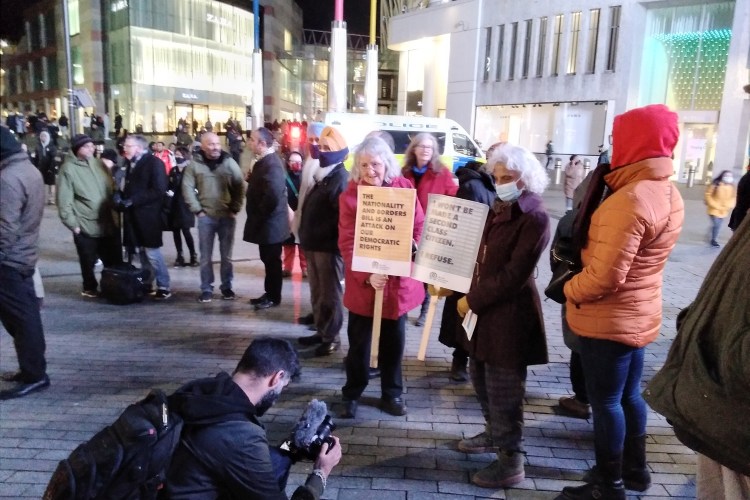
Protesters in a winter evening in Birmingham City Centre. Two older ladies hold signs opposing the Nationality Bill.

A quick post on this protest with uploaded footage.

The Nationalities and Borders Bill is a new piece of legislation relating to issues such as citizenship and asylum put forward by the Tory government. As such, it has enraged the Modern (aka woke) Left due to their heavy emphasis on immigration.

This bill is of concern due to its authoritarian aspects – alongside other bills and acts opposed by the Modern Left – such as the Police Bill – and ones the Modern Left refuse to oppose – such as the Coronavirus Act. The key authoritarian aspect of concern is that the bill makes it possible for the government to strip people from immigrant backgrounds of citizenship without notification. The number of people calculated to be possibly affected is 6 million including dual nationals and people born in foreign countries.

Of course, while the government claims this will only be used against criminals, we cannot trust the government not to abuse these powers and go after activists or anyone they don’t like in general.

Unfortunately, as is in line with the left today, many protesters were clearly in alignment with the Official Covid Narrative.

Here is the protest crowd:

Some of the speakers are up on my Bitchute channel. Unfortunately the sound was not the best due to an arcade game being run very close to the protest site, which is the noise that you can hear in the background in some of the clips.

Kill The Bill Protest Birmingham 8th December 2021

Protesters in the dark.

A quick post about this protest which I attended at short notice. This protest took place because the government are continuing to push the draconian Police, Crime, Courts and Sentencing Bill which will severely restrict the right to protest. This goes along with all the other authoritarian police state things that they are pushing or have pushed, such as the Coronavirus Act, mandatory masks, vaccine passports and the persecution of Julian Assange.

I have expressed some reservations about the Kill the Bill movement before, primarily the fact that they ignore the Official Covid Narrative as a justification for tyranny.

Unfortunately, they are at it again. The group People’s Assembly (which I know nothing about and have no dealings with) refused to protest at the Kill the Bill event in London because some ‘anti-vaxxers’ were going to be there. (Screenshot courtesy Ian Jenkins – they later deleted this after they got called out).

Presumably this was because some groups like Stand Up X and Save Our Rights, who are anti-lockdown, were advertising the event and encouraging people to turn up. Of course, this is beyond pathetic – looking a gift horse of additional support in the mouth. Despite the fact that the left has mocked and smeared people supportive of Stand Up X and Save Our Rights for months, they backed the protest because stopping the bill was more important than disagreement. Obviously this ‘People’s Assembly’ lot don’t represent the whole left but there are a significant proportion who like to mock people who don’t follow every restriction out of Boris Johnson’s mouth and don’t trust Big Pharma.

Anyway, I went to this protest despite reservations because this bill is terrible. Apart from being a lot darker (it was at 5pm) and a lot colder, not a lot has changed in terms of the kinds of things they are talking about (and still no acknowledgement of the evils of the Coronavirus Act or vaccine passports). The usual leftist groups were around including Stop the War coalition, the Workers Party of Britain and trade union groups. The speeches were the usual kind of left leaning stuff that you get at these kind of events with the themes of the ‘climate emergency’, imperialism, migrants etc. (The speaker from Stop the War even had a go at the Workers’ Party of Britain for being too anti-migration, so we couldn’t get through the event without a left wing spat.)

There was also a lot of Extinction Rebellion people around as well, giving out badges and leaflets, and they also brought the drums along. There was a period of 10-15 minutes where they just did some drumming. (I’m a bit cynical about the ‘climate emergency’ narrative at this point given that it seems to be the next narrative after Covid to be used to drive in the authoritarian police state. There was quite a lot of plugging of this narrative at this event with another protest on another date being mentioned for climate change.)

After a few more speakers there was a bit of chanting that was a bit half-assed. Though for a Wednesday 5 o’clock protest, the turnout was decent. Maybe 100-150 or so people (difficult to see in the dark).

Birmingham Clean Air Zone through the lens of Techno-Tyranny

Cartoon reading Birmingham City Council, Clean Air Zone: Smart City Surveillance Ahead

Introduction

On the 1st June 2021, Birmingham (UK) introduced a ‘Clean Air Zone’. The plan is to charge vehicles that emit too many greenhouse gases a fee for every day that they enter the city centre. The supposed motivation for this is to lower emissions and improve air quality, thus improving the quality of life of people who live in Birmingham. As with any capitalist state initiative, however, we have to look beneath the surface, and in this case there is a link to the Smart City agenda.

Birmingham Clean Air Zone

The Birmingham Clean Air Zone – which came into force on the 1st June – will charge any non-compliant household vehicle that enters into the zone or drives within the zone £8 per day. Non-compliant vehicles are those that are (considered to be) non-fuel efficient and so emit too much carbon dioxide and other greenhouse gases. There are various exemptions to these rules, but for our purposes they are not important.

The main aspect which I will focus upon in this article is the mechanism by which the Clean Air Zone will be enforced. According to the BrumBreathes website, the official website for the changes:

Vehicles that do not meet the emission standards for the zone will be detected by an ANPR camera (automatic number plate recognition).

Number plates that are non-compliant with the low emissions zone will be flagged for a fine.

What precisely is ANPR? The RAC has an article discussing the basics of the technology.

ANPR technology converts an image of a number plate into machine-encoded text, this is called optical character recognition.

The technology can be used across CCTV, traffic enforcement cameras and ANPR-specific cameras. Infrared illumination can help cameras to capture a clearer image.

ANPR cameras are used to monitor speeding vehicles and handing out fines based on that basis. The police also use them to monitor stolen vehicles.

A Step Towards Smart Cities

Smart Cities – cities with endless sensors and monitoring managed by AI – are a dream of the global elite. Institutions such as the World Economic Forum are promoting the smart city concept through the creation of a ‘Pioneer Cities’ program. While smart cities are promoted as the solution to humanity’s problems, in reality, they will lead to the end of privacy – as every single device, even a kettle, will be hooked up to the ‘Internet of Things’ for monitoring. One of the main narratives being used to drive the smart city is the Official Covid Narrative – with smart cities being sold as ‘pandemic management’.

However, another idea being used to sell smart cities is the ‘green’ agenda. A significant proportion of Western populations are concerned about genuine environmental issues such as pollution and plastic waste, and this can be leveraged by Smart City promoters to push their agenda. For example, this article from 2018 talks about how the ‘Internet of Things’ is the best way to improve the environment by making everything more efficient. In reality, smart cities would devastate the environment due to the large amount of rare earth metals required for chipping everything and the creation of 5G networks, but that aspect is ignored by smart city promoters.

It is clear that the Birmingham Clean Air Zone is being used in such a manner, due to the fact that its surveillance policies will automatically slap online payable fines on non-compliant cars through ANPR processes. These cameras will be able to collect a large amount of data on drivers which allows for a higher level of privacy violation, a key concept of the Smart City.

On an even more sinister level, the idea of the Clean Air Zone may begin to normalise the exclusion of individuals from certain areas for not meeting certain criteria. This is being pushed extremely hard in Britain at the moment through the attempted normalisation of vaccine passports – preventing people from going to social events unless they have had the Covid-19 vaccine. The Official Covid Narrative and the ‘green’ agenda may merge with the concept of the ‘climate lockdown’ – an idea already being promoted and normalised in the mainstream media.

Conclusion

An initially innocuous idea – that of reducing pollution in the Birmingham City Centre – is actually tied into deeper agendas for the introduction of ‘smart cities’ and ramping up mass surveillance under the guise of ‘protecting the planet’.

Birmingham Protests 5th June 2021

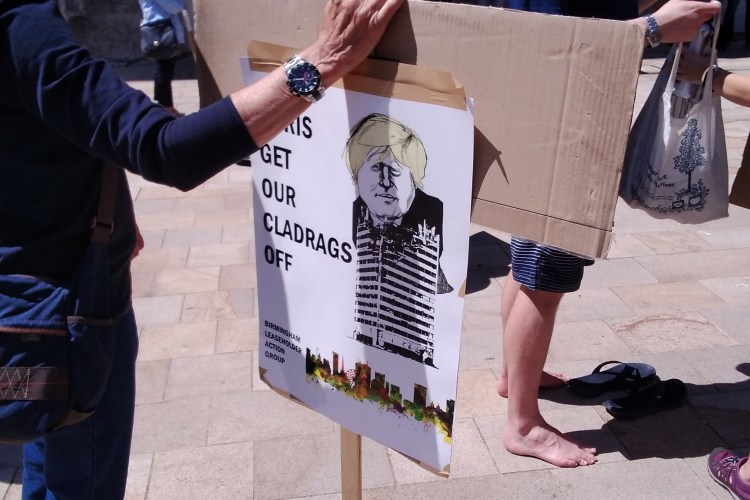
Sign reading Boris Get our Cladrags off with a caricature of Boris Johnson

It could be just me, but it seems as if there are a huge number of protests going on, more than ‘normal’. I don’t mean this from the point of view of one ideology or another. I just mean people protesting about things in general. It could be me simply being more aware of protests, but at the moment we have multiple Free Palestine events, Kill the Bill, Anti-Lockdown events, that have all drawn significant numbers of people.

There were two events on the 5th June, both taking place in Victoria Square at the same time (12 noon). (There was also a third protest going in in Kings Heath against the Low Traffic Neighbourhood organised by the Workers’ Party of Britain, and there were some Extinction Rebellion people hanging out and chalking near the intersection between New Street and Corporation Street.)

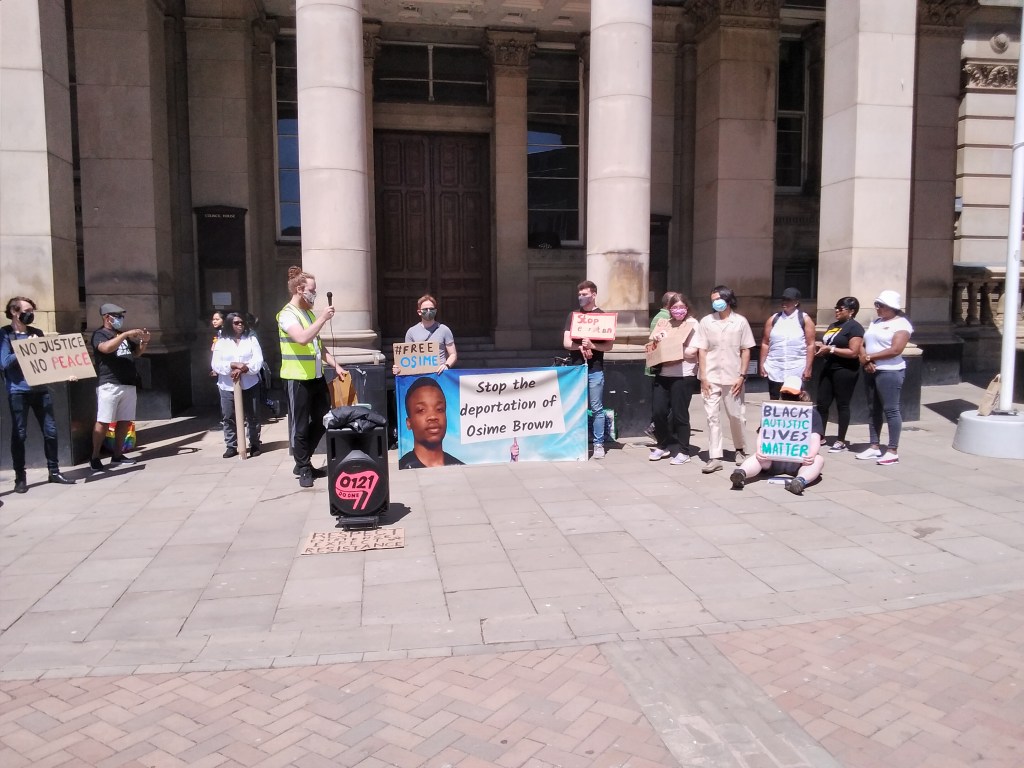
The two protests that took place in Victoria Square were by BrumLAG (Birmingham Leaseholders Action Group) and a group seeking to stop the deportation of Osime Brown to Jamaica.

The BrumLAG protest took place near the statue of Queen Victoria, off to the side of the square. It was pretty well attended, at least a few hundred were there.

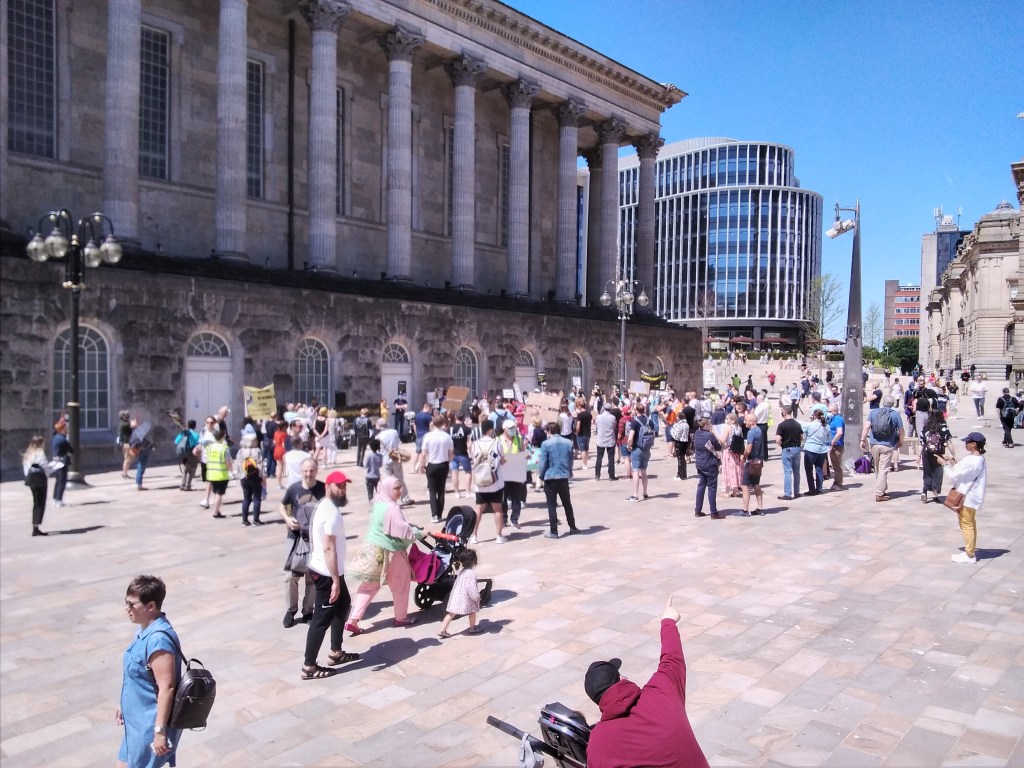
Protesters in Victoria Square, Birmingham. It is a sunny day.
BrumLAG protest about 12.20pm

The protest for Osime Brown was around 30-odd people and took place in the section of Victoria Square under the building.

Protesters with signs reading "Stop the Deportation of Osime Brown.", "No Justice, No Peace", "Black Autistic Lives Matter".
Stop the Deportation of Osime Brown protest

The BrumLAG event was about the issue of cladding in homes. In 2017, Grenfell Tower, a tower block in London, set on fire. The fire was able to spread rapidly because of the type of cladding used in the building. 72 people were killed as a result of the fire.

Safety concerns regarding the risk of fire had been raised before the fire took place.

Many other buildings contain the same or similar unsafe cladding. This has caused serious worries to those living in such buildings due to the risk of a fire.

The BrumLAG protest was focused upon the issue of who pays for the replacement of the cladding. Leaseholders have been expected to pay and their properties have no value. BrumLAG have been making the case that the developers that should be paying for the changes to make the buildings safe.

Copy of a leaflet given out by Brum LAG.
BrumLAG leaflet. The other side says ‘Is your home worth £Zero?’

I did listen to some of the things that the speakers were saying. Unfortunately, they had a fairly low quality sound system. The recordings I made of the couple of speeches I managed to film on my tablet came out pretty garbled.

The Osime Brown event, on the other hand, had a much better sound system. The event was organised by some of the people involved in Kill the Bill and there were several of the same faces there as the event on May 1st.

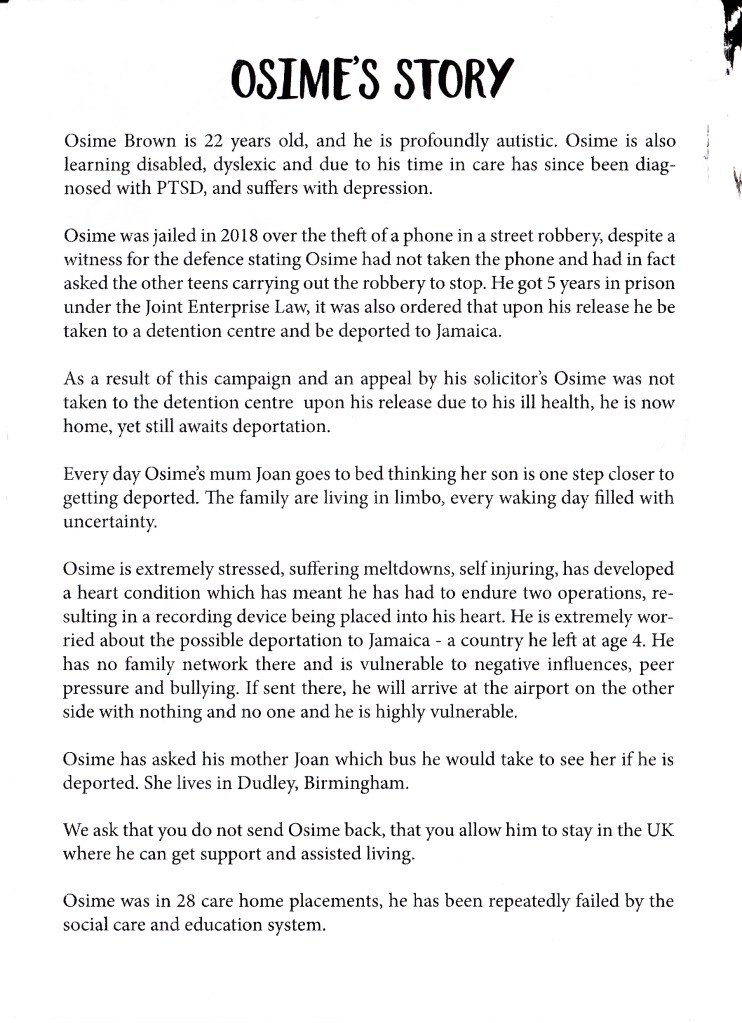
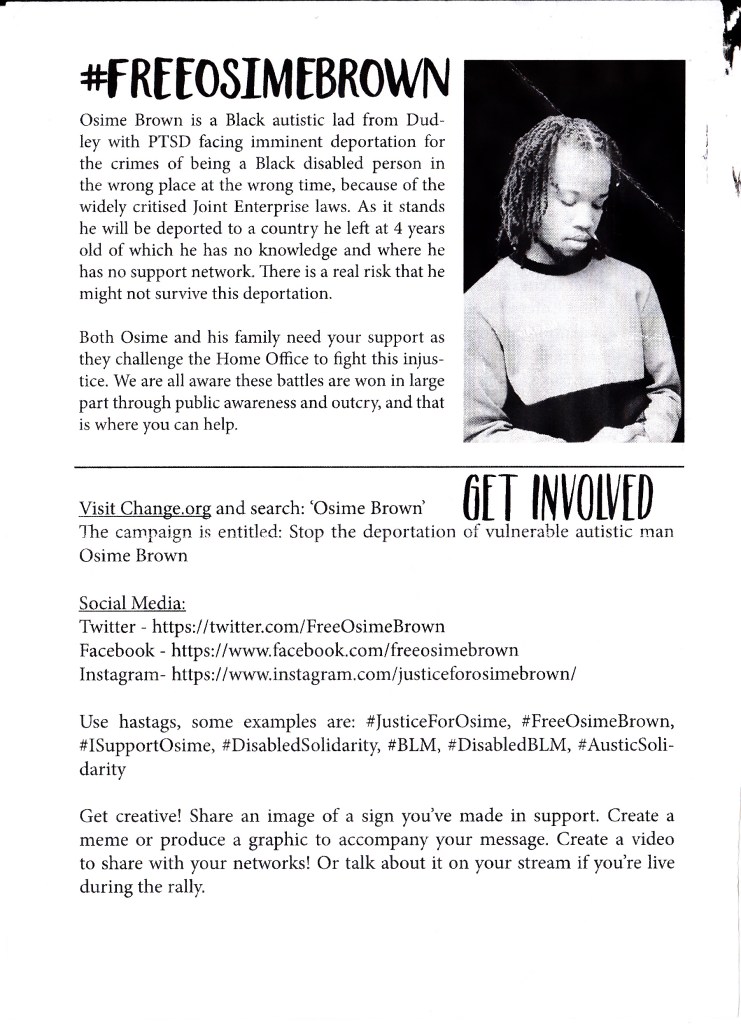
I am going to be honest and say that I do not know a lot about this case. I will post the leaflet handed out by the organisers below so that you can read what they have to say:

Leaflet summarising the story of Osime Brown stating he was jailed in 2018 over a trivial offense under the Joint Enterprise Law and is under threat of deportation to Jamaica.
Leaflet reading #FreeOsimeBrown summarising the case.

Some of the speakers at this event were also at the Kill the Bill event. The woman with the bright coloured hair was speaking at Kill the Bill. I’m pretty sure the man with the yellow jacket introducing the speakers spoke there as well, or was involved in some way. Joan, Osime’s mother, also spoke at Kill the Bill and this is the first that I heard about this case.

I have embedded the videos below.

Here’s some Birmingham Leaseholders Action Group footage:

I am also trying to offer a Bitchute alternative for my footage, but am having some technical problems uploading. [EDIT: This is now resolved and all the above footage is available on Bitchute}.