A Brief History of British Antivaccinationism, Part 3.3 – Popular Resistance

Introduction

This series hopes to explore the history of British Antivaccinationism and Vaccine Scepticism.  It is divided into 7 main eras: the period of Inoculation, 1721-1798; the introduction of vaccination, 1798-1853; the imposition of mandates, 1853-1898; the remaining history of the National Antivaccination League, 1898-1972; DTP Vaccine Scepticism 1972-1998; Andrew Wakefield and vaccines cause autism, 1998-2019, and Covid 19, 2020 to present. This section will look at the resistance from ordinary people to vaccination during the late 19th century.

Working Class Antivaccinationism

It had long been pointed out by antivaccinationists that the 1853 mandate was a piece of class legislation. Fines associated with non vaccination were easily payable by wealthy vaccine resistors, but ordinary resistors faced distraint (forced selling of their property) or prison.

Working class antivaccinationists saw vaccination as an attack and a threat to their bodies. They feared a threat to their employment (mandatory vaccination for employment), due to individual cases of employers attempting to force vaccination on their staff, particularly during an outbreak.

Working class people saw vaccination as an assault on their families. During the late nineteenth and early twentieth century, there was a belief among the elite that working class parenting, particularly working class mothering, was inadequate. Working class women were demonised for working (even though economic survival of the family depended on their income) and were seen as failing to contribute good children to a strong British race (see Anna Davin’s Imperialism and Motherhood). Working class people also perceived vaccination as a means of portraying their children as inherently diseased, and thus demonising them as the problem.

Vaccination was also linked to the New Poor Law, which compelled people into the workhouse if they were unable to find sufficient work to survive. The 1840 act which provided free vaccination was done via the Poor Law. Staff who were working in the vaccination program also worked in Poor Law administration. This associated vaccination with pauperism, a connection resented by working class people.

Resistance was associated with the East End of London, as well as certain working class towns, such as Leicester and Gloucester. It was also linked to other working class self improvement movements, such as the temperance movement. Examples of non compliance, other than the obvious refusing to vaccinate, included treating distraint sales as a protest venue, and physical assault against vaccination officers. (For more information about working class antivaccinationism, see the article ‘They Might as Well Brand Us’ by Nadja Durbach).

The largest display of resistance would occur in Leicester in 1885.

The Leicester Protest

Leicester was a hub of vaccination resistance. Antivaccinationist J. T. Biggs gives a very long account of Leicester and how the quarantine methods they employed after the 1871 smallpox outbreak were more successful than vaccination. Most of the city lost faith in vaccination after 1871, and there was a large amount of non-compliance with the vaccination edicts.

In 1885, there was a large protest against the mandatory vaccination laws in Leicester. This protest advocated for individual liberty and rejected the state control of working class children. Mothers stated that they wanted to protect their children from vaccination. The procession down the streets of Leicester included a horse and cow as the representations of vaccine lymph, furniture (as a representation of the distraint sales mentioned above) and an effigy of Edward Jenner. Further meetings also took place after the protest, stating the continued intent to resist vaccination.

Conclusion

Today, antivaccinationism is often portrayed by vaccinationists as a ‘privileged’ position advocated for by primarily middle-class mothers. If we look at history we can see this is far from the case and that many ordinary people were committed antivacciantionists.


Why David Lammy Wants to Get Rid of Jury Trials

Here in the UK, over the past few months, there has been a lot of talk about removing jury trials for the majority of criminal offenses, and instead having trials decided by a judge. The Deputy Prime Minister, David Lammy, has floated the idea of only maintaining jury trials for crimes with over 3 years jail time such as murder, attempted murder, rape, etc. The official reason for this is to save time, as the UK has a backlog of criminal cases, and Lammy argues that judges will be quicker than having to call and seat juries.

This policy may not be implemented, at least in the short term, because there is opposition to it from within the ruling Labour Party. However, the fact that this policy has even been suggested is revealing. It must be for a reason, and I don’t believe the official reason of saving time, since they didn’t care very much about any legal disruptions caused by lockdowns.

So what’s the reason? In my opinion, it is to guarantee convictions under the increasingly authoritarian anti free speech and anti protest legislation that has been passed over the last 5 years. We have seen a state of such draconian legislation, such as the Police, Crime, Sentencing and Courts Act, or the Online Safety Act, that claim to be in the name of public safety but in practise enhance state authoritarianism. For example,the Online Safety Act massively increases censorship through the excuse of protecting children. We are also seeing a large number of arrests of people for simply holding placards stating that they support Palestine Action, a direct action group that occupies arms factories that send weapons to Israel. There have also been some people arrested and/or convicted for comments made online on the political right. For example, Joey Barton, an (in my opinion) obnoxious ex-footballer, was arrested for comments which while offensive, were bad taste jokes (such as referring to football commentators he didn’t like as serial killers Fred and Rose West).

However, in order to enforce this authoritarianism fully, they need to be able to secure convictions on the charges. Which means they need juries to vote guilty. But there may be a significant number of jurors that would not convict, either because they agree with free speech principles or because they sympathise with the cause represented by the protesters. This weakens the ability to enforce these laws. Judges, on the other hand, would follow the law and convict under these draconian laws, enhancing enforcement and authoritarianism.

Anti Digital ID Protest Birmingham 20 December 2025

This was the next monthly protest in the series.

On this occasion there were three main speakers, former Conservative politician Andrew Bridgen, David Icke, and Covid vaccine injured John Watt.

Former Conservative politician Andrew Bridgen

Andrew Bridgen spoke for about 4 minutes. The main theme of his speech was that digital ID is a one way street – once its introduced, it will be very difficult to get rid of. He said even if you are deluded enough to trust the current government, supporting digital ID is going to require trusting every future government. There is also a risk that the Labour government may come up with an excuse to cancel the 2029 general election. Digital ID is required for Agenda 2030, such as vaccine passports and carbon credits.

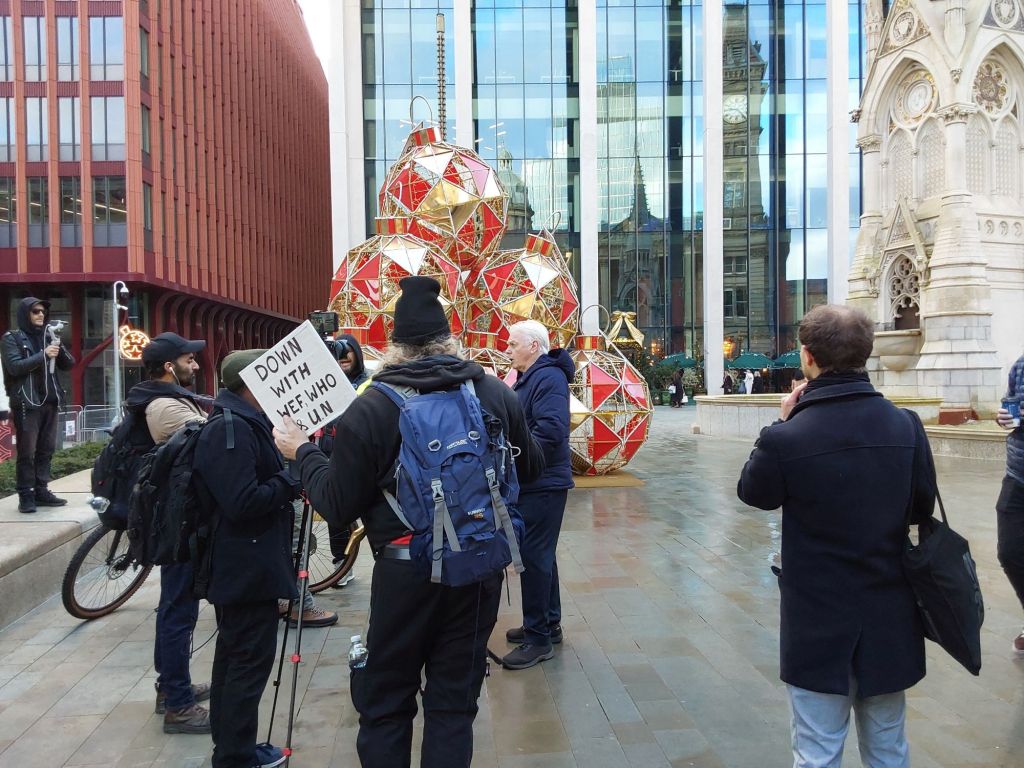
David Icke giving an interview in front of oversized Christmas baubles.

David Icke gave a long speech discussing what he called the global cult. There are similarities across countries due to the control over humanity by this global cult. The aim of this elite cult is to promote artificial intelligence and transhumanism as a means of control. The likes of Ray Kurzweil have made this agenda clear through their promotion of ideas such as the Singularity and the interlinking of AI and the human brain.

Elected politicians are deliberately idiotic and deliberately selected by the global cult to be do, so that people will be more willing to accept technocracy. They promote rigid belief systems and ideological conflict for control. Alternative media is too focused on issues like who killed Charlie Kirk, rather than exposing the real agenda.

It is better to remove the source of the problem rather than to talk about solutions. We need to stop believing in rigid belief systems as these are used for control.

John Watt spoke about the difficulties of getting help when injured by the Covid vaccine. It was good to see him give a speech since I believe at one point he was bedbound due to his injuries.

The next protest is 24th January. I will also cover that protest.

Anti Digital ID Protest Birmingham 8 November 2025

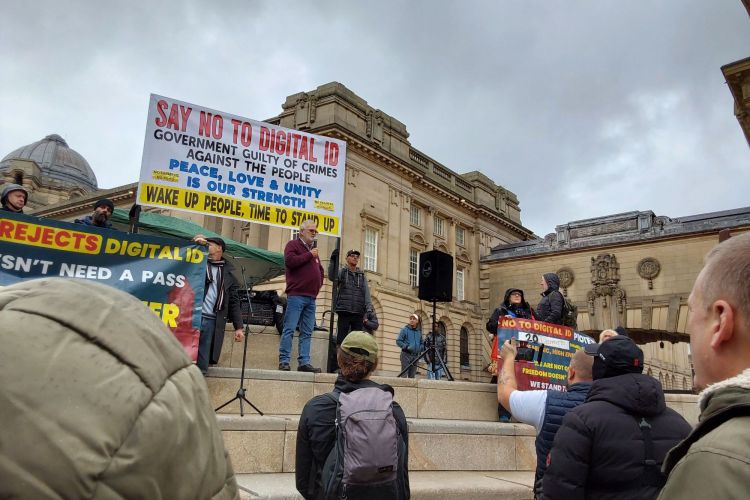
Man in a maroon shirt stands in front of a banner reading 'Say No to Digital ID'

There was another protest against the government’s Digital ID scheme on 8 November 2025. This was in the same location, Chamberlain Square, Birmingham.

Two people holding a banner reading 'Birmingham Rejects Digital ID, Freedom doesn't need a pass, we stand together'

There were fewer speakers at this event, instead there was some live music as well as speakers. Then there was a march around the city centre. They had also set up a TV screen partway through the march advertising the next protest.

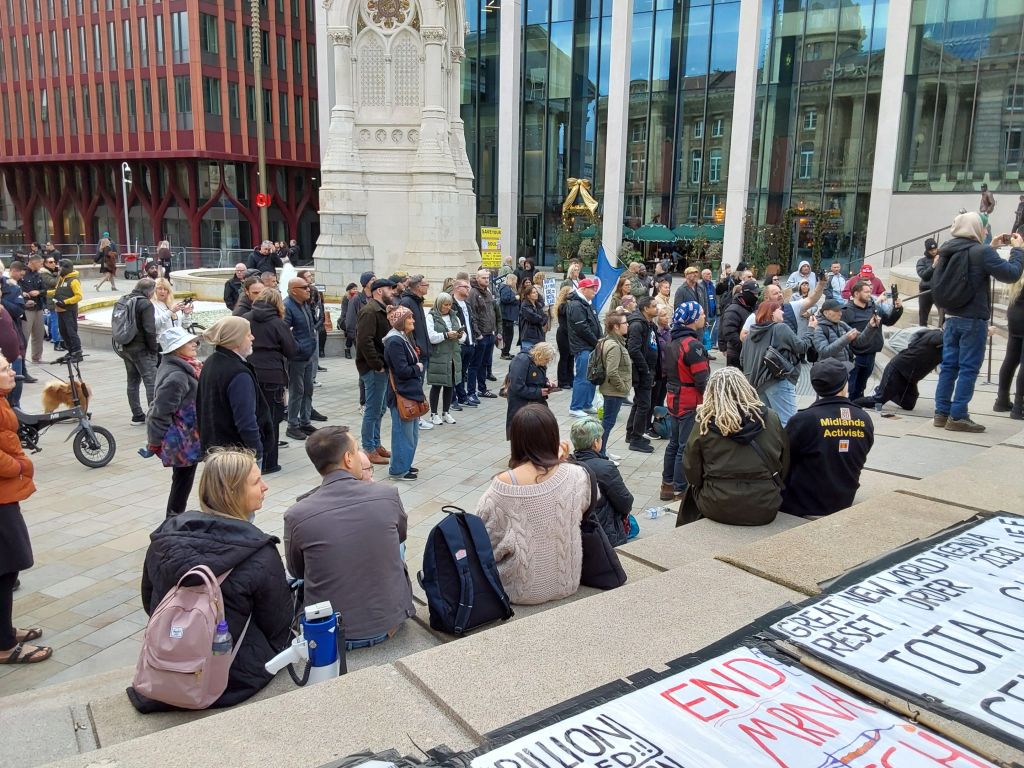
Crowd sitting on steps and standing at the bottom of steps in front of large water fountain

The crowd was a similar size to last time. The speakers included an Army veteran and Fiona from the Mass Non Compliance campaign. She gave a speech focusing on the government’s One Login and the international actors who are supporting tyranny such as the WEF.

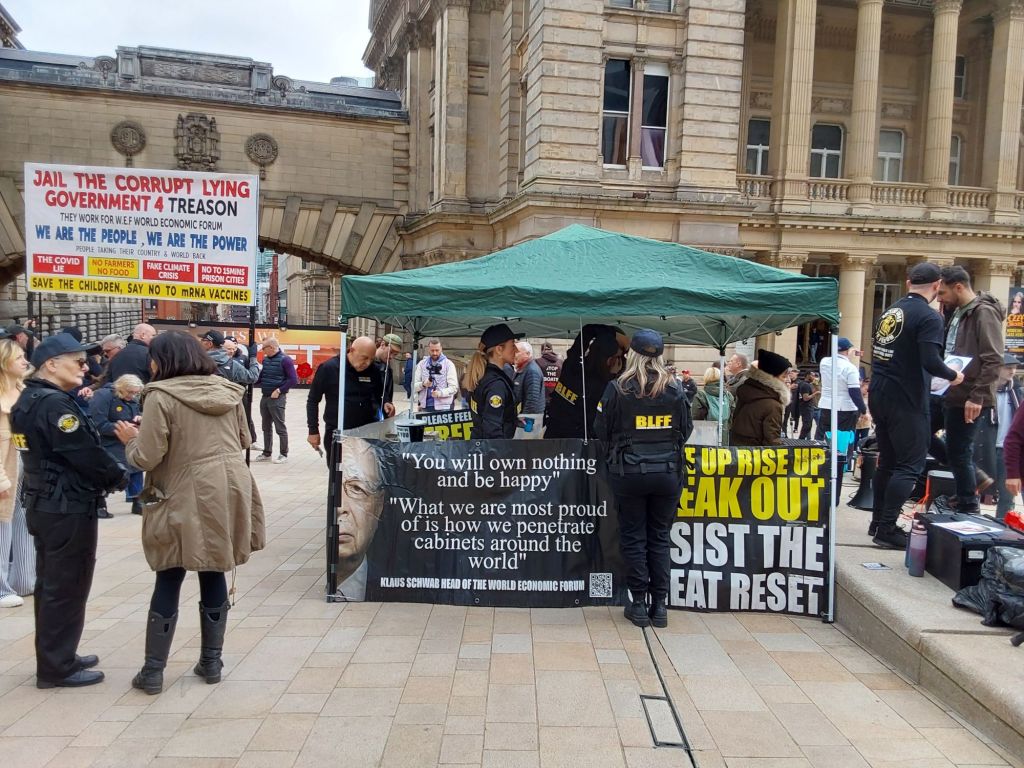
Booth giving out information with quotes from Klaus Schwab on a banner 'You will own nothing and be happy'

Some video footage from this protest and the last one has been uploaded to my YouTube account. As of yet it hasn’t been censored. I plan to upload the videos to Odysee as well but you have to reformat everything and I haven’t yet had time.

The next protest in Birmingham is 20 December 2025 with David Icke.

Anti Digital ID Protest Birmingham City Centre 11 October 2025

I went to a protest against Digital ID in Birmingham City Centre  on 11 October, 2025. I have taken some photos and video for upload (the videos will be uploaded at a later date).

The themes of the protest were basically what you would expect. There were still quite a lot of references to the Covid issue and the vaccines. Rameece, a rap artist who had previously attended some anti-Covid events, did his rap song about the Covid vaccine.

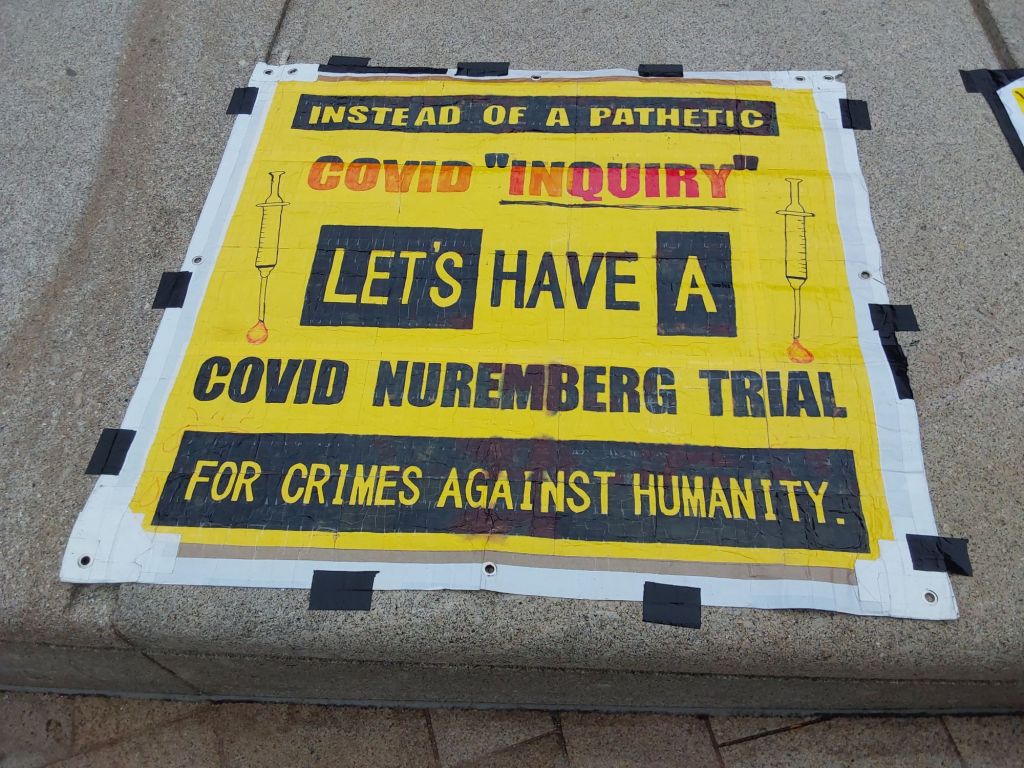
Sign taped to a step reading Instead of a pathetic Covid inquiry, let's have a covid nurenberg trial for crimes against humanity
One example among many of Covid themed signs
Rapper Rameece performing song against Covid vaccine
Rameece

Other themes that came up were 5G, the One Login system implemented by the government and its relation to digital ID, and other authoritarian surveillance legislation such as the Onljne Safety Bill. As well as usual themes of criticism of the claims of climate change, Agenda 2030, the UN, WEF, etc.

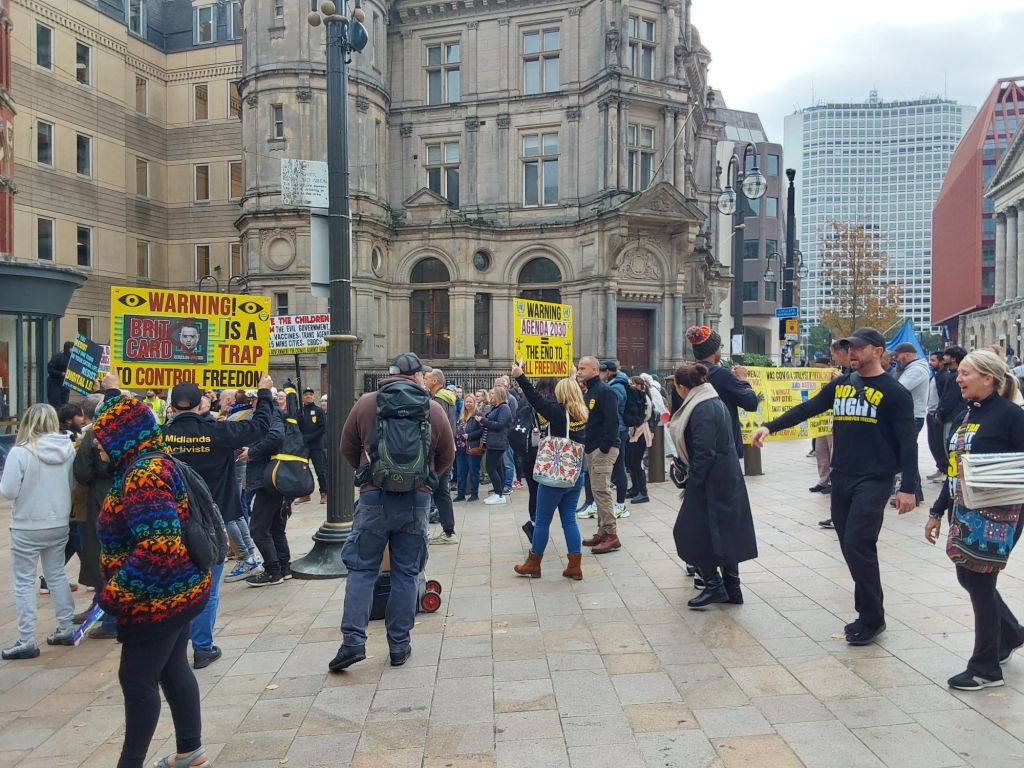
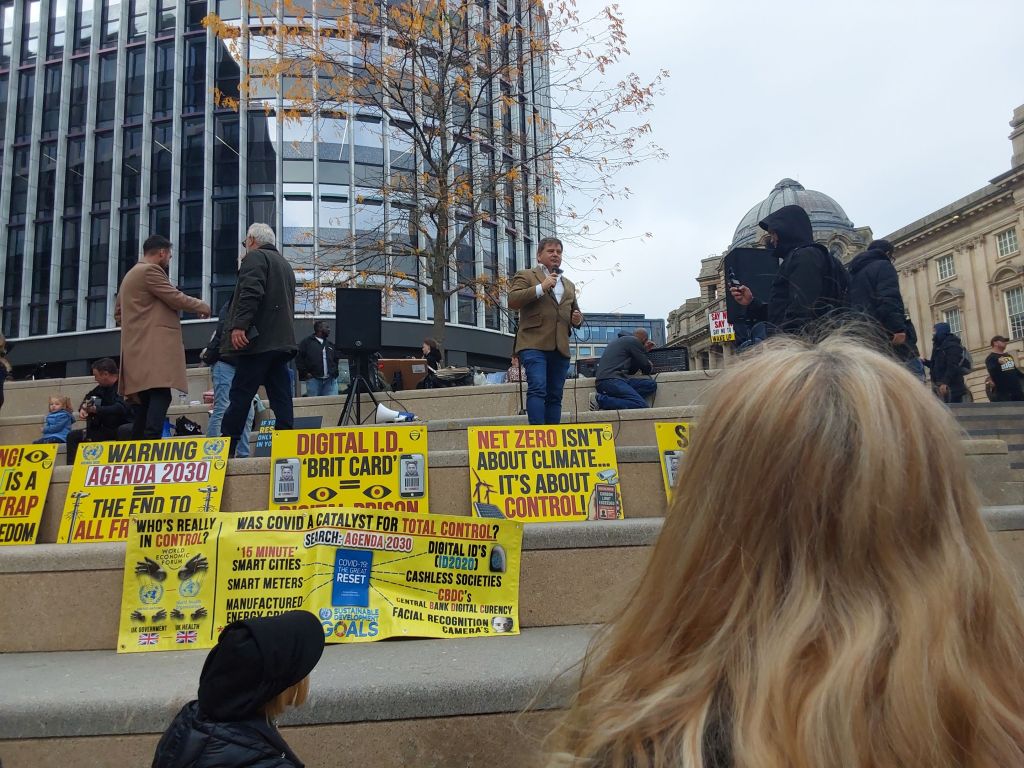
Protesters marching against Brit Card holding yellow signs. Sign reads Warning Brit Card is a trap to control freedom

The attendance for this protest was a few hundred people. It looked like primarily the people who used to attend the anti lockdown protests, I recognised several faces from those events.

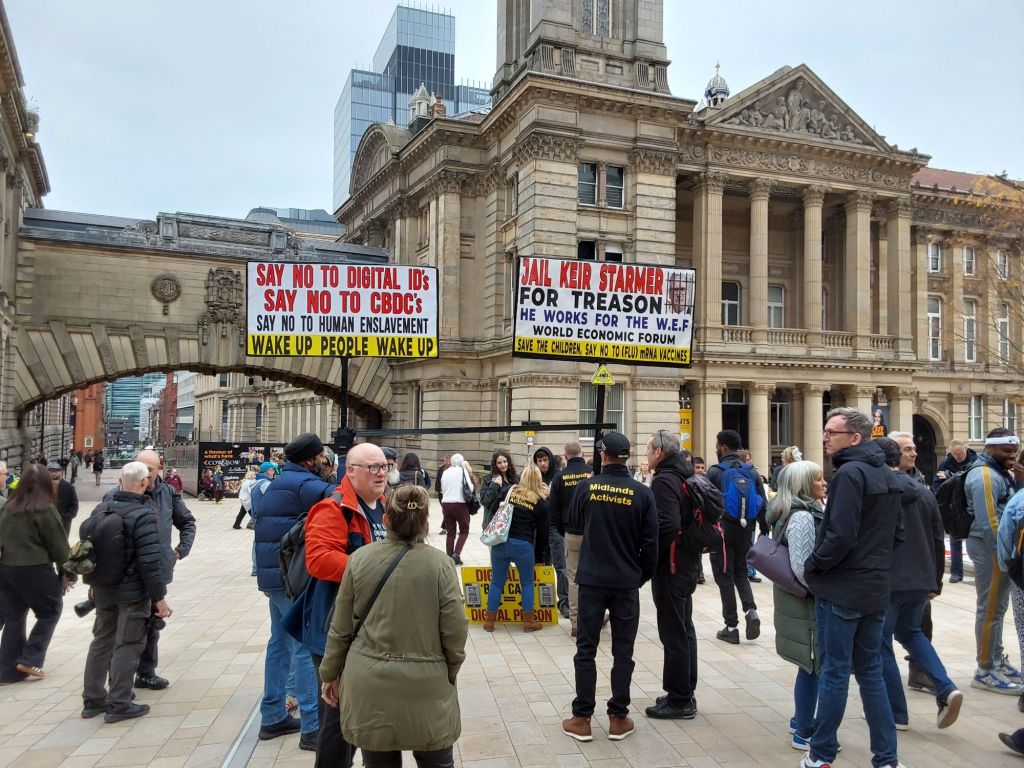
Protesters holding signs reading Jail Keir Starmer for Treason, Say No to Digital IDs

Politician Andrew Bridgen also attended the protest.

He said that he knows a Labour MP who has admitted he essentially votes with the Labour whip (for non UK readers, the ‘whip’ enforces voting with the party) without even reading the legislation. 

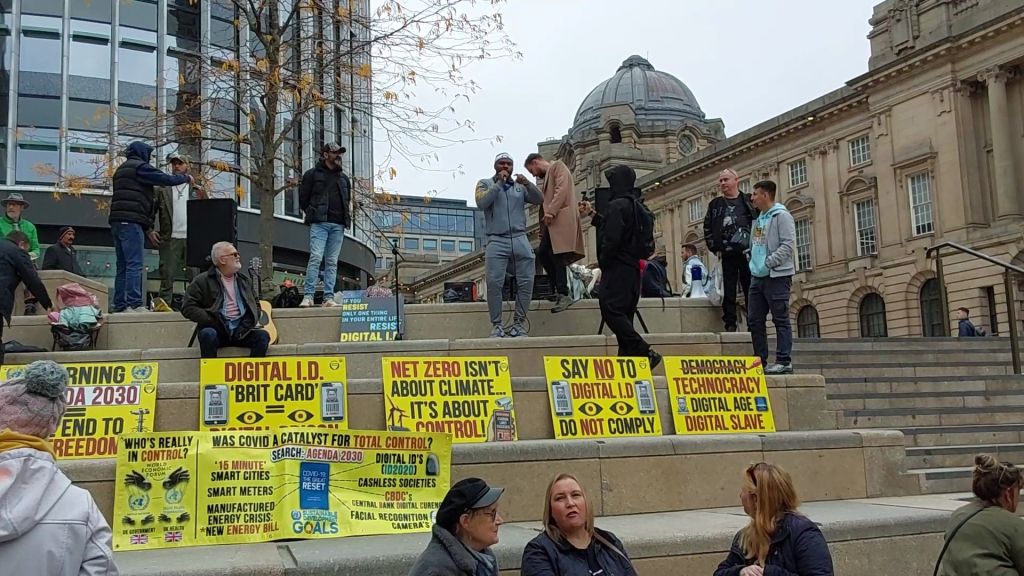
MP Andrew Bridgen stands at the top of the stairs. Multiple yellow signs with text criticising digital ID, agenda 2030 and net zero and below him.
Andrew Bridgen

There has been an update on Digital ID since my last post. This is the new digital Veterans ID where people can prove they served in the military to get certain benefits.

I would also recommend giving Iain Davis’ article on the Brit Card a look (linked above), where he argues that the Brit Card is a distraction (politically untenable) from the real digital ID that is/will be introduced.

We should still continue to make our voices heard against all forms of digital ID. I know I haven’t done many protests recently but I plan to continue being involved in this campaign where possible.

Starmer’s Digital ID Plan

Introduction

The UK government led by Kier Starmer has recently announced that they intend to introduce a Digital ID scheme. This article will look at the roots of this scheme in a UK context, the arguments they will be using to support it, and the reasons why this is a planned step towards government tyranny.

Background

Kier Starmer is the leader of the Labour Party and this particular party has a history of wishing to bring in national ID cards.

Under the Tony Blair government (1997-2010), there was a plan to introduce ID cards. In 2006, the Labour government passed the Identity Cards Act. This act was designed to provide biometric cards backed by a government database. These were physical cards (as smartphones etc were not in mass use).

The government did introduce a pilot scheme in 2009 for these cards where people could apply for them, and around 15,000 cards were issued.

However, the scheme faced significant opposition. There were some protests against the plan, as well as opposition from other political parties. Part of the opposition was based on the fact that any such scheme would be extremely expensive, and part of it was based on surveillance/police state concerns.

The scheme was scrapped by the Conservative/Liberal Democrat coalition government after they took power in 2010.

The New Scheme

The new scheme suggested by Starmer has been outlined in the mainstream media as follows:

  • It will include a name, date of birth, nationality or residency status, and a photo
  • You won’t have to carry IDs around
  • You’ll never be asked to produce it – other than when proving a right to work in the UK
  • The ID will be on people’s phones – similar to contactless cards
  • It will be compulsory for anyone looking to work in the UK

List taken from the BBC report on the ID card scheme.

Arguments

The main argument being used by Starmer to back his scheme is that digital ID will help to combat illegal immigration. Starmer is very unpopular in the UK at the moment and one reason is that people are dissatisfied with his response to small boat crossings of people illegally entering the UK, and ‘migrant hotels’ where migrants are kept while claims for asylum are looked at. As a result, poll results are showing a significant swing towards the anti immigration party Reform UK run by Nigel Farage. As such, he hopes to boost his popularity by announcing this scheme as well as normalise a plank of planned government authoritarianism.

The argument being made is that by having a Digital ID, it would make it more difficult for illegal migrants to work in the country, reducing the ‘pull factors’ that cause people to illegally enter the country. The government also argues that it will more quickly allow people to verify their identity when accessing government services such as welfare benefits to prevent fraud.

Problems

I don’t want to spend too much time outlining the issues of Digital ID as I think they are fairly obvious to my readers. One argument that has been made by some, that I would like to bring up, is the issue of whether it would work. Farage has criticised the scheme, partially on grounds that it would be ineffective. I personally think we shouldn’t focus on the effectiveness argument either way. We shouldn’t want Digital ID even if it was 100% effective against illegal migration.

The main thrust of any argument against Digital ID should be the state tyranny aspect. Once the infrastructure is established, there is nothing stopping creeping expansion of the scheme. Mahmood, the Home Secretary, has already agreed that this can/will happen. Digital ID can be linked to any aspect of life, for example, vaccination status, which the government could use to force people to behave in particular ways.

Conclusion

There has already been much concern from the public about the use of Digital ID. The scepticism towards the scheme must be mobilised as means to prevent further state tyranny. Hopefully the unpopularity of the Starmer government combined with resistance to the scheme can prevent it ever being introduced.

A Brief History of British Antivaccinationism Part 3.1 – Initial Opposition to the Smallpox Vaccine Mandate

Introduction

This series hopes to explore the history of British Antivaccinationism and Vaccine Scepticism.  It is divided into 7 main eras: the period of Inoculation, 1721-1798; the introduction of vaccination, 1798-1853; the imposition of mandates, 1853-1902; the remaining history of the National Antivaccination League, 1902-1972; DTP Vaccine Scepticism 1972-1998; Andrew Wakefield and vaccines cause autism, 1998-2019, and Covid 19, 2020 to present. Because most active resistance to vaccination is clustered in this period between 1853 and 1902, Part 3 will have three sub-parts, discussing initial intellectual resistance in John Gibbs and Charles Pearce, the later intellectual resistance of William White, Charles Creighton, and Edgar Crookshank, and popular class resistance.

The Vaccine Mandate

In 1853, the United Kingdom introduced mandatory smallpox vaccination.  There was a fine of 20 shillings introduced for non compliance. William White covers the introduction of this mandate in detail in his 1885 book, Story of a Great Delusion. According to White, the mandate was introduced because of the organised interests of the medical profession. There was a lack of discussion on the bill in Parliament, and White states it was an “act for application to the vulgar”, i.e. the working classes. In 1861 and 1867, the level of compulsion was increased, the 1867 amendments made non vaccination a continuous offense and gave the state the power to impose multiple fines.

Prior to the mandate, there was no organised antivaccinationism. There was personal distrust of vaccination among people, particularly the working class, and an apathy of not pursuing vaccination. The mandate triggered new wave of intellectual antivaccinationism, as well as popular vaccination resistance.

John Gibbs

John Gibbs was one of the first to write pamphlets against the vaccine mandate. In 1855 he wrote a letter opposing the mandate. He argued that the mandate was an attack on liberty, and that legislators freely admitted their ignorance on vaccination – relying only on the opinions of the medical profession to pass the bill. He argued that there were statistical issues with the case for vaccination, as there was evidence that smallpox was simply replaced by other causes of death and that there was no decline in the death rate due to vaccination. He also pointed to other diseases spread by vaccination,  such as erysipelas (a form of skin rash and swelling), tuberculosis and syphilis.

He drew attention to the moral issues with government forcing a medical intervention on the people and that this opposed self responsibility. Vaccination was in his view “a state religion in physic”.

Charles Pearce

Charles Pearce was an editor of a medical journal, who received papers from Gibbs, and as a result became an antivaccinationist. In 1868, he authored the short book, Vaccination Its Tested Effects, arguing that “vaccination is a crime against nature”.

Pearce points to the theory behind vaccination, that is the idea that cowpox and smallpox are “governed by the same laws” as an error believed by Jenner. He argues that vaccination is not even practised according to Jenner’s theory, since Jenner believed in a chain from horse-cow-human. Vaccine lymph had been spread from human to human for many decades at this point, and had not been anywhere near passage via a cow. He also pointed to the introduction of revaccination as a contradiction to Jenner’s theory of life long protection from vaccination.

He argued that smallpox vaccination did not save lives, by arguing that smallpox increased longevity if you survived, by the fact that there was an increase in mortality from measles after compulsory vaccination was introduced, and that smallpox vaccination could spread syphilis. He points out that there were ups and downs in smallpox due to the laws of epidemics. He believed sanitation and hygiene were the best methods to combat smallpox mortality.

Conclusion

There was increased intellectual resistance to vaccination after the smallpox vaccine mandate was introduced. This would continue to develop further, and British antivaccinationism would reach its peak between 1880-1902 with the cases made by William White, Charles Creighton and Edgar Crookshank against the practise.

Free Lucy Letby Protest Part 2 – The Protest and Narratives

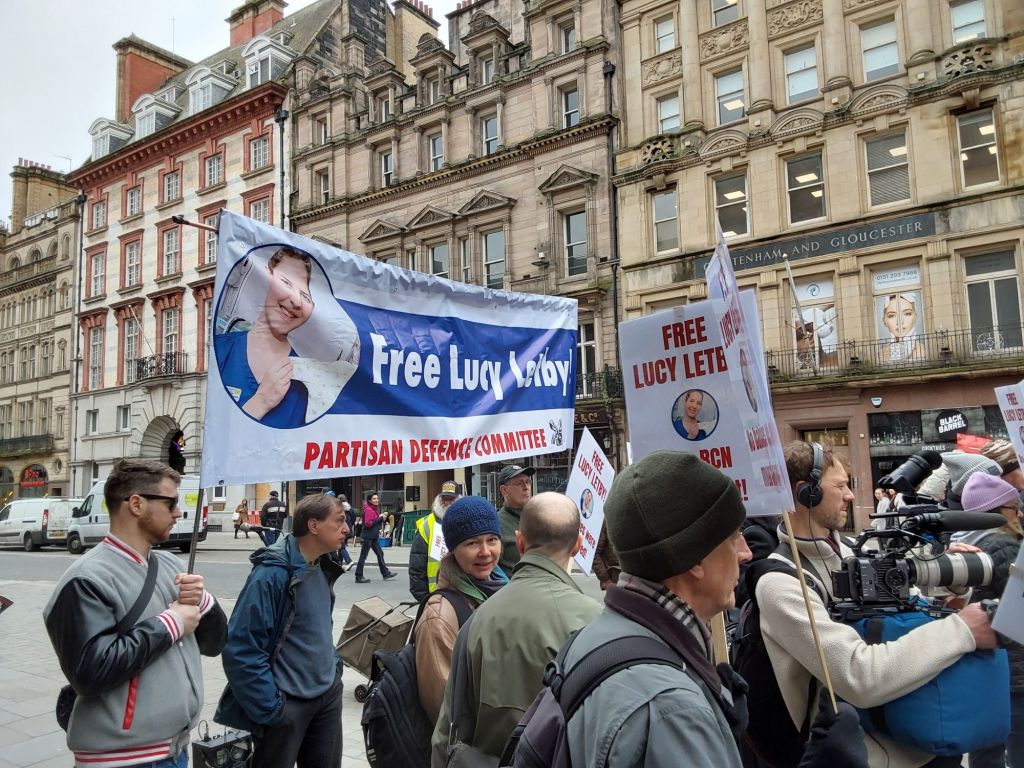
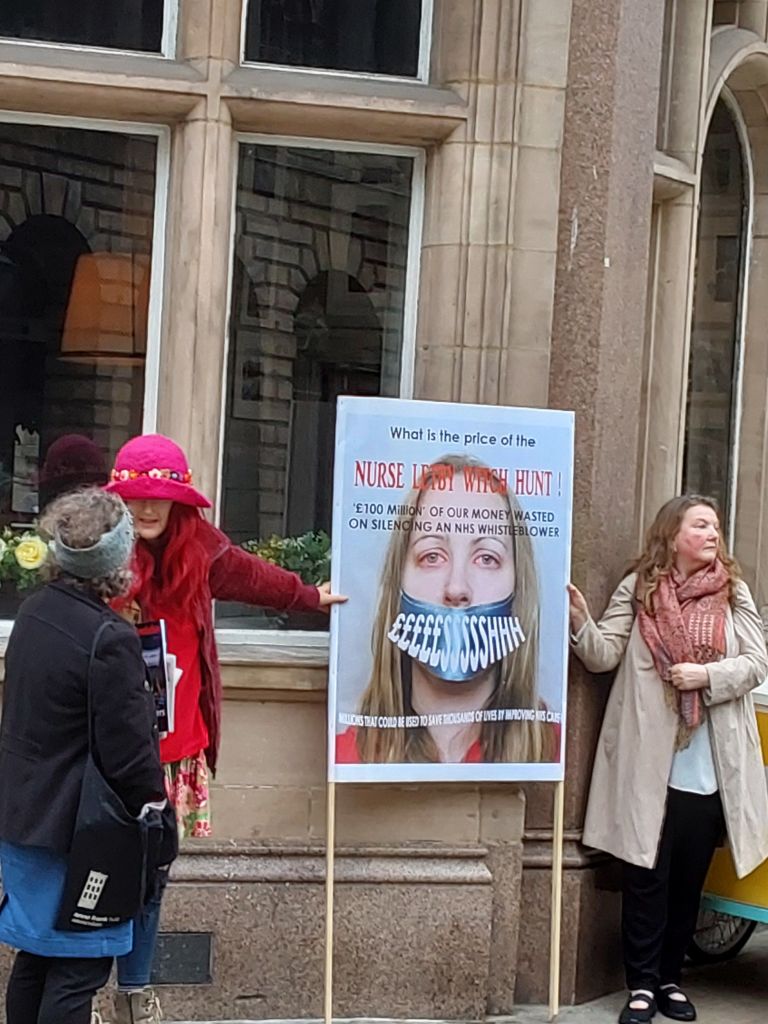
On 17th March 2025, a protest took place in Liverpool outside the Thirlwall Inquiry stating the innocence of a nurse, Lucy Letby, who has been convicted of murdering several babies. For the problems with the case against Letby, see Part 1.

The Protest

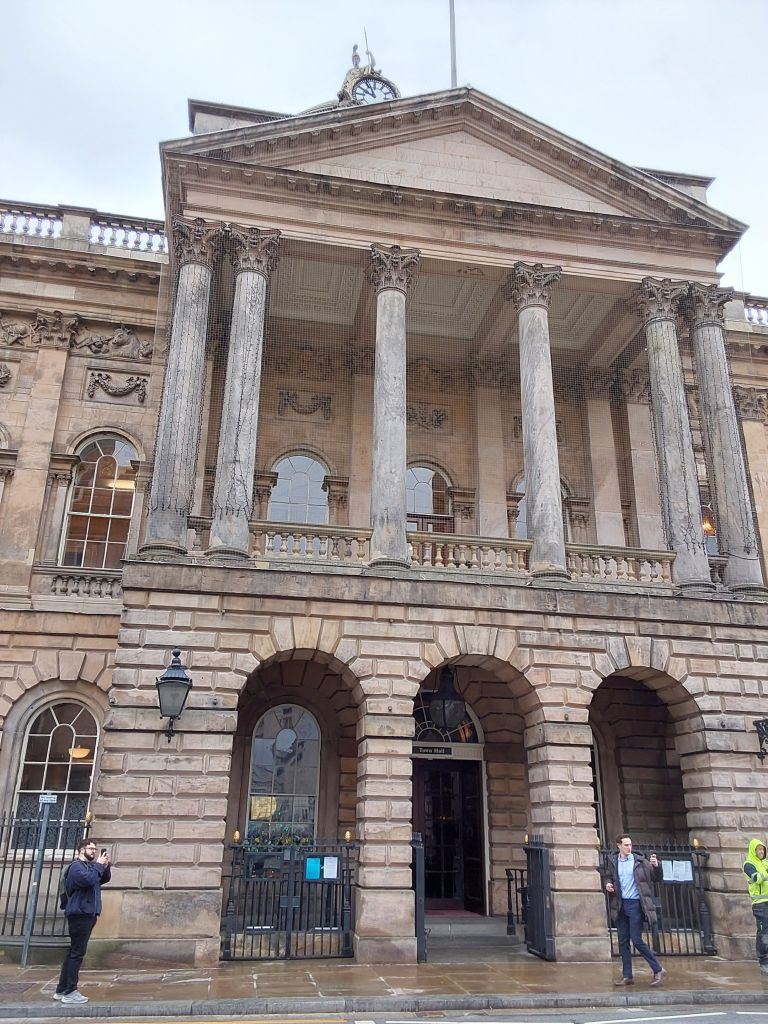
The protest took place between 9 and 10am outside Liverpool Town Hall. The protest was called by the Spartacist League, which is a UK Trotskyist group. While the protest was called by this group, they explicitly stated in their promotion of the protest that anyone who agreed with the message of Free Lucy Letby could/should attend.

I don’t know how many attendees were affiliated with this group. There were only a few attendees at this event (less than 100) so I would guess the majority are Spartacist League members.

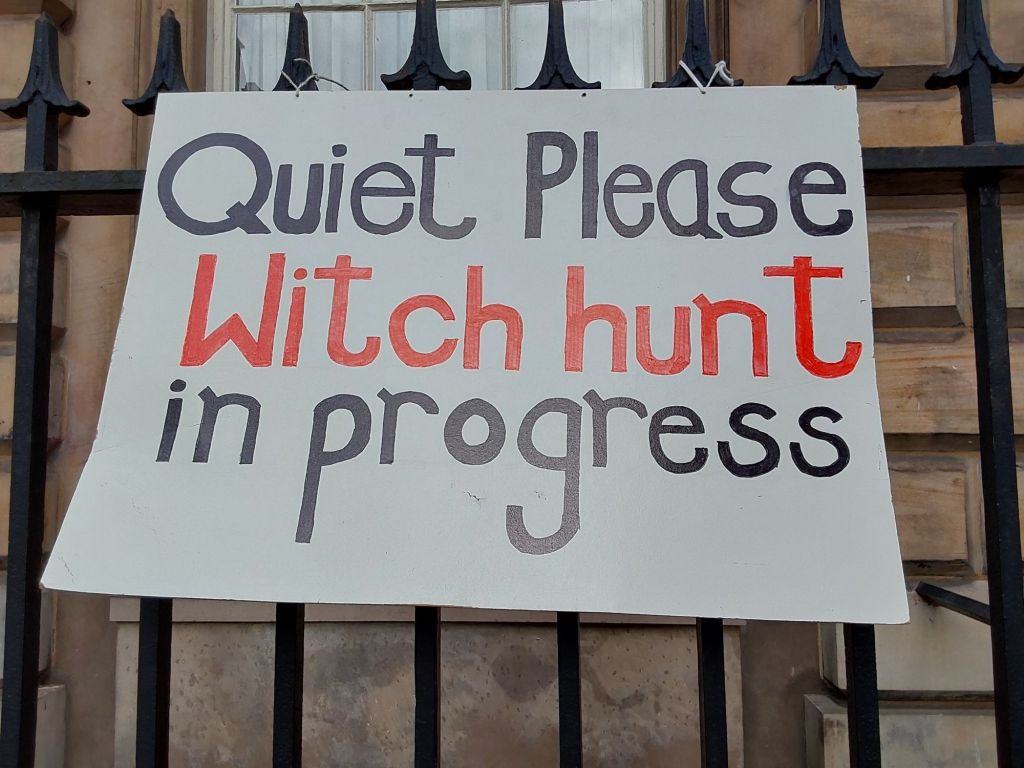
Sign tied to Liverpool Town Hall

The Spartacist League, because they are a Marxist group, have a particular spin on things. Marxist groups, by and large, believe that even a capitalist/bourgeois state can provide important concessions to the working class and that these concessions are worth defending. (At this point in my life, and I confess I have thought differently in the past, I believe the only stance to take is that against anything that enhances state power and control on principle, and that radical decentralisation is the only possible means to prevent corruption).

As such, the framing put forward by the Spartacist League is that of a hard-working and competent nurse framed up for systemic failures, such as the sewage mentioned in Part 1. This is true as far as it goes, in that I do believe the Countess of Chester Hospital consultants and the police sought to scapegoat Letby for these failings by accusing her of deliberately murdering babies.

The Spartacist League links the failings of the NHS to the right wing agenda of reducing the amount of funding available to the NHS, which is why these failings exist. The League (correctly) sees Labour and the Conservatives as part of the same system (they both support the same key policies such as, say, imperialist wars).

Fundamentally, the League perceives the NHS as worth defending as an institution that provides health care to ordinary people free at the point of use and funded via taxation. The establishment sees the problem as an allegedly ‘rogue’ nurse such as Letby,  whereas the opposition sees the problem as the lack of funding and corruption in management. While corruption in power structures is a real issue, neither of these narratives examines the allopathic medical paradigm as an issue.

The Allopathic Paradigm

The allopathic medical paradigm is based upon two broad factors – the separation of Western societies from natural medical knowledge, and the rise of the chemical industries in the late 19th century (the root of the modern pharmaceutical industry).

Western populations were separated from natural medical knowledge via the phenomenon of the Witch Trials. Female healers, who served the interests of the people they attended, were viciously exterminated under the guise of the Church. While the Church’s aim was to increase its own power, the Witch Trials had the effect of eliminating any competition that could arise to the allopathic paradigm in Western societies.

The second factor, the chemical industry, came about as a result of the Industrial Revolution, particularly in Germany. This industry directly spawned the pharmaceutical industry. The pharmaceutical industry is the basis of the modern NHS, because although it is directly run by the state, it purchases all of its drugs via the pharmaceutical industry, and its treatments are mostly dependent upon this industry.

Returning to Lucy Letby, she was an operative within this particular paradigm, and an agent of such. Any (inadvertent) harm she did would have been as an operative within the paradigm itself. For example, her Wikipedia page states that:

[I]n April 2016, she administered antibiotics to an infant that was not prescribed them, which she misclassified as a “minor error”.

I would bet any nurse, doctor, etc. has done the same thing or similar, and if they have a long enough career, probably multiple times.

Anyone on those wards could have caused harm to those babies, through this kind of method, or through a drug harming a baby more generally. It is much more plausible that this happened, than the alternative of Letby as psychopathic baby killer.

One final point to make. The allopathic paradigm believes its control over nature is complete. The fact that these babies were highly vulnerable and would have been at high risk of death even with the best of intentions is ignored. This links directly to the ideological belief of absolute control over nature, which is fundamental to allopathic medicine.

Conclusion

I believe the murder charges against Lucy Letby are most likely unjust and that the conviction in this case is unsafe. I believe her defence lawyers did not present a good case for her innocence. There does need to be another trial in this case.

This should not be confused with believing that the allopathic medical system should be defended. Letby was a low-level operative within that system, who took the blame for its failings. She bears no more or less guilt than any other similar operative.

Free Lucy Letby Protest, Part 1 – Background

On the 17th March 2025, there was a protest in Liverpool outside the Thirlwall Inquiry. The protest was about stating the case for the innocence of Lucy Letby, a nurse who worked in the National Health Service (NHS) and was convicted of murdering several babies on a neonatal unit.

Liverpool Town Hall, the location of the Thirlwall inquiry

Context

Lucy Letby was a neonatal nurse working on a ward in the Countess of Chester Hospital. While she was working there, there was an above average number of baby deaths on the unit. When this was looked into, it was claimed that one particular nurse, Letby, was on shift for the suspicious baby collapses and deaths. As such, Letby was charged with murder and attempted murder, and was convicted in 2023. The case against her rested on circumstantial medical evidence presented by the prosecution.

The purpose of the Thirlwall inquiry was to examine why warnings about Letby were ignored and how she was allowed to act to kill babies.

Doubts about the Conviction of Lucy Letby

Many people – an increasing number – have been questioning the conviction of Letby. This includes even some mainstream examples.

I was first made aware of the weaknesses in the case against Letby by Norman Fenton, who you may be aware of, as he has questioned the official Covid narrative. The original reason for suspecting Letby was statistical, that is, she was on shift for the baby collapses and deaths. Fenton pointed out that the data was cherry picked, and that a similar chart could be made for any nurse by simply selecting the events that happened when they happened to be on shift.

Scott McLachan, who Fenton interviewed, has pointed to a plausible alternative explanation for the deaths. During the period that Letby worked there, the unit was handling very vulnerable premature babies. The building where the unit was housed also had very old plumbing systems, with a high probability of leakage. There was evidence of water contamination at the hospital and the death certificates of many of the babies included sepsis. There was also a high probability of natural death of these babies due to extreme vulnerability.

More recently, mainstream figures have questioned the case against Letby. David Davis, a Conservative politician, has stated there is a “high probability” that Letby is innocent. He argues that there is no evidence of murders in the accounts of the trial or transcripts, and that a large number of medical experts question the evidence presented by Dewi Evans, the medical expert relied on by the prosecution. Peter Hitchens, a Mail on Sunday journalist, has also expressed doubts about the case.

Motives for Blaming Lucy Letby

There are several motives to blame Letby for the baby deaths. The hospital was clearly unsanitary, and they were treating very vulnerable babies. As with everything else, there is always the tendency to blame someone low down the food chain, rather than consultants, doctors, or top-level managers. Only nurses were mapped on the statistical chart used against Letby, but if there was a murderer on the ward, why not consider the doctors as equally possible culprits?

It is worth noting that Letby was charged in November 2020, which was still in the middle of the ‘Covid pandemic’ narrative, if not quite the peak. During the ‘pandemic’, the NHS was glamourised, and a failing ward such as we observed at Countess of Chester Hospital would not have fit with that narrative. There is one further critical question to ask: what if Letby is simply a scapegoat for failings of the allopathic medical system?

Conclusion

It is unlikely that Lucy Letby consciously killed babies as some sort of psychopathic thrill, as alleged by the prosecution. The second part of this article will be a more critical follow up, covering the protest itself, the framing of the narrative put forward by the protest organisers, and the flaws of that framing. We will also return to critical questions of guilt within the allopathic medical paradigm, and how all practitioners are embodiments of that guilt.

Right wing causes can be used to push the control agenda – the case of immigration

Introduction

Many people know and understand that stereotypically left wing causes – such as the environment or transgenderism – can be used to promote state control agendas. However, there is much less consideration of how right wing ideas can be used to push the same control matrix. As right wingers claim to be ‘small government’, it is often assumed that right wing ideas cannot be used to push for these sinister agendas. However, there are some ideas on the right that can be used for this purpose. One of the most significant of these is immigration.

It should be noted that the terms left and right are overgeneralisations, just as not all left wingers support transgender ideology, for example, not all right wingers are supportive of the ideas outlined below. For example, this analysis would not apply to many members of the libertarian right. However, I will use right wing in this article as a shorthand.

Definitions

Certain right wing political parties – for example, Reform UK – are extremely concerned with illegal immigration and use this to appeal to voters. I would say that reducing immigration is Reform UK’s main policy. In the UK, there are a large number of small boats that attempt to land on the shore so that people can illegally enter the country. There are some examples of both refugees and economic migrants entering the country via this method. Parties such as Reform argue that this has negative effects on the country, such as crime and the risk of terrorism, as well as reducing the wages paid to British people via illegal immigrants taking jobs. They also point to costs to the stage of hosting individuals they have caught illegally entering the country (the famed ‘migrant hotels’). As such, a more robust response seems attractive to many people on the right, or many working class people who are concerned about their income.

Pragmatism

When looking at this topic, we need to consider it pragmatically. What would effectively policing illegal immigration look like?

Britain has an open coastline.

According to the Ordnance Survey: “The coastline length around mainland Great Britain is 11,072.76 miles [17,819.88 km].”

Policing simply chokeholds or more obvious areas would not be effective, since boats would simply avoid the more obvious routes even if it was riskier. Bear in mind that the boats seen on the news, etc, are only the boats that are known, there may be many that successfully crossed the border, and the people disappeared into the shadow economy. As such, there would need to be a massive increase in border control police.

This is a large amount of territory to have to police effectively. Sure, there may be some areas of this where it would be difficult to land a boat, so that may reduce the volume somewhat. Nevertheless, it is still a large amount.

Businesses employing illegal immigrants would be another significant issue, as there would need to be increased checks on businesses, and raids on businesses if it suspected they are employing illegal immigrants.

There is also the issue of removing the immigrants effectively. This might encourage more rubber stamping in the judiciary to deport people more quickly.

In other words, effectively removing illegal immigrants would require an increase in state authoritarianism. More police officers would need to be employed, and there would need to be an increase in checks, possibly arbitrary ones, to see if people were hosting or employing illegal immigrants.

Agendas

During Covid, and even before that, it became obvious that one of the key state agendas was the introduction of Digital ID. It was argued that digital identity needed to be linked to vaccine passports in order to ‘control the virus’.

However, policing illegal immigration can also be used by the establishment to promote digital IDs. On this argument, these IDs would be required to confirm that people are citizens or legal migrants. In fact, one of Tony Blair’s arguments for the original ID card scheme, which was eventually scrapped, was to crack down on illegal immigration.

Conclusion

Nominally right wing and left wing ideas can both be used to promote a state control matrix. The establishment is not concerned with which of these ideas it uses to get you to support the increased level of control. So long as it can garner enough support to get these ideas through or at least get you to tolerate them, that is the only thing that matters. People should consider whether ideas they support (whether they are right wing or not) can be used to support these agendas and not assume their ideology is immune from being used by the establishment.