Assange Extradition Ruling: What Does It Mean?

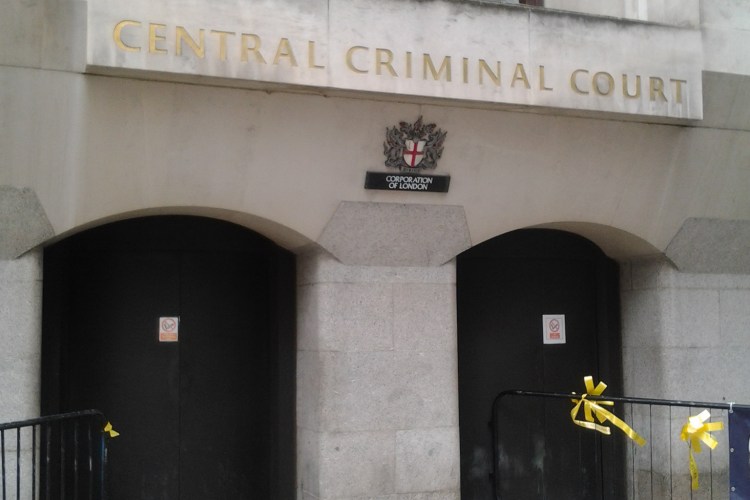
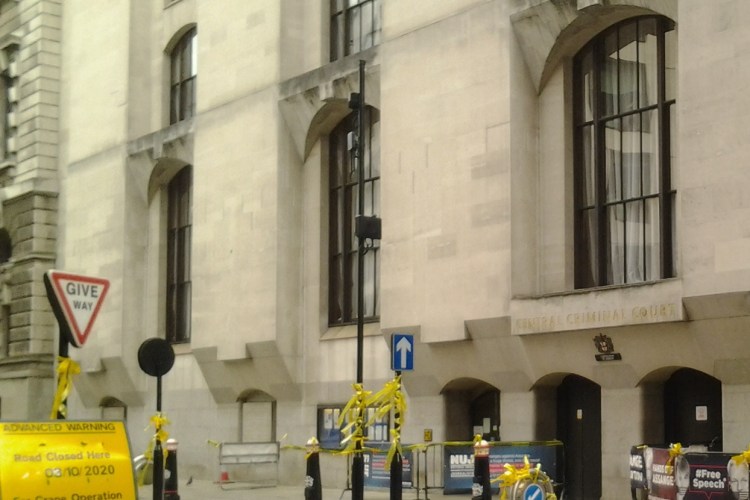
Old Bailey in London, Central Criminal Court

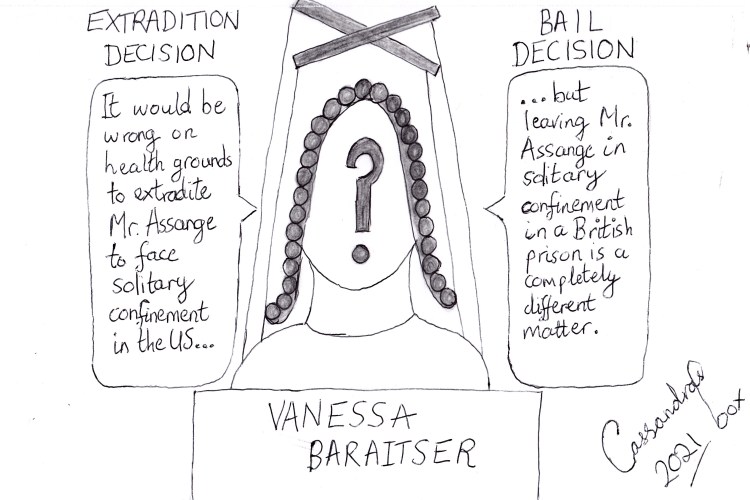
Yesterday District Judge Vanessa Baraitser announced the ruling in the Julian Assange US extradition hearing. Shockingly, she ruled against the extradition to the United States of WikiLeaks founder Assange, citing health reasons and a high chance that Mr. Assange would kill himself in prison should he be extradited. Despite the overall ruling she agreed with every other point raised by the US prosecution, including that Assange would get a fair trial in the US, that the UC Global scandal (where the CIA was spying on Assange in the embassy including privileged communications with his lawyers) was irrelevant, that Assange endangered lives by releasing the information provided by former US Army Intelligence officer Chelsea Manning, and that the US-UK Extradition Treaty 2007 banning extradition for political offenses is irrelevant because the Extradition Act 2003 does not ban extradition on political grounds.

Is this a victory? The answer to this question is ‘Yes, but.’

The sense in which this qualifies as a victory is this. Without scrutiny on this decision by ordinary citizens, the few journalists that bothered to their jobs, and individuals such as the UN Rapporteur on Torture Nils Melzer, I fully believe that Baraitser would have rubber stamped US extradition. In fact, I was shocked that she announced she would not be sending Assange to the US even with these factors. I think this decision does show that putting scrutiny on the establishment can work, and what’s more, its the only thing that does work.

Here’s the ‘but’. Many people, including Jonathan Cook and Rebecca Vincent, have pointed out that the fact that Baraitser agrees with everything the US prosecution said aside from the argument about prison conditions and suicide risk means that the ruling still sets a horrible precedent and does not protect journalism. This is of course a perfectly reasonable point.

Focusing simply on the implications for Assange however, there are two points which limit this victory. The first is that for now (pending a bail appeal tomorrow, 6th January) Assange remains incarcerated in Belmarsh prison. Due to his weak health and the effects of psychological torture, Assange will remain at risk of death in Belmarsh if he does not receive bail. If he has to remain in Belmarsh throughout the course of any appeal that will limit the victory in this case.

The second point to make is that we need to be aware of the possibility of establishment mind games. Having realised that they may not have been able to get away with having Baraitser rule against Assange, they may hope to induce complacency among supporters by giving them a victory and then overturn the decision on appeal. They may hope to get the idea across to the more uninformed public that “Assange has won so there is no need to pay any attention” while they plot a plane to the US.

Assange supporters must not let that happen. By all means, celebrate an unexpected gain yesterday. But as for today, it’s back to work.

ETA: Julian Assange was denied bail, meaning that he has to remain in prison throughout any US appeal. It is now looking as though the decision on Monday – though gained by public scrutiny on the case – was a ploy by the establishment. The establishment obviously thinks that rejecting the extradition and denying bail and hoping Assange dies in Belmarsh is a better option than granting extradition. If he dies in Belmarsh from the effects of psychological torture that serves their purposes just as much as if he was extradited to the US. Of course they may also have a plan to ensure that Assange is extradited on appeal, perhaps by hoping to inculcate complacency and hoping the public gets the misleading impression that ‘Assange has won’. Either way Assange loses more years of his life to horrific torture even if he does not die in Belmarsh and the appeal does not succeed.

It’s important that we don’t fall for the establishment’s lies and maneuvers and that we never give upon Julian Assange despite everything that they will try.

The Douma Primer Part 2: The Avalanche of Evidence the ‘Attack’ was Staged

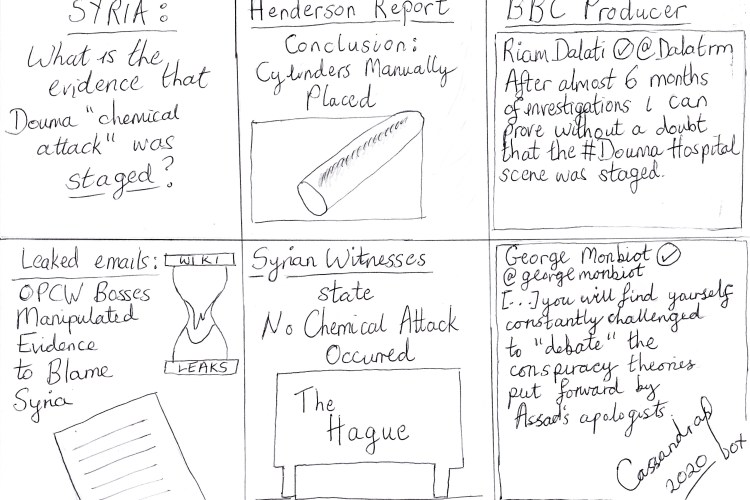
Cartoon reading: SYRIA, what is the evidence that the Douma "chemical attack" was staged? next panel: Henderson report: Cylinders manually placed, Next panel: BBC producer, text of tweet from Riam Dalati @dalatrm reading 'After almost 6 months of investigations i can prove without a doubt that the #Douma hospital scene was staged, next panel: Leaked emails Wikileaks OPCW Bosses Manipulated evidence to blame Syria, next panel Syrian witnesses the Hague state no chemical attack occurred. Last panel tweet from George Monbiot blaming Syrian government.

This is the second part on my series on the Douma false flag ‘chemical attack’. Please read Part 1 if you have not already for an outline of the Syria conflict and the establishment and OPCW narrative about this ‘chemical attack’. Part 2 will consider 6 main points of evidence and argument showing why the Douma attack was staged. As a cumulative case they form a very strong argument for this position.

1. The Logic of the ‘Attack’: Nonexistent

The first problem with the claim that Assad carried out a chemical attack in Douma is basic logic.

At this point in the Syrian conflict, the jihadists were clearly losing the war. Syrian and Russian forces had successfully defeated the jihadists in many areas of the country; one of the most significant of these was the Syrian Army’s victory in Aleppo. Conventional weapons were doing a perfectly good job at defeating the jihadists. It follows that there was simply no rational purpose for a gas attack at this point of the conflict, nor any significant motivation for Assad to randomly attack civilians. Furthermore, Assad is keenly aware of the fact that the West is looking to demonise his government and that any chemical attack will be used as a motivation to intervene further in Syria.

On the other hand, the failing rebels had a strong motive to fake a chemical weapons attack. They could attempt to use the international outrage in order to try and get the West further involved in the conflict and save their weak position. The West would also have a further incentive to promote this faked gas attack as real to justify the vilification of Assad as an ‘animal’ who needs to be overthrown.

Logic alone thus suggests that we should be sceptical of the official narrative, unless one wants to make the baseless claim that Assad is an irrational maniac. Now of course, if there was strong evidence for the position that Assad really did gas his own people, we would just have to accept that he is in fact an irrational leader who doesn’t understand military strategy or a maniac who enjoys killing for the sake of it. But there is no evidence for this as we shall see.

2. The Syrian Witnesses State: No Chemical Attack

At the OPCW in the Hague not long after the alleged attack (26 April 2018), Syrian witnesses stated that there was no chemical attack and that the hospital scene was staged.

Hassan Diab, an 11-year old boy who appeared in the White Helmets video filmed at the hospital, stated that: “We were at the basement and we heard people shouting that we needed to go to a hospital. We went through a tunnel. At the hospital they started pouring cold water on me.”

Several others also testified. Ahmad Kashoi said: “There were people unknown to us who were filming the emergency care, they were filming the chaos taking place inside, and were filming people being doused with water. The instruments they used to douse them with water were originally used to clean the floors actually. That happened for about an hour, we provided help to them and sent them home. No one has died. No one suffered from chemical exposure.”

The counter argument to this point is to claim that the testimony of the witnesses at the Hague was a ‘Russian stunt’. Of course, the Russian government is not any more trustworthy than any other government. The idea that the Russian government somehow got ordinary Syrians to give false testimony to the OPCW was, of course, possible. There is no evidence for that position, though, and the argument that the attack was staged has only increased with the passage of time.

3. BBC Reporter Admits White Helmets Video was Staged

In Feb 2019, BBC Producer Riam Dalati stated that he believed the Douma hospital scene (described in Part 1) was staged.

“After almost 6 months of investigations, I can prove without a doubt that the Douma Hospital scene was staged. No fatalities occurred in the hospital.” Dalati wrote on his Twitter account. He later made the account private. For clarity, Dalati did believe that there was some sort of attack in Douma but that there was no evidence of the chemical agent Sarin (throughout the discussion of the Douma ‘attack’ there was a significant ambiguity over whether the chemical agent was Sarin or chlorine. Dalati’s position stated that no Sarin was used and whether chlorine was used would have to wait for the OPCW report which had not yet been released).

The reason that this is particularly notable is that this is a producer working at the BBC, an establishment media outlet that has promotied the official narrative on the Syria conflict and Douma. Many people dismiss evidence on the question that is raised by someone who works for RT, for example, because they say that they are promoting the Russian government’s opinion. A BBC producer stating things against the official narrative is harder for them to dismiss, though of course, the British MSM ignored this story.

4. The Henderson Report

This leaked report, written by a member of the OPCW Douma Fact Finding Mission, is beyond damning. If the first three points of evidence mentioned so far are suggestive of a staged attack, the Henderson report tears the Assad gas attack narrative to shreds.

This report was first leaked in May 2019 to the website Syria Propaganda and Media, a site run by academics sceptical of the official Syria narrative.

The Henderson report analyses the cylinders said to have possibly been the source of chlorine in the offical report. It proceeds to put forward two possible hypotheses about the cylinders at the two locations: that the cylinders were dropped from a helicopter and contained chlorine (i.e. the establishment narrative that an Assad gas attack took place), and the hypothesis that the cylinders were manually placed in their locations (i.e. the staged hypothesis).

The report looks at factors such as whether the cylinders being dropped from height can account for the damage observed at the scenes that the two cylinders were found (locations 2 and 4). The study does this through the usage of simulations.

The analysis of the cylinder at Location 2 found that the damage to the cylinder was not consistent with what would have been expected to have been observed had the cylinder been dropped from height. It also concluded that the crater in which the cylinder was placed was more likely caused by a mortar or similar explosion. Location 4 also showed similar inconsistencies, such as the cylinder showing an implausibly high amount of corrosion, and that the damage to the cylinder was unlikely on the aircraft hypothesis.

Henderson concludes: “Observations at the scene of the two locations, together with subsequent analysis, suggest that there is a higher probability that both cylinders were manually placed at those two locations rather than being delivered from aircraft.”

Or, to summarise this in another way, the ‘staged’ hypothesis is more plausible than the ‘Assad gas attack’ hypothesis according to the ballistic evidence.

5. The Wikileaks Documents

That, however, was not the end of the leaked documents relating to this scandal. In November 2019 an internal OPCW email was leaked to WikiLeaks.

This email was addressed to Robert Fairweather, Chief of Cabinet, and was written by a member of the FFM team on the ground in Douma. It compared the initial drafted report to the final (redacted) report that was released to the public and expressed multiple concerns about how the evidence was presented in the final report. It argues that the final report’s conclusion that it is ‘likely’ that chlorine was released from cylinders is grossly overstated.
The email says that while it was possible that chlorine was released from cylinders at loacations 2 and 4, there “was insufficient evidence to confirm this.” The final report also overstates the level of chlorine found in the atmosphere at the scene, claiming that ‘high’ levels were detected when in reality only trace quantities were found.

The draft report also contained evidence regarding observed symptoms which was redacted from the final report. The observed symptoms were not consistent with chlorine exposure. The email also notes how Henderson’s evidence regarding the ballistics of the cylinders was excluded from the final report.

Another document was leaked on the 14th December. This is a memo addressed to the Director General at the OPCW. It states that the “FFM report does not reflect the views of all the team members that deployed to Douma. Only one FFM team member (a paramedic) of the so-called ‘FFM core team’ was in Douma.”

It states that “The consensus within the FFM team was that there were serious incionsistencies in findings. After the exclusion of all team members other than a small cadre of members that who had deployed (and deployed again in October 2018) to Country X, the conclusion appears to have turned completely in the opposite direction.”

There were also other documents released by Wikileaks but this covers the main points: that evidence against the ‘Assad gas attack’ narrative was suppressed.

6. Ian Henderson is a Credible Source

At this stage, it is looking very bad for those who want to maintain the ‘Assad gas attack’ narrative. One way they attempt to get out of this problem and maintain their narrative is to suggest that individuals like Ian Henderson are simply ‘disgruntled employees’ who shouldn’t be listened to. The Director General of the OPCW stated that the Douma whistleblowers were “individuals who could not accept that their views were not backed by evidence.”

The OPCW claimed that Henderson “was not a member of the FFM” and had a “minor supportive role”. In fact this is a complete lie, and more leaks, this time to Aaron Mate of the Grayzone demonstrate this fact.

Firstly, documents show that Henderson was listed as a member of the team. Even worse for the OPCW, another leaked document shows that the organisation was happy for Henderson to lead visits to the locations of the cylinders if that became necessary. Documents from within the OPCW also show that Henderson was considered to be an excellent inspector who “can expect to be selected to lead the most demanding and sensitive assignments.”

Conclusion

This cascade of evidence is looking extremely bad for those who want to maintain the fiction that Assad gassed his own people at Douma and that this imperialist narrative is supported by evidence. Part 3 will discuss the logical contortions of those who want to maintain this false narrative.

The Reality of Rapid Onset Gender Dysphoria: A Personal essay

Cartoon showing prison bars with two bent to form a female silhouette, text reads An album cover design I came up with when I was eighteen suffering from gender dysphoria (redrawn).

Rapid Onset Gender Dysphoria (ROGD) is a controversial concept introduced into the discussion around transgenderism by Lisa Littman in a 2018 study. This phenomenon has been observed among teenagers, generally but not always female, who announce that they are transgender without any history of discomfort with their biological sex. This is often connected to use of social media platforms and can involve multiple people in the same friend group coming out as ‘transgender’ at the same time.

When I recently came across the idea of ROGD, I realised that it applied to my own experiences. When I was 18, I began to consider whether I might be a ‘man in a woman’s body’ despite no previous experiences of gender dysphoria. This was about 15 years ago, however, and so I never underwent any social or medical transition. Unlike the gender identity ideologues’ claims that suffering from gender dysphoria means that you should ‘transition’, I turned out perfectly fine as a woman.

This piece discusses my reasons for experiencing gender dysphoria, my experiences with the concept of transgenderism online, what my experiences actually entailed, and the reasons why I did not undergo social or medical transition. Obviously, my own experiences are my own and I don’t claim them to be universal, but if experience is a valid barometer than mine are as well.

I was always a bit naive growing up and I ended up being behind everyone else when I was going through puberty. I don’t remember experiencing much real sexual attraction until I was 15 or so. I went to a girls’ school and became attracted to some of my classmates around this age. I initially came out as bisexual to several different people and I fortunately did not experience pushback in the form of ostracism or bullying. Obviously the idea of being same sex attracted had not been a positive thought for me when I was younger: I remember being upset by ending up in a lesbian relationship on my friend’s The Sims game. We were also taught nothing positive or even neutral about homosexuality and bisexuality at school because it was the last few years of Section 28 [see note]. Nevertheless I didn’t struggle too much with the idea of being same sex attracted compared to many others who have gone through coming out, though I did fear coming out to my father and didn’t do so until I was in my early 20s. I think being mentally behind other people growing up was also linked to having autism. (I mention same sex attraction and autism because both seem to increase the risk of gender dysphoria and presenting at child gender clinics, even though they were not the direct cause of my ROGD).

When I was 17 or so I was introduced to the forum Gaia Online. For those not familiar with this it is a discussion forum but contains games and the like which you can use to earn ‘money’ to buy items for a customised avatar, kind of like a more grown up version of Neopets. I bring this up because this was where I distinctly remember first encountering the idea of transgenderism. In particular, there was a ‘transgender man’ very active on the parts of the site that I gravitated to the most. I had come to have a nascent interest in politics and issues relating to feminism and women’s oppression and was also a passionate atheist and so ended up on the atheist parts of the site.

This individual – I cannot remember names or handles at this point – discussed (how they saw it) the problems that they faced as a transgender man. The most distinctive thing I remember is that this person argued transgender people are very likely to end up dead by suicide before age 30. This alleged fact stuck with me. I was the kind of person who wanted to be inclusive – unlike those religious bigots who hated anyone different from them! – so I thought it must be terrible what they were going through. I mention this online forum because I do believe that it may have influenced me to see my subsequent feelings of dislike of my body through a transgender lens.

Growing up I wouldn’t say I ‘liked’ having a female body or developing breasts though also would not call my feelings about the issue ‘gender dysphoria’, I would just call it typical teenage discomfort with a changing body that basically all girls experience. I only started upon a phase of privately identifying as a man at the age of 18. The incident that led to my ROGD was a bad sexual experience I had with a man which was traumatising. Shortly after that I began to have experiences of gender dysphoria.

At the time, I did not understand that the incident was the trigger for these feelings. I believe that my gender dysphoria originated subconsciously from this experience because I no longer felt safe as a woman. I wanted to protect myself and I saw being big and strong like a man as the way to do that. I wished I would grow taller and not be stuck at 5′ 5″. I imagined myself being 6′. I created a male identity known as ‘Kirk’ (and a new identity on Gaia Online, this time with a male avatar). And of course I thought about taking male hormones.

This is what I wrote a few months after I first experienced dysphoria. “Lately I have felt so confused. Of course all the normal [self] hatred is still there. […] But there is something else. I don’t know what to do or even if it is my own paranoia…I want to be a man. And I don’t know why. I know I’ve always had ‘male’ traits but I don’t know whether I want to change because they have it better. Or whether it is some deep rooted problem. […] I don’t want to be a pretend man if I know that I’m not. But I never know what I’m supposed to be. Was I supposed to be that way?”

I was very aware of not fitting into gender roles (I always had been) but I was now linking that to the idea of being a man. These excerpts are from a piece I wrote (and rewrote) simply called ‘Testosterone’, essentially a plea to be given the stuff. “People judge me by the shape my body makes/they think they know what I want out of this life.” I also expressed disgust at the idea of sexual penetration and expressed the idea that “I should be the one with the weapon.” I referred to the female body as an “oestrogen prison” and drew it as such: curved prison bars. In another work I wrote I referred to being a woman as “lying to the world”.

In general I didn’t talk about these feelings to anyone, except for one time where I tried to ‘come out as trans’ to one friend in my life (incidentally, the first person I cameout to as bisexual). This was around 6 months after I first started experiencing dysphoria. I remember mumbling the words ‘I’m not really female’. My friend was actually quite dismissive of the idea, and I never mentioned it to anyone else again.

It wasn’t that long after this that I slowly began to move away from transgender identification. My gender dysphoria became less severe and less of a significant factor in my life as I moved further in time from the triggering incident. I did not really do anything specific to overcome it, though I did (eventually) go to the doctors with other issues relating to mental distress. I just gradually stopped using the male persona and name. I also went through a phase of not identifying as either gender, instead calling myself ‘androgynous’ (the 2007 ‘non-binary’). Then, by 2008, I was calling myself lesbian. In reality, I just grew out of it (although I appreciate that not everyone has the same experience on this point). At this stage the trauma wasn’t all gone: this wouldn’t happen for several more years. Occasionally I would get bouts of body hatred from trauma response which only resolved with processing the trauma itself.

Essentially, I dealt with this problem on my own, without any form of affirmation or acceptance from society, nor any kind of understanding what I was going through. In this case, though, muddling through on my own was a far better option than medicalisation.

Here are what I consider to be the main differences between the social climate of today and the one I experienced 15 years ago in terms of the attitudes towards transgenderism – and thus why I ended up making the choices I did rather than making different ones. This is my personal experience, and so it may not be exactly the same for everyone else, but I do think that generally these observations hold.

Gender identity ideology – that is, the idea that all human beings have an innate gender identity – was not accepted and promoted as fact. In all honesty, when I look back on the expressions of gender dysphoria I made a large number of them were about not fitting into gender stereotypes, not about a mythical identity. (Of course, this is what gender amounts to – stereotypes – but understanding of that fact is obscured for many young people today with the promotion of the concept of ‘gender identity’).

It follows then that the idea of uncritical affirmation of ‘all gender identities’ did not saturate the culture 15 years ago. In fact, transgenderism was a rare topic of discussion. I knew no one in real life that even mentioned the idea, let alone identified as ‘trans’. In contrast, nowadays teenagers and even children are encouraged to ‘question their gender identity’. I certainly do not remember the phenomenon of ‘trans role models’, such as Munroe Bergdorf or Caitlyn Jenner, being promoted in the media. Nor was there constant affirmation from virtue signalling politicians and celebrities repeating the mantra ‘Trans Men Are Men’.

The echo chambers of affirmation online, such as certain spaces within the platform Tumblr, did not exist. My friends were all in real life and not online. I believe online forums did influence me and my transgender identification, but those are different in make up to Tumblr or Twitter, as they do not allow for ‘following’ accounts and thus developing attachments to specific individuals. These spaces also make it harder to desist from transgender identification as there is a fear of ostracism and a high level of investment in that identity.

I also had some doubts about being transgender, though I privately referred to myself as such in my diaries. The understanding I had was that trans people were aware from an early age of their feelings of wanting to be the opposite sex, and I did not have any gender issues as a child. Had I been in the modern environment, that repeated the mantra ‘anyone who says they are trans is trans’, perhaps these inner doubts would have been subsumed by affirmation.

I am very glad that I never took hormones or had surgery because I know it would have been a terrible mistake. In truth I was just lucky to be 32 and thus a teenager a bit before the trend for promoting gender identity ideology really took off. Of course, I cannot say for sure that had I had similar experiences 10 years later, I would have ‘transitioned’. But I do believe that outcome would have been significantly more likely based on the evidence I have outlined.

I could just forget the whole episode as embarrassing and not write about it at all. The reason I don’t is because I am concerned about the medicalisation of young people who may have similar transient feelings. These young people have no way of understanding the ramifications of taking something like testosterone (I certainly did not!) and often see ‘transition’ as a silver bullet for their problems – yet medical professionals promote the idea of ‘affirming their identity’ and starting them on hormones rather than an exploratory approach.

The uncritical affirmation narrative does not give any time or space for people to uncover the reasons behind having dysphoria. Transgender ideology claims to represent space for adolescents to be themselves without societal expectations being forced on them. In reality it does the opposite, by fixing a specific identity and ideology in the teenager’s head.  In my case the idea of being a man was not fixed in my mind by affirmation or having started a medical process so I just abandoned it fairly easily when it no longer served a purpose – the way young people generally do with identities.

I might hear the transgender ideologists object that ‘I was never really transgender anyway, what do I know?’ Which is true, I’m not transgender. But the transgender ideologists want to have it both ways on this one. During the period of time I was dysphoric and identified as ‘Kirk’ would or could the transgender ideologists draw any distinction between me and another ‘trans’ individual? On their own ideology – no, because I called myself a transgender man so therefore I was one. Even if you take the definition of trans as meaning someone who has gender dysphoria – then I would also qualify as ‘trans’ by that definition. Yet here I am – as very clearly not a transgender man! Not ‘hiding my trans identity’ like some activists say of those who stop identifying as transgender, but embracing myself as a lesbian. This is where the whole concept of ‘trans’ as some kind of immutable characteristic like sexual orientation falls apart.

I believe that if you hate your body – which many girls and young women do – testosterone isn’t going to ease that pain. Only accepting yourself as a woman and working through any trauma you may have from male violence and homophobic/misogynistic ideology will help you come to terms with your body. It isn’t a magic bullet. But unlike surgery and hormones, it isn’t a false promise.

Note: It occurs to me that non UK readers may not be familiar with Section 28. Section 28 was a law passed under the Thatcher government that banned positive discussion of homosexual relationships in schools. I attended school between 1999-2004 and the legislation was repealed by the Blair government in late 2003.

The Douma Primer Part 1: The Official Narrative

Cartoon reading: SYRIA, what is the evidence that the Douma "chemical attack" was staged? next panel: Henderson report: Cylinders manually placed, Next panel: BBC producer, text of tweet from Riam Dalati @dalatrm reading 'After almost 6 months of investigations i can prove without a doubt that the #Douma hospital scene was staged, next panel: Leaked emails Wikileaks OPCW Bosses Manipulated evidence to blame Syria, next panel Syrian witnesses the Hague state no chemical attack occurred. Last panel tweet from George Monbiot blaming Syrian government.

The Douma false flag is one of the most important stories over the past few years that has been (almost) completely ignored by the mainstream media. To summarise the scandal, Britain, the US and France bombed Syria based on the claim that Assad had carried out a chemical attack against civilians in Douma in April 2018. This argument was dubious from the start, but a drip feed of evidence has shown that the claim that Assad ‘gassed his own people’ at Douma to be a complete fraud.

This series of three articles will outline the key information regarding this scandal.

Part 1, below, will cover in brief what the Syrian conflict is about and why the West is involved, the basic narrative about Douma promoted by the US/UK governments and mainstream media, and the OPCW Report which was released in March 2019 and implied Assad was responsible for a chemical attack using chlorine.

Part 2 will cover the main points of evidence disproving the Western claims: 1) the nonexistent logic behind an Assad gas attack, 2) the Syrian witnesses who testified at the OPCW, 3) BBC producer Riam Dalati stating he could prove the attack was staged, 4) The Henderson Report, a ballistics analysis that contradicted the final OPCW report, 5) Internal OPCW documents leaked to Wikileaks, 6) Evidence showing that Henderson was a legitimate authority within the OPCW.

Part 3 will discuss the mainstream media response to this evidence. It will focus on the case of George Monbiot, an alleged outsider who in fact proves his establishment credentials by lying about Syria.

What is Syria About?

The war in Syria is a struggle for control over the country between different factions, that can be divided between pro- and anti-government forces.

The government of Syria, led by Bashar Al-Assad, seeks to maintain control over the country and protect Syria’s territorial integrity. His government is working with their ally, the Russian government led by Vladimir Putin (who has had a military presence in Syria since 2015). Some of Putin’s motives are likely to be protection of a valuable ally and concerns over Islamic terrorists from a jihadist-run Syria destabilising the North Caucasus.

On the other side of the conflict are those who seek to overthrow the Assad government. There are several different armed jihadist groups, such as Islamic State and al-Nusra, operating in Syria. There is also a Kurdish faction in the North of Syria that oppose Assad, known as the Syrian Democratic Forces. The United States also has a sizable troop presence in Syria.

The Syrians and Russians are fighting the jihadi terrorists, whereas the West is using both the jihadists and the Kurds to undermine the Syrian government and the territorial integrity of the country. The US has funded and armed jihadists for this purpose, as well as using the Kurds (along with their own troops) to prevent the Syrian government’s access to oil fields. The West wants to remove Assad from power or at least plunge the country into such complete destabilisation that it cannot function.

Why is the West even concerned with Syria? What’s in it for them? There are a number of factors.

Economic motivations are always a strong reason for any war. The military industrial complex in the US always wants more war in order to increase the profits of military contractors, and politicians are generally funded by these contractors and so support the conflicts. Economic exploitation is also a motivating factor. Having a US vassal state in Syria would make this easier. In the case of Iraq, US firms such as Halliburton made a fortune out of the conflict. Even if they fail (very likely) at creating a vassal state there the destruction wreaked on Syria operates as a threat to any other leader thinking of pursuing an approach at odds with Washington’s interest.

Geostrategic motivations are also relevant, in particular, trying to weaken the Russian position in the face of her resurgence as a player on the international stage (at least to an extent). In the 1990s, Russia was a completely impotent country consumed with economic crisis as well as internal secessionist challenges in the Caucasus. In the 2000s under Putin, Russia began to recover economically because of a significant rise in oil prices, and Putin strengthened the Russian military which had become under-resourced in the 1990s. Slowly Russia recovered and with the Syria conflict was able to begin to become a significant regional player. Control over Syria would weaken Russia by taking out one of Putin’s key allies. Syria has been allied to Russia (previously USSR) for a long time.

A related motive for the West’s involvement is the possibility of putting a gas pipeline through Syria to Europe. Qatar proposed such a pipeline but Assad did not accept the Qatari plan. A pipeline through Syria would weaken Russia economically by reducing the reliance of Europe on Russian gas.

It goes without saying, of course, that none of the motives of the US have anything to do with freedom, democracy, or any other lie that they come up with to justify imperialism.

Douma: The Basic Narrative

The Douma ‘incident’ happened in April, 2018. The basic claim was that the Syrian Army had carried out a chemical attack, killing dozens of civilians in Douma.

The first piece of evidence presented for this was a video that was filmed by the White Helmets (purportedly a civil defense organisation but in reality strongly tied to the jihadists). This video claimed to show children at a hospital who had been attacked by a chemical weapon. It shows panic and children being doused in water. There is another White Helmets video which shows dead people at the scene. These videos were largely presented in an uncritical light by the mainstream media. Obviously they wanted to try to create an emotional response in the viewer, in order that critical questions were not asked.

The second piece of evidence that the mainstream media presented was photographs of cylinders taken at the scene. On the 15 April 2018, the Scottish Sun published an article with the headline “Damning new pics of gas cylinders at Syrian gassing scene as ‘toxin’ dossier emerges” showing these cylinders. They were presented as the source of the chemical attack.

The framing of mainstream media articles tended to assume the guilt of the Syrian army, while dismissing any Syrian or Russian claims that the attack was faked. The US, British and French responded to this ‘attack’ a few days later by an airstrike in Syria.

What the OPCW Claimed Happened

The OPCW released its report into the alleged Douma attack in March 2019. They summarised its findings as such:

Regarding the alleged use of toxic chemicals as a weapon in Douma, the evaluation and analysis of all the above-referenced information gathered by the FFM provide reasonable grounds that the use of a toxic chemical as a weapon has taken place on 7 April 2018. This toxic chemical contained reactive chlorine. The toxic chemical was likely molecular chlorine.

The report itself states that:

Based on the levels of chlorinated organic derivatives, detected in several environmental samples gathered at the sites of alleged use of toxic chemicals (Locations 2 and 4), which are not naturally present in the environment, the FFM concludes that the objects from which the samples were taken at both locations had been in contact with one or more substances containing reactive chlorine.

So important point number 1 is that the OPCW report concluded that the chlorine levels as the scene indicated that chlorine was used as a chemical weapon. They report no evidence of any other chemical weapons.

Important point number 2 is the cylinder analysis:

The analyses indicated that the structural damage to the rebar-reinforced concrete terrace at Location 2 was caused by an impacting object with a geometrically symmetric shape and sufficient kinetic energy to cause the observed damage. The analyses indicate that the damage observed on the cylinder found on the roof-top terrace, the aperture, the balcony, the surrounding rooms, the rooms underneath and the structure above, is consistent with the creation of the aperture observed in the terrace by the cylinder found in that location.

and

At Location 4, the results of the studies indicated that the shape of the aperture produced in the modulation matched the shape and damage observed by the team. The studies further indicated that, after passing through the ceiling and impacting the floor at lower speed, the cylinder continued an altered trajectory, until reaching the position in which it was found.

The OPCW stated in their summary that the Fact Finding Mission [FFM] did not assign blame for the gas attack. However, the analysis of the cylinders assigns implicit blame to the Syrian Arab Army. This is because the argument is that these cylinders were dropped from height, and only Assad’s forces would have had the air power capacity to carry this out.

LGBT Charities Response to Bell/a vs. Tavistock is disgraceful

Cartoon reading 'Conversion Therapy: A Short History'. On the left, the year 1980 with a Bible, on the right, the year 2020 with a sigh stating 'NHS Tavistock Gender Identity Development Service'

Keira Bell is a detransitioned lesbian who was harmed by unprofessional treatment at the Tavistock, the UK’s only gender identity clinic for children. She was a claimant in a legal case against the Tavistock clinic (the other claimant being an anonymous mother, Mrs. A, who has concerns about her autistic daughter receiving treatment at the Tavistock). The question that the judges were asked to decide is whether children can consent to the use of puberty blockers.

Puberty blockers are a drug given to some children who have gender dysphoria. They stop the body from developing in puberty as it normally would (for females menstruation and breast growth, for males hair growth, voice deepening etc.) Ms Bell was prescribed these blockers when she was 16.

Many people have been raising concerns about puberty blockers for quite a while now. There is a lot of scientific evidence that the experience of gender dysphoria in childhood is not always permanent and that the majority of transgender-identified children desist (that is, no longer identify as transgender). It is also well known that many of these gender nonconforming children are more likely to grow up to be gay or lesbian. On the other hand, most children who take puberty blockers do not desist and instead go on to cross sex hormones and later (possibly) surgery. This evidence suggests that puberty blockers, rather than being a ‘pause’ and ‘time to think’ as advocates often claim, cement transgender identification.

There are also significant medical risks with the use of these drugs.  

So little is known about their long‐term effects in gender dysphoric adolescents that their use remains unlicenced (ibid., p. 41). Numerous studies suggest however that bone mass density is seriously compromised by them, leading to the risk of osteoporosis (Vlot et al. 2017, PBS Newshour, 4 February 2017). A study of 30 children prescribed them for precocious puberty showed a 7% drop in IQ (Mul 2001). The authors declared this clinically insignificant, presumably because of the small sample size. 

One puberty blocker, Lupron, has caused significant, long term harm to women who were prescribed it for endometriosis.

There are also significant problems with the Tavistock itself. There is evidence that many parents wanted their children to be transgender instead of gay or lesbian and saw the GIDS service as a means to achieve this goal. A BBC Newsnight report on the Tavistock found that:

“There have been many times when the push to transition has come from families who are uncomfortable with the sexual orientation of their child……some parents express real relief at their child is not gay or lesbian, suggesting being trans is a better outcome for their child.”

A clinician who had resigned from the service said the following: “A lot of the girls would come in and say, ‘I’m not a lesbian. I fell in love with my best girl friend but then I went online and realized I’m not a lesbian, I’m a boy. Phew.’” There was a joke at the clinic that “there would be no gay people left.”

This obviously raises massive concerns about childhood transition being caused by internalised and explicit homophobia, making it essentially the new conversion therapy. There are also other concerns such as a lack of investigation or study into the high level of autism among those referred as well as the huge spike in referrals over the past 10 years. There has also been no investigation into the fact that girls being referred outnumber boys despite the fact that historically, most transsexuals are biological males.

To summarise, then, an outfit riddled with homophobic beliefs has been running a medical experiment on children. The court wisely decided that this medical experiment had to stop and as such, its ruling makes clear that it is very unlikely that children under 16 can consent to these drugs.

So how did the charities that are meant to represent lesbians, such as Stonewall and LGBT Foundation react to this ruling? Did they support a young lesbian who overcame homophobia and being subjected to the medical experiment of puberty blockers?

No, of course not.

BBC Newsnight with Emily Maitlis interviewed both Keira Bell and Susie Green, who is the leader of the ‘trans child’ charity Mermaids. LGBT Foundation, in response to this program, tweeted out their support, not for Bell but for Green: “Today sending our love and solidarity to @Mermaids_Gender and @green_susie100 [Transgender flag] Thank you Susie for speaking so passionately on behalf of young trans people about how worrying the High Court ruling is”. This was added to the retweet of the video of Susie Green talking on Newsnight.

For those not familiar with Green, there is a TEDx talk where she discusses her backstory. She talks about how her eldest (biological male) child declared “I should have been a girl” age 4. According to her own account, the child liked stereotypically feminine toys, but her (likely homophobic) husband did not like this and the toys were taken away from the child. (I will leave you to judge to what degree this triggered the child’s transgender identification). Green put her child on puberty blockers (by going to America, at this time they were not prescribed in the UK) and when her child was 16 they went to Thailand so Green’s child could have genital surgery (an operation which is illegal for under 18s in the UK and now also illegal in Thailand).

Green is a problematic individual for a number of reasons, but one of the main ones is her weaponisation of suicide as a means to try and manipulate the public. Green endlessly repeats the statistic that 48% of ‘trans young people’ attempt suicide. [What she does not mention is that this study involved a total of 27 transgender people, hardly a sample that should be used to conduct national policy]. In the Newsnight clip, within the first 40 seconds Green refers to the fact that she believes that suicide will increase due to this ruling.

I find this extremely problematic and possibly dangerous. These young children, who are vulnerable, have been sold the idea of puberty blockers as a solution to their problems, and no doubt many have seen the videos online from children taking them and talking about the benefits. This ruling has taken away the possibility for these children to be put on blockers, so I have no doubt that some of these children now feel hurt and desperate.

Green’s invocation of suicide in this context has the possibility to create a self-fulfilling prophecy. It is well known that irresponsible media reporting on the issue of suicide can cause already desperate people to be more likely to kill themselves, and that higher rates of death follow suicides of famous people. (This is why suicide charities such as Samaritans have guidelines on suicide reporting for the media, in order to lower the risk.) Suicide contagion is not exactly an obscure phenomenon. It has been observed since the time of Goethe’s The Sorrows of Young Werther, so it’s not unreasonable to expect the head of a national charity to be aware of it.

By talking about the the ‘inevitable rise in self harm and suicidality’ she acts as if these young children are now doomed to death. Rather than bringing up suicide, a responsible person would reassure their clients and make clear that they will give additional support to anyone who is struggling. I do not believe LGBT charities should be sharing this woman’s irresponsible rhetoric.

LGBT Foundation’s own response to the ruling is filled with more claims about puberty blockers being ‘life-saving’, again promoting the suicide narrative. And, of course, they are complaining that it is bigoted because it means that ‘trans children’ have less autonomy than ‘cis children’ over their bodies which is obvious nonsense (if a 14-year-old ‘cis’ child wanted to be sterilised, for example, the courts would rule that to be illegal – the issue at hand is the weight of the decision, not whether it has anything to do with transgender issues). Nothing they have said whatsoever expresses any concern for Keira Bell and that she was harmed by irresponsible doctors, and will have lifelong consequences from impulsive decisions that adults should not have allowed her to make.

Stonewall’s response also lacks any concern for Ms Bell in their response to the ruling. As far as I can tell they don’t even mention her name. They repeat the claims about puberty blockers ‘buying time’ which has already been shown to be false. They claim puberty blockers alleviate distress. What’s interesting here is that Stonewall tried to intervene in the case, but the judge deemed that they did not have any relevant evidence. If there was fantastic evidence for this intervention, they should have tried presenting it to the court.

Neither of the organisations mention that Keira Bell is a lesbian, despite the fact that both of them claim to represent and support lesbians. They don’t even mention she is a detransitioner.

Why? The real truth is that Keira Bell destroys their narrative, and thus they don’t want to draw too much attention to her.

Transgender ideology says that there are two types of people, ‘trans’ and ‘cis’. ‘Trans’ people do not identify with their gender ‘assigned at birth’ whereas ‘cis’ people do identify with their gender ‘assigned at birth’. The narrative promoted around ‘trans children’ is that ‘they just know’. If a child says they are trans it’s because they know they are trans. Questioning their identity is thus harmful and amounts to conversion therapy.

If children ‘just know’ then it follows that interventions such as puberty blockers and cross sex hormones are perfectly fine for children. After all, their ‘trans identity’ is permanent, in the same way that sexual orientation is largely fixed. In fact, denying them this treatment is harmful.

Except for the fact that detransitioners prove that children don’t ‘just know’. When she identified as trans, would any trans activist draw a distinction between Bell and any other person who was transitioning (let’s take an individual who is happy with their decision, say, Blaire White)? No, they would not. They would say both are trans because they both say they are trans. Could they even draw such a distinction? No, they could not. There is no basis for any such distinction to be drawn according to their beliefs. Both ‘just know’ they are trans.

Except Keira Bell decided she didn’t ‘just know’ and was actually a woman and lesbian all along. And thus, the whole logic of transgender identification being permanent and children knowing that they have a ‘boy’s brain in a female body’ or vice versa falls to pieces.

Given that many gay and lesbian young people believe that they are ‘born in the wrong body’ due to homophobia and being gender non conforming, the protection of these children from harmful drugs should be celebrated by organisations that claim to represent them. Keira Bell should be considered as a hero who stood up to protect vulnerable children from medicalisation, despite the fact that that involved admitting her mistakes in public, in front of everyone (no easy decision). Instead these organisations that claim to represent us as lesbians barely mention her name as the woman who personified the case let alone praise her – or even show any basic sympathy that she was harmed by the Tavistock.

Gender identity ideologues are welcome to Stonewall and the LGBT foundation, because they sure as hell do not represent me.